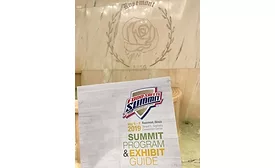

The 21st Annual Food Safety Summit occurred last week in Rosemont, IL, at the Donald E. Stephens Convention Center, and over 1,400 food safety professionals representing the leading foodservice and retail establishments, manufacturers and processors, distributors, regulators, and academicians attended.
Food labeling—whether it’s for allergens or simple nutritional information—is one of the most critical, but overlooked, steps in food and beverage manufacturing and retail.
Today’s technology-focused world has morphed the way our society operates, creating a highly complex and globally interconnected landscape that is fundamentally changing the way foods move from farm to table.
The U.S. Food and Drug Administration released a report on its inspection and environmental sampling of ice cream production facilities for Listeria monocytogenes and Salmonella in 2016 and 2017.
The U.S. Department of Agriculture’s (USDA) Food Safety and Inspection Service (FSIS) announced that that it is proposing to amend labeling regulations to remove duplicative net weight and net content requirements for packages that contain certain amounts of meat or poultry products.
The variability in capabilities at the state and local levels often results in botched investigations and turf battles, and sometimes there isn't any prevention of illness or reduction in the number of people who become ill or die.
The U.S. Food and Drug Administration (FDA) announced today that it is proposing to revise the quality standard for bottled water to specify that bottled water to which fluoride is added by the manufacturer may not contain fluoride that exceeds 0.7 milligrams per liter (mg/L).
The USDA's National List of Allowed and Prohibited Substances (National List) for organic regulations has been amended to implement recommendations submitted to the secretary of agriculture by the NOSB.