The request will support the Codex Committee on Contaminants in Foods in determining whether existing maximum levels (MLs) for total aflatoxins in certain commodities require revision, as well as assessing the need for and feasibility of establishing MLs for additional cereals and grains.
Commission Regulation (EU) 2026/2289 has revised maximum residue limits (MRLs) for acequinocyl, deltamethrin, dodine, maleic hydrazide, pinoxaden, and prothioconazole.
Regulation (EU) 2026/1825 expands MLs for 3-monochloropropanediol (3-MCPD) and glycidyl fatty acid esters, and Regulation (EU) 2026/1890 establishes new MLs for furan, 2-methylfuran, and 3-methylfuran.
As of July 1, 2025, new EU maximum levels for nickel—a heavy metal known to contaminate food, which can have acute and chronic health effects—went into effect for a range of foods. Additional limits for nickel in cereal will go into effect in July 2026.
In a new opinion, the European Food Safety Authority (EFSA) is proposing to modify the existing maximum residue limits (MRLs) for agricultural chemical chlormequat in oats, as well as in the products of food-producing animals.
The European Food Safety Authority (EFSA) recently suggested lowering the acceptable daily intake (ADI) for acetamiprid after scientific evidence was published that raised uncertainties about its toxicity. EFSA also recommends lowering the existing maximum residue levels (MRLs) for acetamiprid in food crops, as current MRLs pose a health risk to consumers.
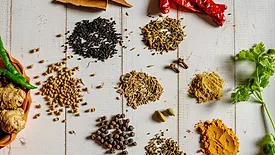
The Food Safety and Standards Authority of India (FSSAI) has issued an order regarding maximum residue limits (MRLs) for pesticides in spices and culinary herbs, in alignment with Codex Alimentarius guidelines and the MRLs adopted by the U.S., the EU, Japan, and Australia/New Zealand.
The European Commission recently made changes to the maximum levels of the mycotoxin deoxynivalenol (DON) in food with Commission Regulation (EU) 2024/1022, amending Regulation (EU) 2023/915.
To align the Maximum Residue Limits (MRLs) for 127 agricultural and veterinary chemicals with international authorities, Food Standards Australia New Zealand (FSANZ) recently released its annual call for comment on proposed changes.