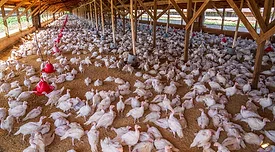
A recent report from the Joint FAO/WHO Expert Meetings on Microbiological Risk Assessment (JEMRA) provides an assessment of the efficacy of different control strategies for non-typhoidal Salmonella in broilers and chicken meat at primary production, processing, and post-processing.
The U.S. Food and Drug Administration (FDA) has released the CORE 2022 Annual Report—the first report of its kind—summarizing the investigations of foodborne illness outbreaks and adverse events involving FDA-regulated foods conducted by the Coordinated Outbreak Response and Evaluation (CORE) Network.
The Interagency Food Safety Analytics Collaboration (IFSAC)—a joint effort between FDA, CDC, and USDA-FSIS—has published its 2021 report on foodborne illness source attribution for Salmonella, Escherichia coli O157, and Listeria monocytogenes.
The UK Food Standards Agency (FSA) recently published Our Food 2022, its annual report of food standards across the nation, which was conducted in collaboration with Food Standards Scotland (FSS). Although the UK faced significant challenges that affected the food system in 2022, FSA reported that that there has not been any significant change in food safety and authenticity standards, except for a trend in food allergen labeling requirements.
Due to a steady increase of foodborne Cyclospora cayetanensis infections in recent years, the U.S. Food and Drug Administration (FDA) charged the National Advisory Committee on Microbiological Criteria for Foods (NACMCF) with producing a report that provides information on the factors that contribute to the contamination of produce by the parasite, as well as recommendations for a prevention and management strategy.
A recent report published by the European Food Safety Authority (EFSA) has provided a global overview of new genomic techniques being applied to food-producing animals and their products, including those already approved for commercialization in the agrifood sector.
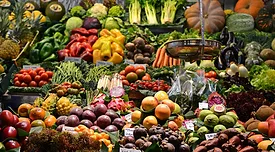
The Spanish Agency for Food Safety and Nutrition (AESAN) has compiled a report that determines which fruits and vegetables are most at risk of spoilage when sold in bulk and the associated food safety risks.
The National Antimicrobial Resistance Monitoring System (NARMS) recently published its 2020 Integrated Summary, which includes data providing phenotypic and genomic antimicrobial resistance (AMR) trends for Salmonella, Campylobacter, generic Escherichia coli, and Enterococcus isolated from retail meat and food-producing animals.
A recent report from the Food and Agriculture Organization of the United Nations (FAO) and three other global organizations has laid out priority research areas for mitigating the rise of antimicrobial resistance (AMR) at the interface between the agrifood, healthcare, and environmental sectors.
The European Food Safety Authority (EFSA) and the European Center for Disease Prevention and Control (ECDC) recently published a summary of a joint investigation of a multi-country foodborne illness outbreak of Salmonella Seftenberg that was possibly linked to cherry-like tomatoes.