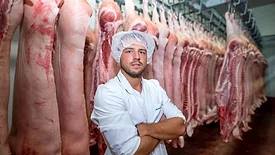
USDA-FSIS has completed swine and poultry line speed studies, finding that workers experienced pain in their upper extremities. FSIS is extending the current swine and poultry line speed waivers for companies that participated in these studies through May 15, 2025.
The U.S. Food and Drug Administration (FDA) needs to strengthen its inspection efforts to safeguard the nation’s food supply, according to a recent report published by the U.S. Government Accountability Office (GAO). FDA says it needs more inspectors to meet its targets.
The European Food Safety Authority’s (EFSA’s) most recent report on emerging risk activities identifies food safety issues on the horizon posed by chemical and biological hazards, and new processes and technologies.
The latest UK Food Security Report (UKFSR) has been published by the UK Government. A trend noted in the report is that, despite Campylobacter causing the most foodborne illnesses, outbreak detection is hindered by the lack of a required national typing scheme.
Salmonella illnesses in the U.S. in 2022 were attributed to a wide variety of foods, while Escherichia coli and Listeria monocytogenes infections were mostly linked to two or three food groups, according to the Interagency Food Safety Analytics Collaboration’s (IFSAC’s) latest foodborne illness source attribution report.
The U.S. Poultry and Egg Association’s latest Antibiotic Stewardship report showed significant decreases in antibiotic use for broiler chickens and turkeys between 2013 and 2023, with the proportion of broiler chickens receiving antibiotics in hatcheries dropping from 90 percent to less than 1 percent.
The EU One Health Zoonoses Report for 2023 shows that foodborne illnesses are rising in the EU, with listeriosis cases reaching their highest levels since 2007. Campylobacter, Salmonella, and Shiga toxin-producing Escherichia coli (STEC) caused the greatest number of illnesses in 2023.
Food Standards Australia New Zealand (FSANZ) recently published its Annual Report 2023–2024 outlining the agency’s food safety regulatory work throughout the past year, including the management of food safety incidents, standards development, surveillance, and other efforts.
A report by the European Court of Auditors has identified “notable gaps” in the EU legal framework around food labeling and enforcement of regulations, and offered recommendations for improvement.
In a recent independent report evaluating popular restaurant chains’ policies on antibiotics in meat, many chains received a failing grade, while only one received an A+.