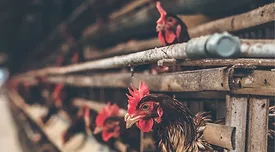
A recent study aiming to investigate the usefulness of publicly available whole genome sequencing (WGS) data for Salmonella surveillance has provided an overview of antimicrobial resistance (AMR) among different serovars and defined the most common antibiotic resistance genes.
A recent study carried out environmental monitoring programs (EMPs) for Listeria monocytogenes at three food production facilities in Japan with the aim of developing EMPs that are relevant to Japanese food businesses and to encourage more widespread adoption of EMPs.
Researchers from Kao Corporation have developed a long-lasting skin coating agent that kills pathogens on the hands, paving the way for new hand hygiene solutions that could potentially help food handlers prevent cross-contamination.
The U.S. Department of Agriculture (USDA) has awarded $2.48 million in grants to the University of Nebraska-Lincoln (UNL) for research that aims to improve food safety and animal health in swine production.
Researchers recently discovered a new fungal strain in soil that shows potential for eliminating patulin, a harmful mycotoxin that contaminates fruits, by breaking it down into less toxic compounds.
Using whole genome sequencing (WGS), a recent study led by Michigan State University (MSU) has demonstrated widespread antimicrobial resistance (AMR) among foodborne Campylobacter jejuni in the state, and the ability to trace the origins of specific strains.
A recent study of the microbiological profiles of disposable gloves intended for ready-to-eat (RTE) food handling found the presence of bacteria to be much higher on gloves with visible damage than intact gloves, underlining the importance of regular glove changes, especially when damaged.
During 2006–2021, Canada saw 55 laboratory-confirmed outbreaks of foodborne botulism, according to a recent article published in the U.S. Centers for Disease Control and Prevention’s (CDC’s) journal Emerging Infectious Diseases.
A team of scientists is developing a rapid sensor-based decision-making system to assess and mitigate Salmonella contamination across the entire poultry supply chain, with an emphasis on improving health equity by leveraging data to help disproportionately affected communities make informed food safety decisions.
The use of artificial intelligence (AI) tools like big data and machine learning for antimicrobial resistance (AMR) surveillance in livestock production shows promise for informing AMR mitigation efforts, according to a recent study led by University of Nottingham researchers.