The World Health Organization (WHO) is updating its estimate of the global burden of foodborne illness for 2025, and researchers are calling for the inclusion of Chagas disease, which has not been considered in past estimates.
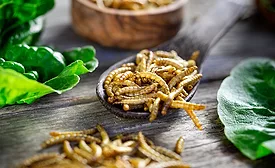
A recent study has mapped the edible insect supply chain to identify the main points for potential food safety hazards and food fraud, and concluded that, in general, substantial food safety and authenticity gaps need to be addressed before edible insects can be considered safe and sustainable protein sources for Western markets.
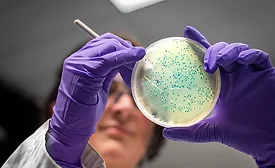
A recent study has analyzed methods of environmental monitoring for Listeria monocytogenes in food production facilities, comparing two alternative methods against a traditional culture-based method.
Researchers from the New Jersey Institute of Technology (NJIT) have developed a method of detecting toxic per- and poly-fluoroalkyl substances (PFAS) in food packaging, water, and soil samples in three minutes or less.
A recent study has demonstrated the protection that multispecies biofilms provide to Listeria monocytogenes against sanitizers, and could help inform more effective sanitation procedures in food processing environments.
With a $5 million grant from the U.S. National Science Foundation (NSF), a multidisciplinary research team is developing sensor-based rapid detection technology, backed by an artificial intelligence (AI) –powered decision support system, to control Salmonella and other foodborne pathogens throughout the poultry supply chain.
Researchers studied how dietary patterns relate to levels of per- and polyfluoroalkyl substances (PFAS) in the human body over time, and found that greater consumption of tea, processed meats, and food prepared outside the home was associated with increased levels of PFAS.
A project funded by the Center for Produce Safety aims to analyze risk factors and sampling points for pathogens in controlled environment agriculture (CEA) facilities to provide data industry can use to develop control measures.
Aflatoxin-contaminated nuts and seeds dominated mycotoxin notifications made through the EU’s Rapid Alert System for Food and Feed (RASFF) between 2011 and 2021, according to a recent study.