A study from the Arkansas Center for Food Safety demonstrates the importance of application time and product formulation in the effectiveness of hand sanitizers, which is critical for food handlers.
A recently completed study funded by the Center for Produce Safety (CPS) has provided new insights into Listeria monocytogenes growth, survival, and inactivation on pears during packing and in storage, and characterized microbial communities of yeasts, molds, and lactic acid bacteria.
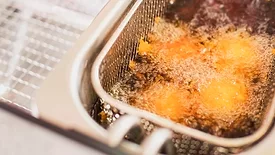
Polycyclic aromatic hydrocarbons (PAHs) are carcinogenic compounds formed during cooking. A new Seoul Tech
study has demonstrated the effectiveness of a streamlined analytical method to detect PAHs, which holds distinct advantages over conventional techniques.
A Center for Produce Safety (CPS) -funded study is investigating how different aspects of bulb onion production influence Salmonella and Escherichia coli risk, filling knowledge gaps about short- and intermediate-day varieties.
A study has found that the majority of shark meat sold in the U.S. is mislabeled, and can oftentimes be the meat of endangered species that are dangerously high in mercury, like hammerhead.
With Dubai receiving about nine million metric tons of food annually, having over 26,000 food establishments, and being home to more than 200 nationalities, the scale—and the stakes—for food safety are enormous.
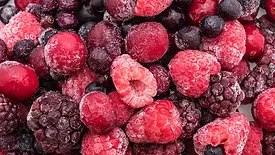
A recent survey of frozen berries at retail across Switzerland showed very low levels of pathogenic bacteria contamination, with only Bacillus cereus detected; however, antimicrobial resistance (AMR) indicators were detected on 2 percent of samples.
In a new paper supported by the Institute for the Advancement of Food and Nutrition Sciences (IAFNS), experts demystify Probabilistic Exposure Assessments (PEAs)—a more accurate approach for estimating dietary exposure to chemicals—by offering a comprehensive overview of their history, applications, and regulatory guidance.
In a new peer-reviewed paper, experts emphasized the need for a paradigm shift in how the entire frozen berry supply chain can manage enteric virus safety, shifting from reliance on detection to a focus on prevention strategies.
A study from the University of Florida College of Veterinary Medicine suggests that commensal Escherichia coli strains could be utilized to mitigate antibiotic-resistant nontyphoidal Salmonella Heidelberg, ultimately improving food safety.