SARS-CoV-2 and the Risk to Food Safety
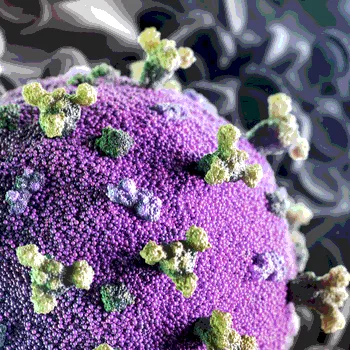
The coronavirus disease 2019 (COVID-19) pandemic has brought about a considerable understanding of the airborne transmission of the causal agent SARS-CoV-2 virus to humans and its potential effects on food safety and food security. The major route of transmission is person-to-person via respiratory droplets and aerosols, and not by fomites (inanimate surfaces or objects). However, concerns have been raised about the possibility of transmission via food and food packaging, and whether the SARS-CoV-2 virus poses a risk to food safety.
Several risk assessments have been conducted by food safety agencies on whether food and food packaging can present a potential risk to food safety related to SARS-CoV-2. The overall consensus is that currently, there is no evidence that SARS-CoV-2 is a food safety risk. Therefore, from a hazard-risk perspective, the overall potential risk of acquiring SARS-CoV-2 from contaminated food or food packaging appears to be very low. SARS-CoV-2 is therefore, not considered a foodborne virus, but rather a respiratory virus which can also enter the bloodstream via mucous membranes in the eyes, nose, and mouth.
Although viable SARS-CoV-2 virus can be present in stool samples, several studies have concluded that diarrhea is likely caused when the virus infiltrates the body through other mechanisms during the severe stage of the illness, and not to the virus being contracted from ingestion of contaminated food via the gastrointestinal tract. Furthermore, SARS-CoV-2 is acid-labile, and if present on a food, it is likely to be so at low levels. Both of these attributes will likely make the virus less available to host cells when contained within a food matrix due to low numbers and potentially limited survival in the acidic environment of the stomach, in comparison to the virus being carried in respiratory droplets.
It is no surprise that SARS-CoV-2 has been found to survive on both foods and inanimate surfaces, doing so better at low (best at freezing temperatures) rather than higher temperatures (we store viruses in the lab in the frozen state to keep them viable). This includes frozen foods, which have been found to contain traces of the virus. However, in relation to food, the greatest risk by far remains person-to-person transfer in a food environment, including manufacturing, retail, and foodservice. In fact, there have been many person-to-person COVID-19 outbreaks among farm workers and in food processing establishments. This emphasizes the importance of wearing appropriate personal protective equipment and practicing proper hand hygiene and physical distancing.
However, in spite of the current consensus by the broader scientific community that SARS-CoV-2 is not a food safety issue, China has examined frozen foods looking for the presence of the virus and has obtained some positive results. As a result, it has suspended imports from many food companies across at least 19 countries and regions where workers have been infected with coronavirus. The main issues with this policy approach are that i) there is no evidence that live virus can be present on a food in high enough numbers and then be transferred by hand to self-infect an individual; ii) when testing, we do not know if all the tests being used are detecting live virus as opposed to only detecting the presence of viral RNA; iii) we do not know how many viable viral particles need to be present to cause illness; iv) viruses present on food or food packaging lose viability over time; and v) if frozen foods were that efficient in spreading the virus to humans effectively, we would likely be seeing hundreds of thousands of cases linked to this transmission route globally, which we have not. Furthermore, according to the Chinese authorities, from a total of 2.98 million samples of food packaging, only 22 samples tested positive for the potential presence of the virus; this represents a 0.00073% positive rate for potentially only viral RNA, which is an insignificant risk.
A hypothetical scenario of a food handler touching fish contaminated with SARS-CoV-2 and its potential transmission via this route is discussed below. For successful transmission and infection to occur, the food handler would need to touch the fish (probably lots of fish many times), the virus on the fish would need to be viable (questionable) and in high enough numbers (unlikely), and then the worker would need to infect him/herself by touching their nose, mouth, or eyes. Even if this hypothetical scenario could lead to an infected worker(s), in terms of overall infections, this route of infection would be so minute as to be insignificant. This scenario notwithstanding, food companies still need to ensure that their employees are vigilant with regards to mask-wearing, handwashing, and the regular cleaning and disinfection of surfaces and utensils.
In relation to chemicals that are needed to inactivate SARS-CoV-2, the virus belongs to the coronavirus family of enveloped viruses, which makes them susceptible to detergents and a variety of other microbicides, even more so than fungi, vegetative bacteria, and yeasts. In fact, studies have shown that 0.1% sodium hypochlorite, 0.5% hydrogen peroxide, and 62–71% ethanol can all significantly reduce coronavirus (including SARS-CoV-2) present on surfaces after a 1-min exposure at room temperature. The Environmental Protection Agency, Health Canada, as well as the European Union Open Data Portal all have lists of approved disinfectants for use against SARS-CoV-2 on their websites.
In summary, the discovery of genetic traces of SARS-CoV-2 on food may raise concerns about food safety; however, this does not indicate a risk for public health and should not therefore be a basis for restricting food trade or initiating a food recall. Although the current evidence suggests that SARS-CoV-2 does not cause foodborne illness, the virus has caused major disruptions to the global food supply chain. Thus, issues such as food security and food sustainability have been brought to the forefront in this pandemic, as well as the issue of the health of food workers from farm through to retail and foodservice. Newer approaches/paradigms, such as the integration of One Health, (e.g., creating a large team of specialists from many disciplines) along with systems thinking (i.e., a health crisis can rapidly spread to other systems that would normally appear unconnected), will be paramount to controlling pandemics in the future.
This article is a brief summary of our mini review published November 2, 2020 in Frontiers in Nutrition.
Lucia E. C. M. Anelich, Ph.D., and Ryk Lues, Ph.D., are at the Centre for Applied Food Sustainability and Biotechnology, Central University of Technology, Bloemfontein, South Africa; Jeffrey M. Farber, Ph.D., is in the Department of Food Science at the University of Guelph, Guelph, ON, Canada; and Valeria R. Parreira, Ph.D., is in the Department of Pathobiology at the University of Guelph, Guelph, ON, Canada.
Looking for quick answers on food safety topics?
Try Ask FSM, our new smart AI search tool.
Ask FSM →