Is That Tomato Raw or Ready-to-Eat?
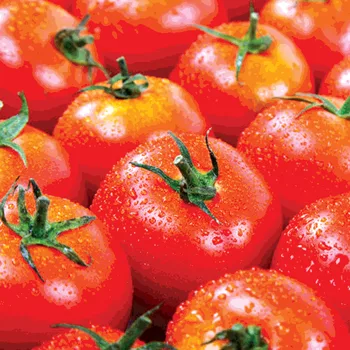
As a food safety professional, we often find ourselves in situations where we see clear food safety issues, but the circumstances make calling it out somewhat difficult. My family and I were invited to our friend’s house for a barbecue. Normally, this story would lead to cross-contamination due to the meat, but my story is in the kitchen with my friend. She was preparing a salad as we caught up since our last visit. She was meticulously washing the lettuce and other vegetables for the bountiful salad, then cutting and placing them in a bowl. As she was finishing, she grabbed a clamshell of cherry tomatoes that was on the counter, opened it, and dumped them into the salad without any preparation, including the wash step. This was my uncomfortable moment as I pointed out that those tomatoes should be washed prior to eating, and they were not ready-to-eat (RTE). Her response was what I would expect most consumers to say. “They look clean, and what is a little rinse going to do?”
Over the years, the push for convenience has edged many of those raw agricultural commodities to the side for fresh-cut, RTE products. These items were first introduced to the foodservice industry in the 1980s, helping chefs cut down on labor to shred carrots or dice onions. Growers and shippers caught on with the invention of value-added items like chopped romaine and iceberg salads. This was looked at as a win-win scenario: The producers would get better yields by using more of the products from their fields, the shippers created a whole new business by manufacturing these products, and the consumers had fresh RTE salads. What could go wrong?
RTE Products and Risk
The challenge with all of these fresh-cut, RTE products is that they were not getting any processing step required to eliminate the hazards that may exist on the raw materials, like enterohemorrhagic Escherichia coli, Salmonella, and Listeria monocytogenes. Consumers—perhaps unaware that RTE doesn’t mean risk-free—pull the product out of their fridge, pour it in a bowl, and eat it. As the demand for these items grew and manufacturers became more savvy on how to get better shelf life, the distribution of these items moved from local to regional to national to international. Items with a shelf life of 4 or 5 days early on were being pushed to 15 or 16 days. These increased days were typically added to meet distribution demands in the supply chain. The shipper would hold the product a couple of days, the ride across the country took 5 days, the distributor required 10 days, and pretty soon you’re up to a 17-day shelf life. The industry grew so fast for the next decade that no one really seemed to pay attention to this evolution. Salads looked good in the stores, consumer demand was soaring, and manufacturers created a niche industry that, by 2010, was making millions of servings a day.
Another interesting addition to the produce section that came with all this fresh-cut product was branded and coded items. Consumers had brand choices and shelf life dates to follow. The competition was fierce for store shelves, and consumers grew fond of brands that frequented their store shelves. What this also allowed for was something to trace back to when illness occurred. Before, there was just a head of lettuce, an apple, or a mango; now, we had major brands showing up and taking a stance. Consumers could then recall these brands in interviews and the regulators had something to look at. As more fresh-cut products were implicated in outbreaks and recalls, the regulatory and science communities began to realize that produce, specifically fresh produce, may be contributing in a large part to foodborne illness in the U.S.
What Industry Has Learned about Pathogen Control
The fresh-cut industry is now decades old and starting to mature. Gone are the days of washing in bathtubs and drying using the spin cycle of a washing machine. The industry today talks about sanitary design and preventive controls. Much of the learning has been focused around pathogens and how they get onto the produce. What most have realized is that produce is most susceptible to contamination in its raw form. More consumers are eating fruits and vegetables this way, including whole commodities. This has further shed a light on the entire industry, and the U.S. Food and Drug Administration (FDA) has been paying attention. There has clearly been a push to emphasize the risk of fresh fruits and vegetables with the Food Safety Modernization Act (FSMA) Produce Safety rule. Officials have said to industry in meetings that if your raw agricultural commodity can be eaten raw, it should be treated like an RTE product. I don’t think they are trying to threaten industry with this statement but rather are getting them to pay attention to what our science and society are telling us. If people can eat your product right out of the clamshell, then you should do everything reasonably possible to prevent contamination.
Officially, the Federal Food, Drug, and Cosmetic Act of 1938 defines a raw agricultural commodity as any food in its raw or natural state, including all fruits that are washed, colored, or otherwise treated in their unpeeled natural form prior to marketing. An “RTE food” means any food that is normally eaten in its raw state or any other food, including a processed food, for which it is reasonably foreseeable that the food will be eaten without further processing that would significantly minimize biological hazards. Going back to my friend’s comment (and where FDA is going), if those tomatoes are contaminated, will rinsing them for a few seconds under running water “significantly minimize biological hazards”?
Traditionally, FDA treated a raw agricultural commodity and an RTE product as completely different foods. Raw agricultural commodities were regulated by the U.S. Department of Agriculture, as they were traditionally packed in the field, and RTE products were regulated by FDA, which payed little attention to raw agricultural commodities. Raw agricultural commodities are traditionally managed with Good Agricultural Practices (GAPs). RTE products are managed with Good Manufacturing Practices (GMPs) and supported by a robust food safety plan that includes Hazard Analysis and Critical Control Points/Hazard Analysis and Risk-Based Preventive Controls plans, specification, Standard Operating Procedures (SOPs), Sanitation SOPs, etc. Growers of raw agricultural commodities rely on GAPs. One would argue that the time has come for us to realize that we cannot rely on GAPs/GMPs to control the risks that exist in the supply chain.
FSMA has brought new awareness to food risk, especially in produce. Produce is the only food group that is associated with every regulation of FSMA. Growers are now required to have a documented food safety plan that includes a Hazard Analysis. What does this mean for companies dealing with raw agricultural commodities that can be consumed raw? Do they have to provide a kill step? Do they have to package the product? Should they do anything different in their process? The answers to these questions may be less complex than one perceives.
A Path to Making Safe Products
The answer to the challenge is to be vigilant. Understand the risks associated with the product and do everything you can to prevent those hazards from occurring. Most of these steps are already required by the FSMA Produce Safety rule and should not be revolutionary to the growing community:
Develop a Food Safety Plan – The grower should put together a process flow diagram to describe the entire process from field selection through harvest and holding. The process flow then informs the hazard analysis and risk assessment. During this process, the grower must determine those areas that bring risk and develop adequate controls. Be truthful about the intended or unintended use of the product. If it can be eaten right from the field, assume people are doing so.
In the field, the grower must understand the risks from their surroundings, inputs, agricultural practices, the equipment, and the workers.
In the packing shed, they need to focus on the environment, the equipment, and the workers.
In distribution, they need to focus on handling practices and cold chain management.
Manage the Plan – The grower should act upon the hazard analysis and control points. Understand that documentation is critical to the process; document all control points at the frequency that is determined to be appropriate. When a control point limit is exceeded, take all appropriate steps to control the product implicated and gain control again.
The simple fact that one should do everything one can to prevent foodborne illness should be enough to drive food safety awareness. If that doesn’t motivate you, FSMA should. As we brand more and more commodities, the ability for the consumer to identify whose raw agricultural commodity they ate will only increase. That, coupled with our ability to detect microorganisms with higher sensitivity, our ability to communicate illness between states, and whole-genome sequencing, only means that the investigation will come back to the fields more often than not. Don’t let the regulators tell you that you have a problem: Act now and control the risks that exist with your product in the supply chain.
Will Daniels is president, Produce Division, of IEH Laboratories & Consulting Group.
Looking for quick answers on food safety topics?
Try Ask FSM, our new smart AI search tool.
Ask FSM →