Sanitary Design’s Role in Fresh Produce Processing to Prevent Listeria Contamination
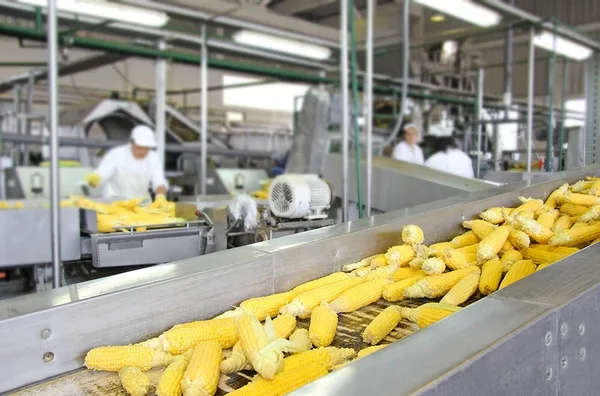
Listeria contamination has emerged as a serious concern in fresh produce packing houses and fresh-cut processing facilities, where it can be even more of a problem than in ready-to-eat protein processing.
Listeria comprise a group of Gram-positive bacteria found in many places, including soil, feces and sewage. Although most species of Listeria are innocuous, the strain L. monocytogenes is a serious pathogen that sickens many people each year and can have a fatality rate close to 20 percent.
Listeria may enter a processing plant on a product, through an infestation of pests, on vehicle tires and on the feet and hands of people working in the facility. Listeria can survive and grow in low-oxygen environments and at the colder temperatures found in refrigerated facilities.
Unlike the processing of protein products such as deli meat, there is no cooking or any other lethality step during the processing of fresh produce. This absence of a kill step creates different challenges to the production of a safe food product. In addition, the cold, wet environment in which produce is typically processed can be an ideal environment for Listeria and may result in the plant developing a persistent resident population.
It can be difficult to prevent, control and eliminate this type of food facility contamination, but failure to do so can result in dire consequences.
Consider the Listeria outbreak traced to cantaloupes in 2011. This was the United States’ deadliest foodborne illness outbreak to date, resulting in the deaths of 33 people. More recently, Listeria issues with pre-packaged leafy greens led to several fatalities and hurt the reputation as well as the bottom line of brands connected to the contamination. Listeria is even showing up in items previously considered to be safe, such as candy apples and ice cream.
The proper sanitary design of facilities and processing equipment is fundamental to preventing and controlling Listeria in fresh produce processing, and poor sanitary design is a major reason why persistent Listeria contamination can be so hard to eliminate.
Looking for quick answers on food safety topics?
Try Ask FSM, our new smart AI search tool.
Ask FSM →
Investing in effective sanitary design not only lowers food safety risks but can lead to significant cost savings by avoiding the financial impact of a recall. Good sanitary design also increases operational efficiency, increases product yield, reduces maintenance needs and helps create a safer workplace.
There are some specific steps and recommendations that fresh produce processors can follow to improve sanitary design for the prevention and control of Listeria contamination.
Considerations for New or Renovated Facilities
Whether renovating or building a new plant, produce processors should take the opportunity to start from square one when examining sanitation design. This is a chance to do things right and improve overall product quality.
Create a production space that is easily cleanable and surrounded by a series of barriers or hurdles to control contamination
Consider both the interior and exterior of a facility during design and construction; build a closed structure that will keep out pests like rodents, insects and birds, which may carry Listeria or other pathogens into the processing space
Install a concrete floor that is appropriately sealed and has sloped surfaces as well as adequate drainage to prevent the pooling of liquids on production floors; drains should be centrally located—away from walls—and should not be located under processing equipment that would obstruct access for cleaning
Purchase processing equipment that is designed with cleaning in mind and constructed from stainless steel or chemical-resistant plastic; soft metals such as aluminum, brass or galvanized materials, together with porous surfaces such as wood or cloth, should be avoided
Ensure that there are no exposed electronic components; motors and control panels should be sealed and rated for wash-down duty; equipment should be installed in a manner that facilitates cleaning with sufficient space, catwalks and other access aids to allow the sanitation crew to reach all surfaces safely; if parts of the equipment are hard to access, built-in self-cleaning systems are another option
What Can Be Done at Existing Facilities?
Some companies have had such horrific Listeria problems that they’ve had to demolish plants.
That’s often not a practical solution, but there are upgrades and routine maintenance activities that help a plant move towards a higher level of sanitary design. Easy-to-implement fixes include the following:
Capping hollow legs on tables and processing equipment, eliminating hollow rollers and chain-link conveyor belts, and filling holes and cracks in walls and floors to eliminate harborage areas
Encouraging good employee hygiene is crucial, from requiring handwashing to installing entryway sanitization equipment—like boot scrubbers—in front of doors to the production area; it is also good to review traffic patterns in the plant and erect access controls to limit the movement of personnel and equipment, such as forklifts, going from dirty areas to clean zones
Looking for harborage areas, like nooks and crannies in equipment and cracked flooring, especially where the epoxy coating has lifted away from the concrete, allowing water to penetrate and create a hard-to-clean environment for bacterial growth; cracked or broken welds and sandwich joints are other areas that can be difficult to clean, trapping food particles and providing a niche for Listeria to grow
Two of the biggest problem areas in existing facilities are the accumulation of soil and biofilm due to inadequate cleaning, and the challenges associated with the cleaning of drains. When Birko encounters a facility with a particularly stubborn Listeria problem, one of the first things we investigate is the possibility of the presence of biofilms, particularly in and around drains.
Biofilms are an extracellular polysaccharide matrix, a glue-like substance, produced by Listeria and other microbes. This glue-like substance can actually help Listeria adhere to equipment surfaces or the inside of drains. These biofilms can shed bacteria during production, resulting in persistent contamination challenges.
By their very nature, drains are hard to clean and can be an excellent harborage area for Listeria. It’s very easy to spread contamination from drains to food contact and other critical areas due to improper cleaning procedures. Tools used for cleaning drains should be clearly labeled and color-coded so that they are not used for any other task. Sticking a hose into a drain and turning it on full blast will create an aerosol of microbes from the drain, contaminating the production space. For this reason, drains should be cleaned early in the sanitation process.
Sanitizers should be rotated on a regular basis. Using different chemicals on a scheduled, periodic basis reduces the potential for microorganisms to develop tolerance to your sanitizer.
Why is a Documented Plan is Necessary?
The Food Safety Modernization Act requires produce processors to have a food safety plan that addresses bacterial challenges including Listeria. Sanitary design and effective sanitation are essential cornerstones of any food safety plan. As you can see, there is a lot to consider, and this article only scratches the surface of potential problems and solutions.
To protect your products, your customers and your brand, it’s important to identify all the potential ways in which your product is at risk for contamination and then determine the most effective ways to prevent Listeria contamination from occurring.
Commitment to sanitary design should involve buy-in and responsibility from everyone at every step of the process, from the executive level to plant engineers to quality assurance, and every other employee as well. Once proper sanitary design is in place, the facility can then develop repeatable, documented sanitization procedures, which production employees follow to help ensure a safe product.
Elis Owens, Ph.D., is the director of technical services at Birko.