Food Safety
search
Ask Food Safety AI
cart
facebook twitter linkedin
  • Sign In
  • Create Account
  • Sign Out
  • My Account
Food Safety
  • NEWS
    • Latest News
    • White Papers
  • PRODUCTS
  • TOPICS
    • Contamination Control
    • Food Types
    • Management
    • Process Control
    • Regulatory
    • Sanitation
    • Supply Chain
    • Testing and Analysis
  • PODCAST
  • EXCLUSIVES
    • Food Safety Five Newsreel
    • eBooks
    • FSM Distinguished Service Award
    • Interactive Product Spotlights
    • Videos
  • BUYER'S GUIDE
  • MORE
    • ENEWSLETTER >
      • Archive Issues
      • Subscribe to eNews
    • Store
    • Sponsor Insights
    • ASK FSM AI
  • WEBINARS
  • FOOD SAFETY SUMMIT
  • EMAG
    • eMagazine
    • Archive Issues
    • Editorial Advisory Board
    • Contact
    • Advertise
  • SIGN UP!

Food Safety

Automated microbiological testing helps speed up determining if food is safe

The adoption of automated or rapid methods for pathogen testing should include some kind of overall assessment of potential benefits and risks.

By Richard F. Stier, M.S.
pathogen testing

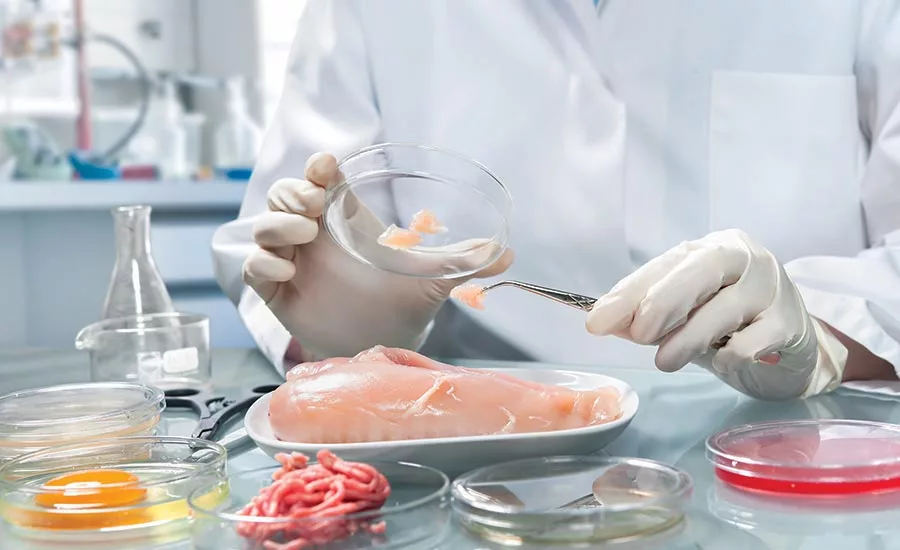
When it comes to pathogen testing, processors must choose from a number of processes, as well as whether the work will be done in-house or through a contract laboratory.

Photo courtesy of Getty Images/Luchschen
testing raw products

Testing samples of raw or finished products for pathogens presents processors with a number of challenges, including the need to ensure that contract laboratories have equipment properly designed and calibrated to do the specific tests needed.

Photo courtesy of Getty Images/AlexRaths

Pulsed-Field Gel Electrophoresis

A diagram of the Pulsed-Field Gel Electrophoresis process.

Source: Centers for Disease Control and Prevention

pathogen testing
testing raw products
Pulsed-Field Gel Electrophoresis
September 21, 2018

Q&A: LexaGene CEO Dr. Jack Regan

Jack ReganTo meet the increasing needs of consumers and retailers demanding safe food, processors must have a fast and reliable food safety testing and pathogen control program. In this Q&A, Dr. Jack Regan, CEO, LexaGene, shares insights on the new technology available to help automate food safety testing and pathogen control.


Food Engineering (FE): For food manufacturers, what is the current state of food-borne pathogen detection? 

Regan: Food manufacturers test food items as well as have environmental monitoring programs in place to ensure their facilities are clean. For example, when it comes to food items such as ground beef, 25 grams of meat are placed in a bag with enrichment media and are allowed to incubate overnight.  For environmental sampling, food-contact surfaces on processing equipment, and non-food contact surfaces (such as floors and drains) are swabbed. The swab is then placed in an enrichment broth.  This testing is part of a plant’s overall Hazard Analysis and Critical Control Point (HACCP) plan.  

However, for many samples, a “zero tolerance” requirement is imposed on key human pathogens such as Listeria monocytogenes and E. coli—which generally requires an additional culture step to maximize sensitivity, resulting in a longer turnaround time. Following the culture step, a portion of the sample is removed and tested by conventional plate-based technologies or, more commonly, by rapid tests, including immunoassays and PCR-based tests.  


FE: What are the drawbacks of using culture-based methods? 

Regan: Those methods are very slow. Companies are looking to shorten the enrichment period, from overnight to a few hours to skipping culture entirely, if possible. When you shorten the enrichment period, there are less bacteria present, so immunoassays become less valuable, since they lack the sensitivity of PCR-based assays. However, PCR-based assays are extremely sensitive, as they amplify a single copy of DNA about 1 billion-fold. In addition, PCR does not require a viable pathogen, which is viewed by many as a positive characteristic—since samples that are found to have the DNA from a pathogenic organism are considered ‘high’ risk, and should be treated more cautiously (e.g. a full culture workup). On the other hand, samples with no DNA from a pathogenic organism are considered low risk. PCR also has the advantage that it can be easily multiplexed without harming the sensitivity.


FE: What are some areas in testing methods that are speeding up pathogen detection (in assay preparation, enrichment time, analysis, etc.)?  

Regan: The most effort is placed on PCR-based testing, since PCR is so sensitive and amplifies a single copy about 1 billion fold for easy optical detection. Also, there are genomic targets in bacteria that are present at more than 1 copy per cell. So, if bacteria are present—regardless of viability—targeting the mRNA of a highly transcribed gene is more likely to result in a positive test than targeting the bacterium’s gDNA.

Looking for quick answers on food safety topics?
Try Ask FSM, our new smart AI search tool.
Ask FSM →


FE: How can automated pathogen protection help processors (lower costs, more efficiency, less room for human error, etc.)?  

Regan: Automation removes the costs associated with paying an individual to manually process the sample. It also removes some of the variability seen when different microbiologists process the same sample, as many have small variations in technique that can quite drastically change the result. In addition, manual testing is more likely to be prone to false-positives due to user-caused cross-contamination.  Automated instruments can run 24/7, which is very helpful for plants that are operational 24 hours a day.


FE: What are some of the potential drawbacks of automated food pathogen detection (occurrence of false positives, need to target a specific pathogen, costs, etc.)?  

Regan: Some view PCR testing as “too sensitive.” PCR testing detects the presence of genomic material from different pathogens—but cannot confirm viability. Some meat producers are worried that testing the surfaces of meat processing equipment might too frequently find the presence of DNA from a pathogenic organism. However, it is possible that the source was from bacteria that were killed during processing by a chemical. So, PCR can potentially result in some false alarms, but many feel that this is a better alternative, rather than failing to detect a contaminated food item and sending it to consumers who fall ill.


FE: What is the future of whole genome sequencing and its impact on food safety testing? 

Regan: Whole genome sequencing (WGS) is great for identifying where food outbreaks originated from. WGS is a technology that is used after an outbreak has happened, to identify what company should issue the recall. However, WGS is not good for testing on-site at the plant—as it is too time consuming, expensive and technical. This is why it is better to use PCR, which can be easily automated and is much more affordable, in food plants.


This article was originally posted on www.foodengineeringmag.com.
KEYWORDS: automation rapid testing

Share This Story

Richard stier 200px
Richard F. Stier, M.S. is a consulting food scientist who has helped food processors develop safety, quality and sanitation programs. He believes in emphasizing the importance of how these programs can help companies increase profits. Stier holds degrees in food science from Rutgers University and the University of California at Davis. He is also a member of the Editorial Advisory Board of Food Safety Magazine.


Recommended Content

JOIN TODAY
to unlock your recommendations.

Already have an account? Sign In

  • people holding baby chicks

    Serovar Differences Matter: Utility of Deep Serotyping in Broiler Production and Processing

    This article discusses the significance of Salmonella in...
    Meat/Poultry
    By: Nikki Shariat Ph.D.
  • woman washing hands

    Building a Culture of Hygiene in the Food Processing Plant

    Everyone entering a food processing facility needs to...
    Food Prep/Handling
    By: Richard F. Stier, M.S.
  • graphical representation of earth over dirt

    Climate Change and Emerging Risks to Food Safety: Building Climate Resilience

    This article examines the multifaceted threats to food...
    Best Practices
    By: Maria Cristina Tirado Ph.D., D.V.M. and Shamini Albert Raj M.A.
Previous 1 2 Next
Manage My Account
  • eMagazine Subscription
  • Subscribe to eNewsletter
  • Manage My Preferences
  • Website Registration
  • Subscription Customer Service

More Videos

Sponsored Content

Sponsored Content is a special paid section where industry companies provide high quality, objective, non-commercial content around topics of interest to the Food Safety Magazine audience. All Sponsored Content is supplied by the advertising company and any opinions expressed in this article are those of the author and not necessarily reflect the views of Food Safety Magazine or its parent company, BNP Media. Interested in participating in our Sponsored Content section? Contact your local rep!

close
  • Salmonella bacteria
    Sponsored byThermoFisher

    Food Microbiology Testing Methods: Salmonella species

  • a diagram explaining indicator organisms
    Sponsored byHygiena

    How Proactive Listeria Testing Helps Prevent Six- and Seven-Figure Recalls

  • woman grocery shopping
    Sponsored byCorbion

    Designing Safety Into Every Bite: Proactive Risk Mitigation for Refrigerated Foods

Popular Stories

NRTE breaded stuffed chicken

USDA Indefinitely Delays Enforcement of Salmonella as Adulterant in Raw Breaded, Stuffed Chicken

non-conforming product

How to Handle Non-Conforming Product

spoonfuls of food ingredients

FDA’s Developing Rule to Tighten GRAS Oversight Moves to White House

Events

December 11, 2025

How to Develop and Implement an Effective Food Defense Strategy

Live: December 11, 2025 at 2:00 pm EDT: From this webinar, attendees will learn common areas where companies encounter challenges in their food defense strategies and how to address them.

May 11, 2026

The Food Safety Summit

Stay informed on the latest food safety trends, innovations, emerging challenges, and expert analysis. Leave the Summit with actionable insights ready to drive measurable improvements in your organization. Do not miss this opportunity to learn from experts about contamination control, food safety culture, regulations, sanitation, supply chain traceability, and so much more.

View All

Products

Global Food Safety Microbial Interventions and Molecular Advancements

Global Food Safety Microbial Interventions and Molecular Advancements

See More Products

Related Articles

  • auditor with clipboard looking at soda bottles on production line

    The Importance of Internal Audits

    See More
  • Neogen Petrifilm Automated Feeder

    New Neogen Petrifilm Automated Feeder Helps High-Volume Food Safety Testing Labs

    See More
  • water management in food facility

    Water System Management for Food Processors

    See More

Related Products

See More Products
  • food-safety-making.jpg

    Food Safety: Making Foods Safe and Free From Pathogens

  • Food-Forensics-3D.jpg

    Food Forensics Handbook Practice, Instrumentation, Case Studies

  • 9781498721776.jpg

    Handbook of Food Processing: Food Safety, Quality, and Manufacturing Processes

See More Products

Related Directories

  • BioSafe Systems

    BioSafe Systems provides food safety solutions with peroxyacetic acid (PAA) and Smart Technology. Our advance chemistry and OxyFusion, on-site, on-demand PAA generator, automates food safety compliance, reduce cost, and increase productivity. Our Smart Technology automates monitoring, dosing, and generates customizable data reports that are blockchain compatible. We continue to innovate solutions for food safety.
  • Smart Food Safe

    Smart Food Safe is a leading and innovative software company specializing in providing state-of-the-art technology solutions for businesses to excel in Quality, Food Safety, Regulatory, and Traceability management. With a strong focus on empowering organizations, Smart Food Safe Software offers a comprehensive suite of customizable modules designed to streamline processes, ensure regulatory compliance, enhance product quality, and enable real-time visibility into operations.
×

Never miss the latest news and trends driving the food safety industry

eNewsletter | Website | eMagazine

JOIN TODAY!
  • RESOURCES
    • Advertise
    • Contact Us
    • Directories
    • Store
    • Want More
  • SIGN UP TODAY
    • Create Account
    • eMagazine
    • eNewsletter
    • Customer Service
    • Manage Preferences
  • SERVICES
    • Marketing Services
    • Reprints
    • Market Research
    • List Rental
    • Survey/Respondent Access
  • STAY CONNECTED
    • LinkedIn
    • Facebook
    • Instagram
    • X (Twitter)
  • PRIVACY
    • PRIVACY POLICY
    • TERMS & CONDITIONS
    • DO NOT SELL MY PERSONAL INFORMATION
    • PRIVACY REQUEST
    • ACCESSIBILITY

Copyright ©2025. All Rights Reserved BNP Media.

Design, CMS, Hosting & Web Development :: ePublishing