Food Safety
search
Ask Food Safety AI
cart
facebook twitter linkedin
  • Sign In
  • Create Account
  • Sign Out
  • My Account
Food Safety
  • NEWS
    • Latest News
    • White Papers
  • PRODUCTS
  • TOPICS
    • Contamination Control
    • Food Types
    • Management
    • Process Control
    • Regulatory
    • Sanitation
    • Supply Chain
    • Testing and Analysis
  • PODCAST
  • EXCLUSIVES
    • Food Safety Five Newsreel
    • eBooks
    • FSM Distinguished Service Award
    • Interactive Product Spotlights
    • Videos
  • BUYER'S GUIDE
  • MORE
    • ENEWSLETTER >
      • Archive Issues
      • Subscribe to eNews
    • Store
    • Sponsor Insights
    • ASK FSM AI
  • WEBINARS
  • FOOD SAFETY SUMMIT
  • EMAG
    • eMagazine
    • Archive Issues
    • Editorial Advisory Board
    • Contact
    • Advertise
  • SIGN UP!

Consultants Corner

Make time for employee training

By Abbey Davidson
Employee Training
July 23, 2018

Production dates, yields, customers, inspectors, food safety, regulations, payroll, human resources, the books — there never seems to be enough time in the day. Throw all that work in with ensuring employees are properly and consistently trained and a person is looking at a monster of a daily schedule. But when an employee does not have proper training or direction, business strategies can go awry. 

To prevent this, continual, consistent and focused training is necessary to facilitate accuracy of projections, operations and food safety. It can be difficult in the moment of daily production to slow down and explain reasoning, especially when everyone involved is working as fast as they can. After all, the higher the production, the more revenue rolls in. 

There are too many examples to list that detail what can go wrong because of a lack of training. But let’s take an obvious example: recalls. 

Imagine that a control point check is set at a labeling step, at which employees applying the labels and packaging the products are supposed to check for allergen ingredients in the package against the ingredient statement. If an employee isn’t adequately trained, there is the chance that an item may be mislabeled, or a label lackadaisically applied, with the result being undeclared allergens in commerce. As we are all too aware, this ultimately ends in a recall, poor public relations, loss of consumer confidence and other unwanted outcomes. 

Bottom line: It is better to have an employee trained correctly for each task that they are to perform than it is to have a loss of revenue because of an action that could have been prevented. It is clear that scheduled, consistent training for all employees is necessary. And facilities should not forget to document the training time. Your auditors will ask to see it. 

Teaching an employee to correctly collect microbial swabs also is important. With new testing methods on the market, there is a real chance of an untrained employee incorrectly collecting a critical sample. The hassle then begins to conduct a corrective action, create a new sampling plan and follow through when it could all have been prevented. It’s important to train employees initially, conduct ongoing training to prevent, eliminate or reduce bad habits, and train when a procedure is changed to ensure employees understand the new process. 

When creating training programs, there are many factors to consider. Depending on the area and competency of an employee, training should occur at a minimum upon hiring, during operations when tasks are not being completed correctly, on an interval basis but no less than annually and when changes are made to business or production practices. 

Looking for quick answers on food safety topics?
Try Ask FSM, our new smart AI search tool.
Ask FSM →

Your training program might look something like this:

  • Onboarding: basics of business practices, your culture;
  • Initial: Job-specific responsibilities; 
  • Monthly: Job-specific plus an area of focus for business practices; proper workplace etiquette, for example;
  • Semi-annual: Emphasis of business practices; safety, for example;
  • Annual: Focused on changes to business practices;
  • Spot training: as needed to correct practices or change practices;
  • Advanced training: Identified employees receive training to further their abilities.

It seems like a lot, but many production facilities are already following this checklist. 

This proactive training approach should address any employee weaknesses and develop a more confident, skilled workforce. One could argue with confidence comes happiness, and employee longevity in a company will arguably increase, therefore ultimately reducing the time spent training employees. The end goal is to implement a cohesive, comprehensive training program to create efficient production, increase profits, reduce food safety issues and mitigate risks.  NP

This article was originally posted on www.provisioneronline.com.
KEYWORDS: employee training food safety training

Share This Story

Abbey Davidson is a food safety consultant for We R Food Safety! For more information, contact her at abbey@werfoodsafety.com.

Recommended Content

JOIN TODAY
to unlock your recommendations.

Already have an account? Sign In

  • people holding baby chicks

    Serovar Differences Matter: Utility of Deep Serotyping in Broiler Production and Processing

    This article discusses the significance of Salmonella in...
    Microbiological
    By: Nikki Shariat Ph.D.
  • woman washing hands

    Building a Culture of Hygiene in the Food Processing Plant

    Everyone entering a food processing facility needs to...
    Facilities
    By: Richard F. Stier, M.S.
  • graphical representation of earth over dirt

    Climate Change and Emerging Risks to Food Safety: Building Climate Resilience

    This article examines the multifaceted threats to food...
    Contamination Control
    By: Maria Cristina Tirado Ph.D., D.V.M. and Shamini Albert Raj M.A.
Manage My Account
  • eMagazine Subscription
  • Subscribe to eNewsletter
  • Manage My Preferences
  • Website Registration
  • Subscription Customer Service

More Videos

Sponsored Content

Sponsored Content is a special paid section where industry companies provide high quality, objective, non-commercial content around topics of interest to the Food Safety Magazine audience. All Sponsored Content is supplied by the advertising company and any opinions expressed in this article are those of the author and not necessarily reflect the views of Food Safety Magazine or its parent company, BNP Media. Interested in participating in our Sponsored Content section? Contact your local rep!

close
  • Salmonella bacteria
    Sponsored byThermoFisher

    Food Microbiology Testing Methods: Salmonella species

  • a diagram explaining indicator organisms
    Sponsored byHygiena

    How Proactive Listeria Testing Helps Prevent Six- and Seven-Figure Recalls

  • woman grocery shopping
    Sponsored byCorbion

    Designing Safety Into Every Bite: Proactive Risk Mitigation for Refrigerated Foods

Popular Stories

food Safety Assurance

eBook | Food Safety Assurance for Dairy and Low-Moisture Foods

baby eating bottle

Coalition Urges RFK Jr. to Fix Infant Formula Oversight Problems that Allowed Infant Botulism Outbreak

hospital patient

Foodborne Illness Outbreaks and Serious Listeria Infections Rising in EU

Events

May 11, 2026

The Food Safety Summit

Stay informed on the latest food safety trends, innovations, emerging challenges, and expert analysis. Leave the Summit with actionable insights ready to drive measurable improvements in your organization. Do not miss this opportunity to learn from experts about contamination control, food safety culture, regulations, sanitation, supply chain traceability, and so much more.

View All

Products

Global Food Safety Microbial Interventions and Molecular Advancements

Global Food Safety Microbial Interventions and Molecular Advancements

See More Products

Related Articles

  • fork tablet knife on wood

    Is It Time for Third-Party Delivery Platforms to Help Make the Rules?

    See More
  • Strategies for employee management, training and workforce development

    Strategies for employee management, training and workforce development

    See More
  • Meat & Poultry Workers Look at Tablet

    Employee hygiene training: Rinse and repeat for best results

    See More

Related Products

See More Products
  • 1119160553.jpg

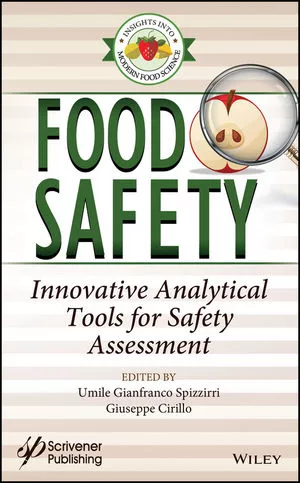
    Food Safety: Innovative Analytical Tools for Safety Assessment

  • 1118396308.jpg

    High Throughput Analysis for Food Safety

  • 1119053595.jpg

    Food Safety for the 21st Century: Managing HACCP and Food Safety throughout the Global Supply Chain, 2E

See More Products

Related Directories

  • Responsible Training

    Responsible Training has been a trusted leader in compliance education since 1999, providing accessible and reliable training solutions for businesses across highly regulated industries. With deep local expertise in Texas and a nationwide reach, we specialize in helping kitchens across industries get tailored, regulation-focused content that ensures businesses seamlessly meet their compliance requirements. Contact us for more information about our Food Manager Certification, Food Handler Courses, Alcohol Server and Cannabis Vendor courses.
  • Intertek Alchemy

    For over 20 years, Intertek Alchemy has been the global leader of training and consulting solutions for processors, manufacturers, packagers, and distributors of all sizes. Because we believe that people make the difference, our innovative technologies and services help ensure the everyday actions made by employees have a valuable impact on safety, quality, and productivity.
×

Never miss the latest news and trends driving the food safety industry

eNewsletter | Website | eMagazine

JOIN TODAY!
  • RESOURCES
    • Advertise
    • Contact Us
    • Directories
    • Store
    • Want More
  • SIGN UP TODAY
    • Create Account
    • eMagazine
    • eNewsletter
    • Customer Service
    • Manage Preferences
  • SERVICES
    • Marketing Services
    • Reprints
    • Market Research
    • List Rental
    • Survey/Respondent Access
  • STAY CONNECTED
    • LinkedIn
    • Facebook
    • Instagram
    • X (Twitter)
  • PRIVACY
    • PRIVACY POLICY
    • TERMS & CONDITIONS
    • DO NOT SELL MY PERSONAL INFORMATION
    • PRIVACY REQUEST
    • ACCESSIBILITY

Copyright ©2025. All Rights Reserved BNP Media.

Design, CMS, Hosting & Web Development :: ePublishing