Food Safety
search
Ask Food Safety AI
cart
facebook twitter linkedin instagram youtube
  • Sign In
  • Create Account
  • Sign Out
  • My Account
Food Safety
  • NEWS
    • Latest News
    • White Papers
  • PRODUCTS
  • TOPICS
    • Contamination Control
    • Food Types
    • Management
    • Process Control
    • Regulatory
    • Sanitation
    • Supply Chain
    • Testing and Analysis
  • PODCAST
  • EXCLUSIVES
    • Food Safety Five Newsreel
    • eBooks
    • FSM Distinguished Service Award
    • Interactive Product Spotlights
    • Videos
  • BUYER'S GUIDE
  • MORE
    • NEWSLETTERS >
      • Archive Issues
      • Subscribe to eNews
    • Store
    • Sponsor Insights
    • ASK FSM AI
  • WEBINARS
  • FOOD SAFETY SUMMIT
  • EMAG
    • eMagazine
    • Archive Issues
    • Editorial Advisory Board
    • Contact
    • Advertise
  • SIGN UP!
News

USDA-ARS, PathoGenetix to Evaluate Strain Typing System on Salmonella, E. coli

October 1, 2013


The U.S. Department of Agriculture’s Agricultural Research Service (USDA-ARS) and PathoGenetix have signed an agreement to evaluate the company’s Genome Sequence Scanning (GSS) technology for use in identifying strains of Shigatoxin-producing E. coli (STECs) and Salmonella enterica, two types of pathogens frequently implicated in foodborne illness outbreaks. The ability to quickly and accurately identify these pathogens, particularly in their most virulent forms, can have significant public health and financial impact for consumers, farmers and ranchers, and the agricultural and food industries.

Under the agreement, USDA-ARS will provide PathoGenetix with genetic information and bacterial strains of E. coli and Salmonella. USDA-ARS and PathoGenetix researchers will analyze the strains, both as isolates and in mixed cultures, using PathoGenetix’s GSS technology, currently in development for commercial use as the RESOLUTION™ Microbial Genotyping System. Results of the joint analysis will assist USDA-ARS in evaluation of the RESOLUTION System as a platform for rapidly identifying pathogenic Salmonella and E. coli in food samples.

“As we work to deliver a fully automated RESOLUTION System for rapid and effective pathogen strain typing next year, we are pleased to partner with USDA-ARS to demonstrate the speed and effectiveness of the GSS technology, particularly in differentiating the most virulent pathogens that pose the greatest challenges to food safety and public health investigations,” said Ann Merrifield, CEO of PathoGenetix.

Shiga-toxigenic Escherichia coli (STEC) and Salmonella enterica represent an important U.S. public health concern, causing an estimated 1.2 million cases of foodborne illness each year. E. coli O157:H7, the most common of the virulent STECs, has been implicated in multiple foodborne illness outbreaks, and six additional STEC serogroups are now considered adulterants in certain beef products. Unlike STEC O157:H7, however, the “Big 6” virulent strains are not easily distinguished using available molecular testing methods. Of the more than 2,500 identified strains of Salmonella enterica, 1,700 of them are classified as human pathogens belonging to subspecies S. enterica I. Just 20 of these serotypes are responsible for more than 70% of the illnesses caused by S. enterica subspecies I. Clearly, there is a need to be able to rapidly and cost-effectively identify these more virulent strains when they are present in food products.

PathoGenetix’s GSS technology identifies microbial DNA from complex mixtures or from isolates, and automates the process from sample preparation through data analysis to provide actionable information in five hours. Because GSS scans microbial DNA directly from a mixed culture and does not require a pure culture, it can reduce the time, complexity, skill and cost required for molecular identification and strain typing. The strain type information provided by GSS is comparable to pulsed field gel electrophoresis (PFGE), the current standard for pathogen typing in foodborne outbreak investigation and response. As a result, GSS may enable quicker decisions affecting food safety and public health.

In addition to demonstrating use of GSS to identify pathogens such as Salmonella in enriched food samples in five hours, PathoGenetix research also has shown the use of the technology to differentiate virulent Shiga toxin-producing E. coli. As a result, the RESOLUTION System also could be used as a confirmatory method for “Big 6” STEC screening assays, and potentially reduce the loss of product associated with false positive results from current STEC screening tests.


Author(s): Staff

Looking for quick answers on food safety topics?
Try Ask FSM, our new smart AI search tool.
Ask FSM →


Share This Story

Recommended Content

JOIN TODAY
to unlock your recommendations.

Already have an account? Sign In

  • people holding baby chicks

    Serovar Differences Matter: Utility of Deep Serotyping in Broiler Production and Processing

    This article discusses the significance of Salmonella in...
    Microbiological Control
    By: Nikki Shariat Ph.D.
  • woman washing hands

    Building a Culture of Hygiene in the Food Processing Plant

    Everyone entering a food processing facility needs to...
    Food Prep/Handling
    By: Richard F. Stier, M.S.
  • graphical representation of earth over dirt

    Climate Change and Emerging Risks to Food Safety: Building Climate Resilience

    This article examines the multifaceted threats to food...
    Contamination Control
    By: Maria Cristina Tirado Ph.D., D.V.M. and Shamini Albert Raj M.A.
Manage My Account
  • eMagazine Subscription
  • Subscribe to Newsletters
  • Manage My Preferences
  • Website Registration
  • Subscription Customer Service

More Videos

Sponsored Content

Sponsored Content is a special paid section where industry companies provide high quality, objective, non-commercial content around topics of interest to the Food Safety Magazine audience. All Sponsored Content is supplied by the advertising company and any opinions expressed in this article are those of the author and not necessarily reflect the views of Food Safety Magazine or its parent company, BNP Media. Interested in participating in our Sponsored Content section? Contact your local rep!

close
  • NEVIFIT 3 Compartment BPA-FREE
    Sponsored byCorbion

    The Risks of Ready-to-Eat: Five Ways to Protect Today's Prepared Meals

  • a group of workers in a food production facility
    Sponsored bySkillUp by Registrar Corp

    How to Build a Better Training Program: Data and Insights from the Global Food Safety Training Survey

  • the use of dual-energy X-ray food inspection technology to identify foreign contaminants.
    Sponsored byEagle by METTLER TOLEDO

    Precision Inspection Starts with the Right X-ray Detector

Popular Stories

green powder/moringa in wooden mortar

FDA Opens Third Salmonella–Moringa Outbreak Investigation of the Year

clover hill dairy recalled cheese products

Eight Sick, One Dead in Three-Year Listeria Outbreak Linked to Soft Cheese

fermented meat

Study is First to Analyze Trends in Foodborne Illness Outbreaks Linked to Non-Dairy Fermented Products

a practical guide to spoilage investigation webinar

Events

June 10, 2026

A Practical Guide to Spoilage Investigation and Prevention

Live: June 10, 2026 at 11:00 am EDT: Join this webinar to learn how to identify spoilage root causes, reduce risk, and apply data-driven strategies for prevention.

June 16, 2026

Sustainable Food Contact Materials: Where Regulation Meets Analytical Testing

Live: June 16, 2026 at 11:00 am EDT: This webinar explores how sustainability regulations are changing food contact material requirements, including packaging compliance, unintended substances, and per- and polyfluoroalkyl substances.

June 17, 2026

Living HACCP: Practical Steps for Implementation

Live: June 17, 2026, at 12:00 pm EDT: From this webinar, attendees will understand how social norms shape the way hazards are understood, how decisions are made, and how well risks are understood and acted on across companies.

View All

Products

Global Food Safety Microbial Interventions and Molecular Advancements

Global Food Safety Microbial Interventions and Molecular Advancements

See More Products

Related Articles

  • FDA Testing of Domestic and Imported Fresh Produce Finds Salmonella, E. coli, Listeria, and Cyclospora

    See More
  • CDC: Salmonella, E. coli and Listeria Cause Almost All Multistate Foodborne Outbreaks

    See More
  • BAX System X5 Receives AFNOR Certification for Salmonella and E. coli O157:H7 Detection

    See More

Related Products

See More Products
  • 1119071127.jpg

    Food Safety, Risk Intelligence and Benchmarking

  • 9781138198463.jpg

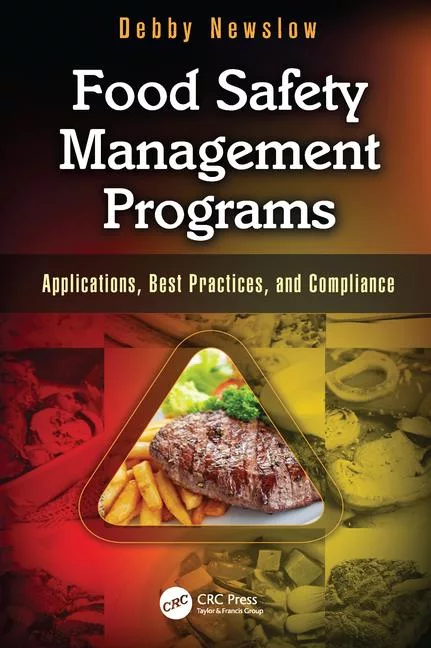
    Food Safety Management Programs: Applications, Best Practices, and Compliance

  • 1119258073.jpg

    FSMA and Food Safety Systems: Understanding and Implementing the Rules

See More Products

Related Directories

  • OneVision Corp.

    We develop, manufacture, sell and support can seam inspection and weighing systems to food and beverage canners, can makers, and specialty manufacturers (oil filter, aerosol cans, composite cans). Founded in 1994, we've installed and support more than 350 can seam inspection systems around the world.
×

Never miss the latest news and trends driving the food safety industry

Newsletters | Website | eMagazine

JOIN TODAY!
  • RESOURCES
    • Advertise
    • Contact Us
    • Directories
    • Store
    • Want More
  • SIGN UP TODAY
    • Create Account
    • eMagazine
    • Newsletters
    • Customer Service
    • Manage Preferences
  • SERVICES
    • Marketing Services
    • Reprints
    • Market Research
    • List Rental
    • Survey/Respondent Access
  • STAY CONNECTED
    • LinkedIn
    • Facebook
    • Instagram
    • X (Twitter)
  • PRIVACY
    • PRIVACY POLICY
    • TERMS & CONDITIONS
    • DO NOT SELL MY PERSONAL INFORMATION
    • PRIVACY REQUEST
    • ACCESSIBILITY

Copyright ©2026. All Rights Reserved BNP Media, Inc. and BNP Media II, LLC.

Design, CMS, Hosting & Web Development :: ePublishing