Food Safety
search
Ask Food Safety AI
cart
facebook twitter linkedin
  • Sign In
  • Create Account
  • Sign Out
  • My Account
Food Safety
  • NEWS
    • Latest News
    • White Papers
  • PRODUCTS
  • TOPICS
    • Contamination Control
    • Food Types
    • Management
    • Process Control
    • Regulatory
    • Sanitation
    • Supply Chain
    • Testing and Analysis
  • PODCAST
  • EXCLUSIVES
    • Food Safety Five Newsreel
    • eBooks
    • FSM Distinguished Service Award
    • Interactive Product Spotlights
    • Videos
  • BUYER'S GUIDE
  • MORE
    • ENEWSLETTER >
      • Archive Issues
      • Subscribe to eNews
    • Store
    • Sponsor Insights
    • ASK FSM AI
  • WEBINARS
  • FOOD SAFETY SUMMIT
  • EMAG
    • eMagazine
    • Archive Issues
    • Editorial Advisory Board
    • Contact
    • Advertise
  • SIGN UP!
News

Cornell Scientists Discover Five New Listeria Species

April 2, 2014

Source: Cornell University

Cornell researchers have discovered five new species of a group of bacteria called Listeria – including one named for Cornell – that provide new insights that could lead to better ways to detect soil bacteria in food.

To date, of the 10 previously known species of Listeria, only two are pathogenic to humans; Listeria monocytogenes is the main cause of listeriosis, which causes illness in hundreds – and death in nearly 250 – people each year in the United States through infected deli meats, seafood and produce.

The new study, published online March 5 in the International Journal of Systematic and Evolutionary Microbiology, suggests that all five new species are benign.

The research was part of a larger study led by researchers at Colorado State University and Cornell to examine the distribution of such foodborne pathogens as Listeria, E. coli and Salmonella in agricultural and natural environments. Samples were taken from fields, soil, ponds and streams in New York, Colorado and Florida.

“Doing studies on natural diversity in produce fields helps us develop better and more precise tests to make food safer,” said Martin Wiedmann, Cornell professor of food science and the paper’s senior author.

To identify the five new species, the researchers applied molecular biology methods, including full genome sequencing.

Looking for quick answers on food safety topics?
Try Ask FSM, our new smart AI search tool.
Ask FSM →

The findings have implications for understanding the evolution of what makes Listeria monocytogenes pathogenic.

“The most recent common ancestor [of L. monocytogenes and closely related nonpathogenic species] was a pathogen, and that makes it difficult to reconstruct the evolution of pathogenicity in Listeria,” said Henk den Bakker, a research associate in Wiedmann’s lab and the paper’s first author. But the five new species add more evidence to the existence of four distinct evolutionary branches of Listeria.

“Now we see the evolutionary tree has a couple of new branches, which gives us a nice dataset to reconstruct what happened on a genomic level during the evolutionary transition from a free living ancestor to a pathogen,” den Bakker said.

The study has economic implications, since tests to identify Listeria cost about $25 each, and large food and produce plants run thousands of tests, spending up to half a million [$500,000] per year. To identify L. monocytogenes, food producers and researchers first look for the presence of more common Listeria species. But tests may only work to identify Listeria species that are very similar to L. monocytogenes.

“If you find a species that grows at different temperatures, or feeds on different sugars, then running the same test is not a good idea,” said Wiedmann. “This helps us to develop better rational tests that makes our food supply safer,” he added.

Of the five new species, one was named Listeria cornellensis, a rare addition to a small list of organisms named after the eponymous institution where the research was conducted.

The study was funded by the U.S. Department of Agriculture.

 

Share This Story

Recommended Content

JOIN TODAY
to unlock your recommendations.

Already have an account? Sign In

  • people holding baby chicks

    Serovar Differences Matter: Utility of Deep Serotyping in Broiler Production and Processing

    This article discusses the significance of Salmonella in...
    Food Type
    By: Nikki Shariat Ph.D.
  • woman washing hands

    Building a Culture of Hygiene in the Food Processing Plant

    Everyone entering a food processing facility needs to...
    Food Prep/Handling
    By: Richard F. Stier, M.S.
  • graphical representation of earth over dirt

    Climate Change and Emerging Risks to Food Safety: Building Climate Resilience

    This article examines the multifaceted threats to food...
    Risk Assessment
    By: Maria Cristina Tirado Ph.D., D.V.M. and Shamini Albert Raj M.A.
Manage My Account
  • eMagazine Subscription
  • Subscribe to eNewsletter
  • Manage My Preferences
  • Website Registration
  • Subscription Customer Service

More Videos

Sponsored Content

Sponsored Content is a special paid section where industry companies provide high quality, objective, non-commercial content around topics of interest to the Food Safety Magazine audience. All Sponsored Content is supplied by the advertising company and any opinions expressed in this article are those of the author and not necessarily reflect the views of Food Safety Magazine or its parent company, BNP Media. Interested in participating in our Sponsored Content section? Contact your local rep!

close
  • Salmonella bacteria
    Sponsored byThermoFisher

    Food Microbiology Testing Methods: Salmonella species

  • a diagram explaining indicator organisms
    Sponsored byHygiena

    How Proactive Listeria Testing Helps Prevent Six- and Seven-Figure Recalls

  • woman grocery shopping
    Sponsored byCorbion

    Designing Safety Into Every Bite: Proactive Risk Mitigation for Refrigerated Foods

Popular Stories

baby eating bottle

Infant Botulism Spike Exceeds 100 Cases, Extent of ByHeart's Involvement Unclear

NRTE breaded stuffed chicken

USDA Indefinitely Delays Enforcement of Salmonella as Adulterant in Raw Breaded, Stuffed Chicken

digital map of europe

EU Publishes Food Fraud Tool Mapping Thousands of Cases Since 2016

Events

December 11, 2025

How to Develop and Implement an Effective Food Defense Strategy

Live: December 11, 2025 at 2:00 pm EDT: From this webinar, attendees will learn common areas where companies encounter challenges in their food defense strategies and how to address them.

May 11, 2026

The Food Safety Summit

Stay informed on the latest food safety trends, innovations, emerging challenges, and expert analysis. Leave the Summit with actionable insights ready to drive measurable improvements in your organization. Do not miss this opportunity to learn from experts about contamination control, food safety culture, regulations, sanitation, supply chain traceability, and so much more.

View All

Products

Global Food Safety Microbial Interventions and Molecular Advancements

Global Food Safety Microbial Interventions and Molecular Advancements

See More Products

Related Articles

  • Listeria

    Cornell Scientists Discover Five Unknown Species to Listeria Genus

    See More
  • pile of shrimp

    Scientists Discover How Foodborne Vibrio Infects People, Could Lead to New Treatments

    See More
  • liquid blue splash against white background

    To Meet Demands for Natural Food Dyes, Cornell Scientists Develop New Algae-Based Blue

    See More

Related Products

See More Products
  • 1119258073.jpg

    FSMA and Food Safety Systems: Understanding and Implementing the Rules

  • 1119160553.jpg

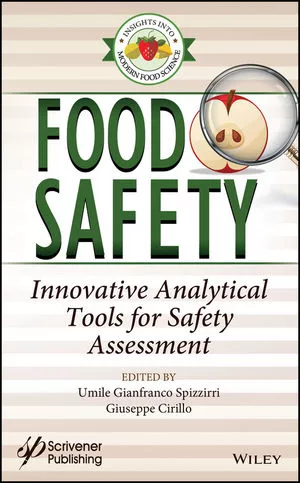
    Food Safety: Innovative Analytical Tools for Safety Assessment

  • 1444333348.jpg

    Handbook of Food Safety Engineering

See More Products

Related Directories

  • North American Chemical Residue Workshop

    NACRW) formerly the Florida Pesticide Residue Workshop conducts an annual meeting for scientists particularly interested in trace level analysis of pesticides, veterinary drug residues, and other chemicals in food, animal feed, and environmental samples. The purpose of the meeting is to provide training, develop and improve technical knowledge, facilitate development and distribution of new analysis methods and techniques, and establish networking to promote professional cooperation between scientists of these interests.
×

Never miss the latest news and trends driving the food safety industry

eNewsletter | Website | eMagazine

JOIN TODAY!
  • RESOURCES
    • Advertise
    • Contact Us
    • Directories
    • Store
    • Want More
  • SIGN UP TODAY
    • Create Account
    • eMagazine
    • eNewsletter
    • Customer Service
    • Manage Preferences
  • SERVICES
    • Marketing Services
    • Reprints
    • Market Research
    • List Rental
    • Survey/Respondent Access
  • STAY CONNECTED
    • LinkedIn
    • Facebook
    • Instagram
    • X (Twitter)
  • PRIVACY
    • PRIVACY POLICY
    • TERMS & CONDITIONS
    • DO NOT SELL MY PERSONAL INFORMATION
    • PRIVACY REQUEST
    • ACCESSIBILITY

Copyright ©2025. All Rights Reserved BNP Media.

Design, CMS, Hosting & Web Development :: ePublishing