Food Safety
search
Ask Food Safety AI
cart
facebook twitter linkedin instagram youtube
  • Sign In
  • Create Account
  • Sign Out
  • My Account
Food Safety
  • NEWS
    • Latest News
    • Sponsored Insights
    • Sponsored White Papers
  • PRODUCTS
  • TOPICS
    • Contamination Control
    • Food Types
    • Management
    • Process Control
    • Regulatory
    • Sanitation
    • Supply Chain
    • Testing and Analysis
  • PODCAST
  • EXCLUSIVES
    • Food Safety Five Newsreel
    • eBooks
    • FSM Distinguished Service Award
    • Interactive Product Spotlights
    • Videos
  • BUYER'S GUIDE
  • MORE
    • NEWSLETTERS >
      • Archive Issues
      • Subscribe to eNews
    • Store
    • ASK FSM AI
  • WEBINARS
  • FOOD SAFETY SUMMIT
  • EMAG
    • eMagazine
    • Archive Issues
    • Editorial Advisory Board
    • Contact
    • Advertise
  • SIGN UP!
Sponsored White Papers

GFSI Certification at Food Manufacturers: SQF and BRC

November 4, 2013

Global Food Safety Initiative (GFSI) certification is growing in importance to food companies, as businesses prepare for many components of the Food Safety Modernization Act. Under the GFSI umbrella, the most popular standards are Safe Quality Food (SQF) and the British Retail Consortium (BRC) Food Standard. Certification to both standards, which offers various levels including food quality as well as safety requirements, requires that companies plan ahead for appropriate time, budget and resources. Two food companies recently certified to GFSI standards have found the process very rewarding—not just because it satisfies the demands of their larger customers for food safety and quality certification, but also because of the business process improvements they’ve achieved as a result.

The world’s largest dry mustard miller G.S. Dunn, which processes mustard out of Hamilton, Ontario, for food companies in 52 countries on six continents, received SQF certification in the summer of 2013. Nancy Post, G.S. Dunn’s director of technical services, who oversaw the year-long process of certification, says to other food companies thinking of doing the same, “Run screaming into the night!…but seriously, make sure you have buy-in from upper management to ensure that the entire SQF code and certification can be implemented. This means group participation from the entire business and adequate resources.”

Post notes that G.S. Dunn’s key customers around the world, especially in the last couple of years, were “directly asking that we get certified to SQF.” The Q in SQF was “hugely important” to the mustard miller, says Post. “The SQF level we chose [Level 3] includes quality parameters that represents key measurable in our product. My own professional background includes several years working in quality management, so I like that part a lot!” G.S. Dunn staff attended sessions at a Food Technology Center to learn the differences between SQF, BRC and FSSC [Food Safety System Certification] “so we could make a wise choice on which standards to follow,” says Post.

At The Original Cakerie (TOC), Canada’s largest privately owned dessert manufacturer that sells almost one-half of their frozen cakes in the U.S., decided to go with the BRC  Food Standard which was originally mostly adopted in England but has since spread globally. TOC, a 500-employee company with facilities in Vancouver, BC and London, Ontario, spent 2012 working towards the attainment of BRC’s highest level, ‘A’ grade. IT Director Eric Murphy says TOC was seeking to as well as to augment their customers’ growth with the certification. “We like that the BRC framework focuses a lot on process, requiring commitment from top to bottom within the organization. I also like the flexibility around training that BRC provides...we can bring the training right into our organization, versus always having to go through outside providers.”

The facilities of both TOC and G.S. Dunn already complied with Hazard Analysis and Critical Control Points (HACCP) certification, and the mustard miller also had ISO 9001:2008 certification. “Having both ISO and HACCP certification was definitely an advantage, says Post at G.S. Dunn, because “SQF is a system that uses some ISO principles, ensuring that our documentation, requirements and quality reviews were compliant with SQF.  On the safety side, SQF also incorporated HACCP principles and assessment, with an extra measure of food safety by ensuring we did a risk analysis for food quality,” identifying Critical Control Points are identified for food safety and Critical Quality Points.

Murphy at TOC agrees, noting that the BRC food standard uses the same framework as HACCP. The dessert manufacturer first certified their larger facility, in Vancouver, followed by the same at their London, Ontario facility which had opened in 2011. At each location, a cross-functional team across all business units, led by their quality assurance (QA) director, QA worked on the certification process.

G.S. Dunn spent 18 months analyzing and revising their procedures—involving hundreds of staff hours and an outside consultant hired for about 30 hours a month—prior to a SQF pre-assessment audit, says Post. Six months after that, their certification audit began with a documentation review (aka “desk audit”), followed 3 weeks later by the facility review—a walkthrough of the mustard processing plant. “We spent tens of thousands of dollars in upgrades to our facility to meet SQF specifications,” says Post, “everything from coating wood surfaces, to setting up a project for validation (time, temperature, etc.) of our steam processing machine, and much more.”

Both companies note that their enterprise resource planning (ERP) business software system played a role in expediting their certification processes. “The SQF certifying body asked directly about our software systems and processes, such as how do we manage inventory, expiration analysis, traceability,” says Post at G.S. Dunn. “It really helped that we use the food industry-specific software of JustFoodERP which has substantial functionality around food safety and quality management, hold reports, certificate of analysis, etc.”

At TOC, employees worked on the integration within shop floor reporting to capture variations and deviations on the Variation form. An event is created to track it within the company’s JustFoodERP system, says Murphy, “so we know exactly when these variations have occurred, by whom, and for which products.” An event is assigned to a supervisor and reviewed. If it requires further investigation, the company has integrated BRC’s Corrective Action Form within their ERP system. “We have a good traceability process—all the way through corrective action,” he notes.

G.S. Dunn displays their SQF certificate in their front lobby and main boardroom; “as a company that truly believes in continuous improvement, we couldn’t be more pleased about implementing a GFSI code,” says Post. That feeling is pervasive at The Original Cakerie, too. “We’re very proud of being BRC certified at both our facilities,” says Murphy.

Heather Angus-Lee writes for IndustryBuilt; JustFoodERP is an IndustryBuilt company. She can be reached at heather.angus-lee@industrybuilt.com.


Author(s): Heather Angus-Lee

Looking for quick answers on food safety topics?
Try Ask FSM, our new smart AI search tool.
Ask FSM →


Share This Story

Recommended Content

JOIN TODAY
to unlock your recommendations.

Already have an account? Sign In

  • people holding baby chicks

    Serovar Differences Matter: Utility of Deep Serotyping in Broiler Production and Processing

    This article discusses the significance of Salmonella in...
    Microbiological Control
    By: Nikki Shariat Ph.D.
  • woman washing hands

    Building a Culture of Hygiene in the Food Processing Plant

    Everyone entering a food processing facility needs to...
    Personal Hygiene/Handwashing
    By: Richard F. Stier, M.S.
  • graphical representation of earth over dirt

    Climate Change and Emerging Risks to Food Safety: Building Climate Resilience

    This article examines the multifaceted threats to food...
    Best Practices
    By: Maria Cristina Tirado Ph.D., D.V.M. and Shamini Albert Raj M.A.
Manage My Account
  • eMagazine Subscription
  • Subscribe to Newsletters
  • Manage My Preferences
  • Website Registration
  • Subscription Customer Service

More Videos

Sponsored Content

Sponsored Content is a special paid section where industry companies provide high quality, objective, non-commercial content around topics of interest to the Food Safety Magazine audience. All Sponsored Content is supplied by the advertising company and any opinions expressed in this article are those of the author and not necessarily reflect the views of Food Safety Magazine or its parent company, BNP Media. Interested in participating in our Sponsored Content section? Contact your local rep!

close
  • Man In Warehouse
    Sponsored byRentokil

    Mitigating Hidden Rodent Risks in Food Facilities

  • an industrial manufacturing or processing facility
    Sponsored bybioMérieux

    Get Ahead of Spoilage in Food Manufacturing with Metagenomics for Preventive Monitoring

  • an automated industrial production line used in a modern food factory
    Sponsored byIFC

    A Formula for Food Processing Pest Management

Popular Stories

lettuce leaves up close

Is Whole Head Lettuce Safer Than Bagged Salad?

Gummy supplements

FDA's Proposed Mandatory GRAS Rule: What Food Safety Professionals Need to Know

listeria

FDA’s Listeria Prevention Public Meeting: Experts Debate Zero Tolerance, Emphasize Environmental Monitoring and Fundamental Controls

allergens ebook

Events

September 1, 2026

Seafood Under the Microscope: FDA HACCP, Pathogen Risk, and Modern Testing Strategies

Live: September 1, 2026 at 2:00 pm EDT: Attend this webinar to learn how environmental monitoring, rapid pathogen detection, and risk-based testing strengthen seafood safety programs.

September 2, 2026

From Crisis to Control: A Listeria Elimination Journey in Food Manufacturing

Live: September 2, 2026 at 2:00 pm EDT: This webinar shares a real-world case study of a food processing facility that solved a persistent Listeria challenge after standard protocols fell short.

September 10, 2026

Stop Rodents in Their Tracks!

Live: September 10, 2026 at 2:00 pm EDT: Attend this webinar to understand rodent behavior and innovative strategies for rodent management.

View All

Products

Global Food Safety Microbial Interventions and Molecular Advancements

Global Food Safety Microbial Interventions and Molecular Advancements

See More Products

Related Articles

  • Terra Tech Subsidiary, Edible Garden, Achieves GFSI Food Safety Certification

    See More
  • SQFI Earns New GFSI Benchmarking Certification

    See More
  • Understanding NSF Certification and How it can Benefit Food Equipment Manufacturers

    Understanding NSF Certification and How it Can Benefit Food Equipment Manufacturers

    See More

Related Products

See More Products
  • 9781138198463.jpg

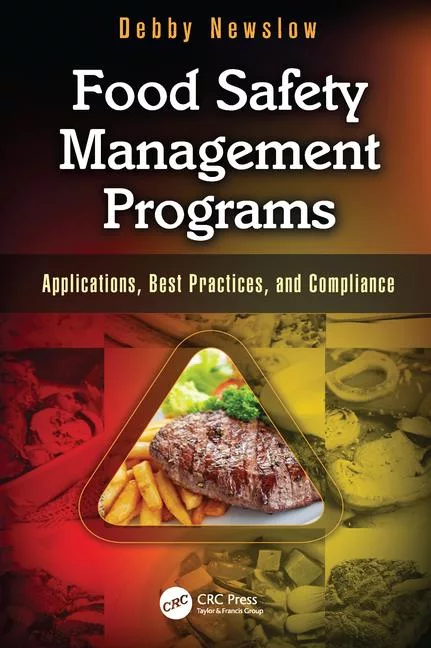
    Food Safety Management Programs: Applications, Best Practices, and Compliance

  • 1119053595.jpg

    Food Safety for the 21st Century: Managing HACCP and Food Safety throughout the Global Supply Chain, 2E

  • 9781498721776.jpg

    Handbook of Food Processing: Food Safety, Quality, and Manufacturing Processes

See More Products

Related Directories

  • Onsite Magnet Certifications Inc.

    Onsite Magnet Certifications Inc. offers annual inspection and audit services for your plant’s Metal Detectors, X-Ray, and Magnetic Separation equipment. As a HACCP Certified technician, I provide a certificate that conforms to HACCP, BRC, SQF, and GFSI food safety requirements upon completion of the audit. With over 25 years of experience in the manufacturing and processing industries, I have a deep understanding of the correct operation of this equipment and the expectations of an auditor.
  • GFSC Group Inc.

    GFSC Group Inc is a software and consulting company that has a staff of experts from the actual food safety arena with expertise in the GFSI and FDA/USDA fields. Our software covers SQF, BRC, and HACCP document control, traceability, supply chain management, sanitation and maintenance, and food safety training.
  • QIMA

    QIMA, with its food certification division, provides comprehensive food safety, quality, and sustainability certification services globally. Specializing in GFSI-recognized certifications (PrimusGFS, GLOBALG.A.P., SQF, BRCGS, IFS), USDA Organic, European Organic, and RSPO standards, we help food producers and processors meet international compliance requirements and access worldwide markets. With a global reach spanning 100+ countries, QIMA serves the consumer products, food, and life sciences industries, supporting more than 30,000 brands, retailers, manufacturers, pharma labs, and food growers.
×

Never miss the latest news and trends driving the food safety industry

Newsletters | Website | eMagazine

JOIN TODAY!
  • RESOURCES
    • Advertise
    • Contact Us
    • Directories
    • Store
    • Want More
  • SIGN UP TODAY
    • Create Account
    • eMagazine
    • Newsletters
    • Customer Service
    • Manage Preferences
  • SERVICES
    • Marketing Services
    • Reprints
    • Market Research
    • List Rental
    • Survey/Respondent Access
  • STAY CONNECTED
    • LinkedIn
    • Facebook
    • Instagram
    • X (Twitter)
  • PRIVACY
    • PRIVACY POLICY
    • TERMS & CONDITIONS
    • DO NOT SELL MY PERSONAL INFORMATION
    • PRIVACY REQUEST
    • ACCESSIBILITY

Copyright ©2026. All Rights Reserved BNP Media, Inc. and BNP Media II, LLC.

Design, CMS, Hosting & Web Development :: ePublishing