Unlike many other foodborne pathogens, Listeria can both survive and grow at refrigeration temperatures. This ability, along with the risk of cross-contamination to other foods and surfaces, contributes to its persistence in food processing environments and makes it a significant concern for food safety.
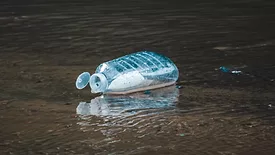
Recent studies have found that microplastics and nanoplastics move upward through the food chain and land in the human gut, and have also demonstrated the ability of the particles to encourage biofilm formation, harbor pathogens, and affect microbial growth in ways that may affect human health.
Companies in the EU now need to submit studies to the European Food Safety Authority to prove that its new food additive, pesticide, or genetically modified organism is safe.