A recent revision to Directive 8080.1 by the U.S. Department of Agriculture’s Food Safety and Inspection Service (USDA’s FSIS) now includes egg products a commodity subject to recall under the Directive, outlining instructions for large-scale recalls and recalls of ingredients regulated by the U.S. Food and Drug Administration (FDA).
A recent study conducted by veterinary and agronomic researchers from Lusófona University in Portugal has provided a new One Health perspective on food safety in ready-to-eat (RTE) produce, with a focus on the challenges related to microbiological contamination in minimally processed fruits and vegetables.
With each passing year, new and emerging technologies and techniques that have promise for advancing food safety are developed and validated. This article summarizes the top food safety innovations of 2023, based on audience interest.
After reassessing the food safety of the popular zero-calorie sweetener erythritol, the European Food Safety Authority (EFSA) has lowered the acceptable daily intake (ADI) for the additive and reported that, for all groups the EU included in the assessment, acute and chronic exposure to erythritol is above the newly set ADI.
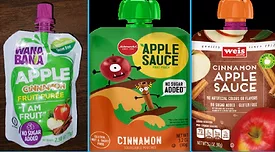
With regard to the recently recalled, lead-contaminated applesauce packages that have caused lead poisoning among dozens of children, Jim Jones, Deputy Commissioner for Human Foods at the U.S. Food and Drug Administration (FDA), recently shared that the agency’s leading theory is economically motivated adulteration of cinnamon used in the products.
Concerns around food safety and scalability have surfaced since the successful launch of cultivated meat products in the U.S. This article summarizes recent regulatory developments that provide insight on how the current U.S. regulatory framework addresses food safety within the cultivated meat space.
Two complimentary studies funded by the Center for Produce Safety (CPS) are using genomic sequencing technology to examine how storage conditions affect microbial growth on pears, with a focus on Listeria monocytogenes.
The European Parliament’s Committee on Fisheries recently held a public hearing to discuss the issue of labeling plant-based imitation fishery products, with some stakeholders likening current labeling practices to food fraud, and others arguing that labeling plant-based foods with words that evoke animal products is helpful to consumers.
SÜDPACK has enhanced its flexible food packaging films for thermoforming applications, such as for fishery products. The new Multifol Extreme combines maximum functionality and lightweight efficiency.
The U.S. Food and Drug Administration (FDA) has provided an update on its completed and ongoing actions to strengthen the safety and resiliency of the nation’s supply of infant formula, including specific actions the agency has taken to meet the recommendations made in FDA’s evaluation of the infant formula crisis response.
 RSS
RSS