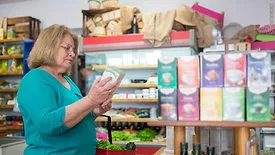
A recent UK-based report from the Chartered Trading Standards Institute (CTSI) warns that the lack of a legal definition for vegan food is potentially putting people with allergies at risk, as well as causing confusion for consumers and businesses.
The U.S. and Canada are melting pots of cultures, and one of the most evident expressions of this diversity can be found in the variety of ethnic foods available in markets. While the influx of these foods has brought new and exciting flavors to North American palates, it has also brought the risk of new microbial hazards.
The Joint Food and Agriculture Organization of the United Nations (FAO)/World Health Organization (WHO) Expert Committee on Food Additives (JECFA) has published the summary of its findings on the food safety aspartame and 15 other flavorings, which was discussed at the 96th meeting of JECFA that took place in Geneva, Switzerland from June 27–July 6, 2023.
However, FDA and industry groups disagree with WHO's determination.
The World Health Organization (WHO) has officially declared popular artificial sweetener aspartame as “possibly carcinogenic to humans," although the acceptable daily intake of 40 milligrams mg/kg of body weight remains unchanged. Additionally, FDA and industry groups disagree with WHO's determination.
Wageningen University and Research (WUR) has announced the launch of its Safe Precision Fermentation (SAFERMENT) project, which is aimed at enhancing the safety of animal-free dairy protein production. The project consortium is still open to additional partners and encourages interested parties to contact WUR.
Following severe flooding that occurred throughout Vermont and New York, the Northeast Center to Advance Food Safety (NECAFS) has compiled a collection of resources to help growers impacted by floodwaters ensure produce safety.
The U.S. Department of Agriculture’s Animal and Plant Health Inspection Service (USDA’s APHIS) has announced 12 awards totaling more than $3.2 million in cooperative agreement funding to create antimicrobial resistance (AMR) dashboards. AMR is a crucial threat to food safety and global public health that is aggravated by the use of antimicrobials in food animal agriculture.
The Dutch government has partnered with the cultivated meat industry to develop a code of practice for the facilitation of taste tests for cell-cultured meat and seafood products prior to receiving market approval.
Following a May 2023 announcement of a new framework for systematic post-market reassessment for chemicals used in foods, the U.S. Food and Drug Administration (FDA) has released a public inventory of certain food ingredients and additives determined to have unsafe uses in food because they are unapproved, as well as lists of select chemicals currently under the agency’s review. FDA also shared insights about the agency’s work to enhance the assessment of ingredients in foods on the market.
 RSS
RSS