The challenge of mitigating E. coli in leafy greens calls for a rigorous, multifaceted approach that includes stringent sanitation practices, facility design optimization, and the use of advanced microbial control methods.
Eagle Product Inspection’s new Short Retracting Nose Reject is a hygienic solution for removing non-conforming products from the line in food processors’ raw applications.
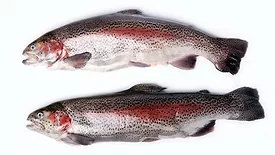
An ongoing project by the Norwegian food research institute Nofima is investigating the efficacy of different treatment baths for Listeria monocytogenes decontamination on fish and fish products.
Treating melons as food as soon as possible—even though they will be peeled—is needed to mitigate the risks associated with the three contamination mechanisms for cantaloupe. Zero risk is impossible, but can industry do better?
XENON’s new stainless steel washdown lamp housing is powered by Intense Pulsed Light (IPL) -based PUREPULSE technology, providing an eco-friendly and effective sanitization solution for food packaging processes.
New artificial nose technology developed by the Norwegian University of Science and Technology (NTNU) could make it possible to reliably detect and identify spoiled and damaged food through smell.
In this episode of Food Safety Matters, we speak to Dr. Carolyn Ross, Professor at Washington State University (WSU) and Director of the WSU Sensory Science Center, about emerging sensory perception technologies and their potential applications for food safety and quality assurance.
Many food manufacturers are already benefiting from deploying x-ray inspection systems to carry out a wide range of quality control and compliance duties and these additional capabilities also should be factored into the equation when considering the cost of an x-ray inspection system.
 RSS
RSS