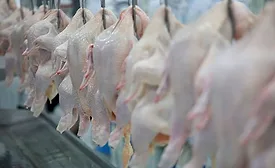
To understand and eventually reduce the risk of salmonellosis from poultry meat, it is necessary to understand the poultry production system, the introduction of the microorganism into the poultry ecosystem (as well as its gastrointestinal tract), the sources of Salmonella during production, subsequently, strategies to control or reduce the risk from this microorganism at both the pre-and post-harvest stages. Part 3 of this article will focus on post-harvest controls during processing to minimize the risk of Salmonella from poultry products.
Researchers from the U.S. Department of Agriculture’s Agricultural Research Service are using a bioplastic coating to naturally shield seeds from Aspergillus, a type of fungi that produces aflatoxin. Exposure to aflatoxins is a food safety issue due to the compound’s carcinogenic and other harmful effects.
The European Food Safety Authority’s European Scientific Network on Microbiological Risk Assessment recently convened for its 22nd meeting to discuss various national efforts related to microbial food safety hazards such as prevalent foodborne pathogens, mycotoxins, antimicrobial resistance (AMR), and other risks.
The Joint FAO/WHO Expert Meeting in Microbial Risk Assessment (JERMA) convened in response to a Codex Alimentarius Committee request to develop microbiological risk assessment models for Listeria monocytogenes, and to provide recommendations to inform possible future revisions to Codex guidelines on hygienic controls for L. monocytogenes.
Researchers have built a new One Health-based risk model for possible human Campylobacter outbreaks that leverages data on weather patterns and the presence of Campylobacter on broiler farms.
After conducting new research on the survival of the COVID-19 virus on food and food packaging, the UK Food Standards Agency (FSA) has determined that, while the likelihood of catching the virus from food varies by surface type, the risk is “very low” overall.
A recent case study from the Sapienza University of Rome examined the surveillance of foodborne pathogens through a One Health lens in Europe, with a specific focus on the One Health European Joint Program (OHEJP) MATRIX Project framework.
A recent study is the first to track foodborne pathogens from specific pigs and their associated pork products at all points in the supply chain, from the farm to retail stores. The antimicrobial resistance (AMR) of the pathogens was also evaluated.
 RSS