CDC has announced that the Escherichia coli outbreak linked to yellow onions distributed by Taylor Farms and served at McDonald’s restaurants to be over, and FDA has closed its investigation. However, the outbreak strain was not confirmed in any product or environmental samples.
The European Food Safety Authority (EFSA) is seeking stakeholder input on a new draft guidance regarding the characterization and risk assessment of microorganisms used in foods.
In today's advanced manufacturing environment, food processing offers a great career and many opportunities for people to experience. So, how can the food industry attract youth to food manufacturing careers?
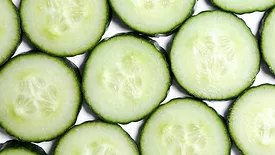
A Salmonella Typhimurium outbreak linked to Mexican-grown cucumbers has caused 68 illnesses and 18 hospitalizations in 19 states. A recall has been initiated by distributor SunFed Produce LLC.
The Dutch National Institute for Public Health and the Environment has proposed a standardized approach for calculating the burden of disease for chemicals in food, calling it “not easy.”
A recent survey of Finnish municipal food inspectors has provided insight into the challenges inspectors face when trying to control food businesses that repeatedly violate food safety regulations, and suggested possible methods for motivating businesses to take corrective actions.
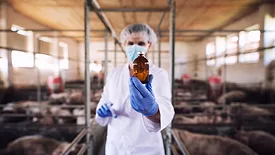
The latest UK-Veterinary Antimicrobial Resistance and Sales Surveillance report shows that levels of antimicrobial resistance (AMR) in pathogens from livestock and poultry are declining, and observes a 10-year-low in the number of antibiotics sold for use in food-producing animals.
The United States Department of Agriculture’s National Institute of Food and Agriculture (USDA-NIFA) is investing $14 million into dozens of projects aimed at advancing food safety research, outreach, and training.
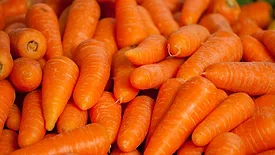
Following a fatal Escherichia coli outbreak linked to organic carrots that has sickened people in multiple U.S. states, the Government of Canada is warning consumers not to eat recalled products distributed by California-based Grimmway Farms.
A multistate outbreak of Shiga toxin-producing Escherichia coli O121:H19 infections linked to organic carrots has sickened 39 people, resulting in 15 hospitalizations and one death.
 RSS
RSS