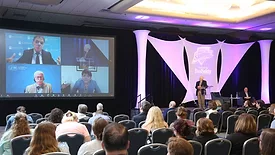
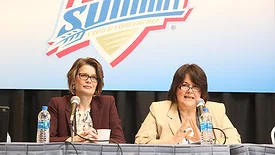
During the Thursday morning Town Hall at the 2022 Food Safety Summit, top food safety regulators from FDA, USDA, CDC, and AFDO discussed initiatives and advances in food traceability, food safety policy, recalls, pathogen monitoring, food safety culture, and a number of other timely areas.
A panel of experts from regulatory, state agriculture, and consumer advocacy groups shared their views on recall modernization and improvement at a Wednesday educational session at the 2022 Food Safety Summit.
A recent study found that food recalls may negatively affect brands that rely on e-commerce more than brick-and-mortar retailers, and that it may be harder to restore consumer confidence for online brands even when voluntarily restorative actions are taken.
The Association of Food and Drug Officials (AFDO) recently released a whitepaper that provides recommendations for recall modernization to the U.S. Food and Drug Administration (FDA) and other stakeholders, based on three years of data collection and analysis.
Food Safety Matters speaks to attorney Shawn Stevens, Founder, and Partner at Food Industry Counsel LLC, about the firm's Food Recall Reporter search tool and how the data can be used for predictive analysis. Mr. Stevens also speaks about upcoming changes to FDA’s enforcement policies.
The U.S. Food and Drug Administration (FDA) is continuing to investigate an outbreak of non-viral hepatitis, but the bottled water company in question, Real Water Inc., refuses to give them company records that are needed.
The U.S. Food and Drug Administration (FDA) recently released a statement saying that its investigation into the 2020 outbreak of Escherichia coli O157:H7 tied to leafy greens found that cattle grazing on lands near leafy greens fields could have increased the risk of product contamination.
The FDA and CDC investigated a multistate outbreak of Eschericia coli O157:H7 infections in fall 2020, and have determined that the outbreak was linked to leafy greens.