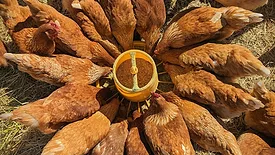
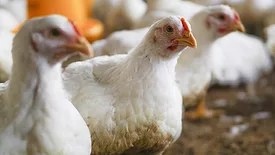
Field studies led by Wageningen University have demonstrated the efficacy of two vaccines in reducing mortality in poultry infected with the Highly Pathogenic Avian Influenza (HPAI) H5N1 virus, although it is too early to draw accurate conclusions about transmission.
Acidification can inactivate Highly Pathogenic Avian Influenza H5N1 (HPAI H5N1), a.k.a. “bird flu,” in milk, according to a UC Davis study. The finding is especially relevant to farmers, who often do not pasteurize waste milk.
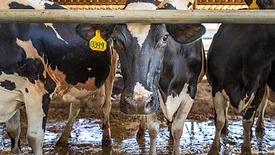
As a result of Nevada state tracing and investigation following positive silo testing results under USDA’s National Milk Testing Strategy, USDA laboratories have confirmed through whole genome sequencing the first detection of a second genotype of Highly Pathogenic Avian Influenza H5N1 (HPAI H5N1) in dairy cattle.
A joint scientific opinion from the European Food Safety Authority (EFSA) and the European Center for Disease Control and Prevention (ECDC) includes recommended strategies for the food animal sector to prevent the spread of avian influenza and its transmission to humans.
Following the deaths of pet cats who ate raw food contaminated with Highly Pathogenic Avian Influenza (HPAI) H5N1, raw pet food manufacturers must now consider the virus as a hazard in their food safety plans, under FDA’s FSMA Preventive Controls for Animal Food rule.
The time is now for food safety professionals to heighten vigilance pertaining the dairy chain and raw milk—before the hypothetical risks of avian influenza H5N1 contamination become a reality. NEHA’s raw milk policy underscores the dangers of raw milk, advocating for policies that prioritize public health.
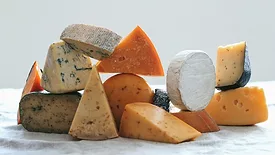
The U.S. Food and Drug Administration (FDA) recently began a national sampling and testing assignment for Highly Pathogenic Avian Influenza H5N1 (HPAI H5N1) in raw cow’s milk cheese.
A house cat in Oregon has died from eating raw cat food contaminated with Highly Pathogenic Avian Influenza H5N1 (HPAI H5N1), and a product recall was initiated. Additionally, cats in California contracted HPAI H5N1 from different raw pet food.
In this episode of Food Safety Matters, we discuss the top food safety stories of 2024 and their implications, including high-profile foodborne illness outbreaks, the ongoing avian flu outbreak in poultry and dairy cattle, FDA’s Human Foods Program restructuring, rising concerns and evolving legislation around food additives and chemical contaminants, and other topics.
In light of the global Highly Pathogenic Avian Influenza H5N1 (HPAI H5N1) outbreak, and considering the virus’ spread from poultry to dairy cows in North America, FAO has published recommendations for monitoring for HPAI H5N1 in cattle.