How is the Revolution in Technology Changing Food Safety?—Part 2
How has adoption of different technologies affected processors' daily food safety operations and improved their food safety outcomes?
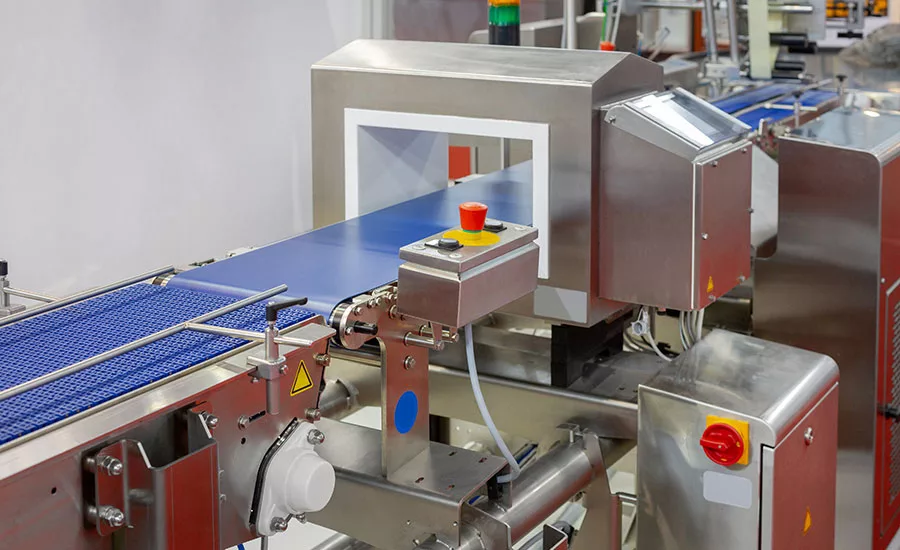
In the June/July Food Safety Insights column,1 we discussed what we heard during our survey earlier this year of approximately 200 food processors from 38 countries and their attitudes and actions toward the adoption of new technologies in food safety. We heard about what technologies they have adopted and what that has meant for their daily operations. In Part 1 of this series, we learned that more than 50 percent of the respondents had indeed adopted new processing technologies, with the most common answers being new metal detection and X-ray technologies for the detection and prevention of contamination by foreign objects.
A smaller (but still significant) number reported adopting new analytical testing technologies. In this column, we will dive further into this second question about adoption of analytical testing technologies, whether for laboratory or in-plant use.
For those in the U.S. and Canada, adoption of new chemical/physical diagnostic tests was the most common answer (Figure 1). The array of testing technologies named was as varied as the types of processing and foods represented, and included UV scanning, portable spectroscopy, equipment for in-plant chemistry testing (including ingredient quality), as well as product parameters such as Brix, oil quality, and other product-specific tests.
Interestingly, many companies in the U.S. and Canada also indicated that they have adopted ATP, or have substantially changed how they are using the technology. I found this curious because, as we have reported in previous Food Safety Insights columns, the use of ATP is fairly widespread in North America. It would seem that candidates for new adoption would be limited. It was clear by the comments, however, that this was not just about adopting ATP as a new test to be used; rather, it indicates a general trend toward a more aggressive approach to environmental monitoring, with a higher level of testing and a focus on ATP as a key tool in that effort.
For example, a quality assurance manager for a baked goods company summarized this as saying, "We have increased our environmental monitoring program for indicator organisms and ATP, and increased our number of sample sites." A plant laboratory manager mentioned, "Our increased use of ATP has permitted massive reductions in standard two-day micro[biological] testing for sanitary cleanliness testing. ATP allows instant feedback to sanitation personnel and reduced need for additional testing when there are site failures."
Several other respondents mentioned similar efforts to adopt rapid tests designed to be used to produce in-plant, rapid environmental monitoring data such as rapid protein tests, rapid allergen tests, rapid pathogen indicator swabs, and a variety of others.
One poultry processor highlighted this view in a description of its environmental monitoring processes and how it relies on speed. The quality assurance/regulatory manager described how the company had previously used aerobic plate count (APC) data to make plant-level decisions, but it wanted to make adjustments to incorporate faster tests.
Looking for quick answers on food safety topics?
Try Ask FSM, our new smart AI search tool.
Ask FSM →
"We don't have a true laboratory in any of our plants, so we were having to send our samples out for a two-day analysis turnaround time," the manager explained, and added that needing to wait for results from the laboratory was adding delays and additional risks. "We developed a program that incorporates ATP tests and eight-hour rapid indicator test swabs, along with pre-prepared media plates that we read in-plant with an automatic plate reader, in addition to the APC tests that we send out to the lab. With the correlations that we have, we can make fast decisions from the instantaneous data we get from ATP, the eight-hour micro[biological] data that we get from the rapid test swabs, and additional confirmation from the plates and plate reader with next-day results. This has enabled us to save time while conducting more testing—including tests collected during the course of production, which was not practical before. This has made a huge difference in the way we're able to track what's going on."
None of these comments should be surprising. In our three-part Food Safety Insights series on rapid microbiological methods earlier this year,2,3,4 it was clear that demand for microbiological test methods was evolving into two tracks: one for analytical tests designed for commercial laboratory use that would focus on cost efficiency and automation (for labor efficiency), and a second track for tests designed for in-plant use that are easy to use, have a level of accuracy that is "good enough," and are very fast to enable rapid day-to-day decision-making. It is the demand for this second track of rapid tests that we are seeing in these current comments about testing technology.
People are not indicating a need for tests with high levels of sensitivity in terms of detection level, specificity, and selectivity, but are looking for tests that are:
- Accurate enough for plant-level decision-making
- Fast enough so that these decisions can be made in real time
- Fast enough such that a higher number of tests can be conducted for better coverage
- Fast enough that tests and re-tests can be conducted quickly to aid in decision-making.
The example of the need for allergen detection tests that are fast enough to measure the effective cleaning of a line prior to a switchover is instructive. The tests need to be accurate enough to minimize the potential for allergen cross-contamination with the next product due on that line, but also fast enough so that tests and re-tests can be conducted without undue delays in production during the switchover process. They must also be sufficiently inexpensive so that multiple tests can be conducted to have a statistically valid number of tests to assure coverage, but without the conflict of undue cost pressure potentially reducing the test volumes.
In Part 3 of this series, to be published in the October/November issue, we will hear more from food professionals outside of North America. We will also hear which problems the survey participants thought could best be solved through the introduction of new technologies, and which already available technologies they rank as having been most impactful on food safety in general.
References
- Ferguson, B. "How is the Revolution in Technology Changing Food Safety?" Food Safety Magazine June/July 2024. https://www.food-safety.com/articles/9589-how-is-the-revolution-in-technology-changing-food-safety.
- Ferguson, B. "Rapid Testing Methods—Still a Necessary Part of Food Safety?" Food Safety Magazine December 2023/January 2024. https://www.food-safety.com/articles/9108-rapid-testing-methodsstill-a-necessary-part-of-food-safety.
- Ferguson, B. "Rapid Testing Methods—Processor Preferences." Food Safety Magazine February/March 2024. https://www.food-safety.com/articles/9248-rapid-testing-methodsprocessor-preferences.
- Ferguson. B. "Rapid Testing Methods—The Future." Food Safety Magazine April/May 2024. https://www.food-safety.com/articles/9398-rapid-testing-methodsthe-future.
Bob Ferguson is President of Strategic Consulting Inc. and can be reached at bobferguson9806@gmail.com or on X/Twitter at @SCI_Ferguson.