Food Safety
search
Ask Food Safety AI
cart
facebook twitter linkedin instagram youtube
  • Sign In
  • Create Account
  • Sign Out
  • My Account
Food Safety
  • NEWS
    • Latest News
    • White Papers
  • PRODUCTS
  • TOPICS
    • Contamination Control
    • Food Types
    • Management
    • Process Control
    • Regulatory
    • Sanitation
    • Supply Chain
    • Testing and Analysis
  • PODCAST
  • EXCLUSIVES
    • Food Safety Five Newsreel
    • eBooks
    • FSM Distinguished Service Award
    • Interactive Product Spotlights
    • Videos
  • BUYER'S GUIDE
  • MORE
    • NEWSLETTERS >
      • Archive Issues
      • Subscribe to eNews
    • Store
    • Sponsor Insights
    • ASK FSM AI
  • WEBINARS
  • FOOD SAFETY SUMMIT
  • EMAG
    • eMagazine
    • Archive Issues
    • Editorial Advisory Board
    • Contact
    • Advertise
  • SIGN UP!
ProductsFood TypeRegulatoryMeat/PoultryInspection

BIZTRACKS

Safe Food Coalition Opposes Bills That Would Deregulate Sales of State-Inspected Meat
By Food Safety Magazine Editorial Team
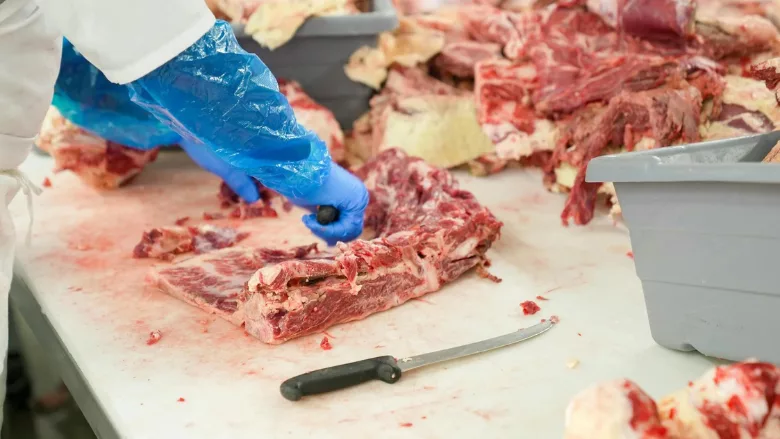
commercial meat butchering

Image credit: Mark Stebnicki via Pexels

April 19, 2024

In a letter addressed to key U.S. congressional leaders, the Safe Food Coalition (SFC), comprising a variety of food industry stakeholder groups and consumer protection organizations, expressed its opposition to pending federal legislation that would lift prohibitions on the interstate sale of meat and poultry from state-inspected facilities and allow commercial sales from uninspected “custom” slaughter facilities.

Specifically, SFC criticizes the Direct Interstate Retail Exemption for Certain Transactions Act of 2023 (the DIRECT Act), the Processing Revival and Intrastate Meat Exemption Act (the PRIME Act), and the New Markets for State-Inspected Meat and Poultry Act of 2023 (New Markets Act). The letter is addressed to House Speaker Mike Johnson, Senate Majority Leader Charles Schumer, House Minority Leader Hakeem Jeffries, and Senate Minority Leader Mitch McConnell.

The letter calls the three pieces of legislation “efforts that would compromise established food safety standards for consumers in exchange for speculative, thinly supported benefits,” and recommends that Congress explore more meaningful interventions to support smaller meat and poultry processors, such as reforms to U.S. Department of Agriculture (USDA) overtime inspection fees, which disproportionately affect smaller firms. If passed:

  • The DIRECT Act (H.R. 2817) would amend the Federal Meat Inspection Act, 21 U.S.C. 661, and the Poultry Products Inspection Act, 21 U.S.C. 454, to allow establishments and retailers to “sell over the internet and ship by carrier in commerce” state-inspected meat and poultry, so long as the product “is shipped directly to household consumers and in normal retail quantities”
  • The New Markets Act (S. 846) would allow state-inspected meat and poultry processors to sell across state lines by whatever means they prefer
  • The PRIME Act would allow meat and poultry from an uninspected “custom slaughter facility” to be sold to consumers at restaurants, hotels, boarding houses, grocery stores, or other establishments located within the state’s borders.

SFC believes that the DIRECT Act and the New Markets Act “present a dramatic overhaul of the nation’s food safety system, potentially allowing consumers to buy state-inspected meat and poultry on sites like Amazon.com, without even knowing it.” Regarding the PRIME Act, the group underlines that there is no size limitation on the facilities that can take advantage of the exemption, nor any prescriptions for states on how they should regulate “custom” establishments before their products are released to market.

In the letter, SFC suggests that, before moving to deregulate sales of state-inspected meat processors, Congress should examine whether such legislation would create unfair competition for small and very small processors who have invested in meeting federal inspection requirements. Additionally, SFC recommends that Congress examine whether reforming laws that disproportionately burden smaller processors with user fee payments would better promote the stated objectives of recent deregulation proposals. The group believes that efforts to further expand interstate shipment of state-inspected meat and poultry products are most appropriately channeled towards improving the existing Cooperative Interstate Shipment (CIS) program.

The letter was signed by Barbara Kowalcyk, Ph.D., Faculty at George Washington University; the Center for Food Safety, the Center for Science in the Public Interest, the Consumer Federation of America, Consumer Reports, Food and Water Watch, the National Consumers League, and Stop Foodborne Illness.

Looking for quick answers on food safety topics?
Try Ask FSM, our new smart AI search tool.
Ask FSM →


KEYWORDS: Congress legislation Safe Food Coaliation

Share This Story

Fsm purple logo 200x200

The Food Safety Magazine editorial team comprises Bailee Henderson, Digital Editor ✉ and Adrienne Blume, M.A., Editorial Director.

Recommended Content

JOIN TODAY
to unlock your recommendations.

Already have an account? Sign In

  • people holding baby chicks

    Serovar Differences Matter: Utility of Deep Serotyping in Broiler Production and Processing

    This article discusses the significance of Salmonella in...
    Meat/Poultry
    By: Nikki Shariat Ph.D.
  • woman washing hands

    Building a Culture of Hygiene in the Food Processing Plant

    Everyone entering a food processing facility needs to...
    Facilities
    By: Richard F. Stier, M.S.
  • graphical representation of earth over dirt

    Climate Change and Emerging Risks to Food Safety: Building Climate Resilience

    This article examines the multifaceted threats to food...
    Contamination Control
    By: Maria Cristina Tirado Ph.D., D.V.M. and Shamini Albert Raj M.A.
Manage My Account
  • eMagazine Subscription
  • Subscribe to Newsletters
  • Manage My Preferences
  • Website Registration
  • Subscription Customer Service

More Videos

Sponsored Content

Sponsored Content is a special paid section where industry companies provide high quality, objective, non-commercial content around topics of interest to the Food Safety Magazine audience. All Sponsored Content is supplied by the advertising company and any opinions expressed in this article are those of the author and not necessarily reflect the views of Food Safety Magazine or its parent company, BNP Media. Interested in participating in our Sponsored Content section? Contact your local rep!

close
  • NEVIFIT 3 Compartment BPA-FREE
    Sponsored byCorbion

    The Risks of Ready-to-Eat: Five Ways to Protect Today's Prepared Meals

  • a group of workers in a food production facility
    Sponsored bySkillUp by Registrar Corp

    How to Build a Better Training Program: Data and Insights from the Global Food Safety Training Survey

  • the use of dual-energy X-ray food inspection technology to identify foreign contaminants.
    Sponsored byEagle by METTLER TOLEDO

    Precision Inspection Starts with the Right X-ray Detector

Popular Stories

green powder/moringa in wooden mortar

FDA Opens Third Salmonella–Moringa Outbreak Investigation of the Year

FoodSafetyMattersFinal-900x550-(002).jpg

Ep. 218. Dr. Brady Carter: Water Activity, Shelf-Life Validation, and Food Safety Controls

fermented meat

Study is First to Analyze Trends in Foodborne Illness Outbreaks Linked to Non-Dairy Fermented Products

a practical guide to spoilage investigation webinar

Events

June 10, 2026

A Practical Guide to Spoilage Investigation and Prevention

Live: June 10, 2026 at 11:00 am EDT: Join this webinar to learn how to identify spoilage root causes, reduce risk, and apply data-driven strategies for prevention.

June 16, 2026

Sustainable Food Contact Materials: Where Regulation Meets Analytical Testing

Live: June 16, 2026 at 11:00 am EDT: This webinar explores how sustainability regulations are changing food contact material requirements, including packaging compliance, unintended substances, and per- and polyfluoroalkyl substances.

June 17, 2026

Living HACCP: Practical Steps for Implementation

Live: June 17, 2026, at 12:00 pm EDT: From this webinar, attendees will understand how social norms shape the way hazards are understood, how decisions are made, and how well risks are understood and acted on across companies.

View All

Products

Global Food Safety Microbial Interventions and Molecular Advancements

Global Food Safety Microbial Interventions and Molecular Advancements

See More Products

Related Articles

  • US Capitol building

    Second Bill Introduced to Weaken FSMA 204; Safe Food Coalition Voices Opposition

    See More
  • typewriter and letter

    CBA, Safe Food Coalition, and AFDO Communicate with FDA About FSMA Inspection Frequency Mandates

    See More
  • view of US capitol building from national mall

    Bill Aims to Create New Federal Food Administration That Would Take FDA’s Food Responsibilities

    See More

Related Products

See More Products
  • food-safety-making.jpg

    Food Safety: Making Foods Safe and Free From Pathogens

  • 9781498721776.jpg

    Handbook of Food Processing: Food Safety, Quality, and Manufacturing Processes

  • 1444333348.jpg

    Handbook of Food Safety Engineering

See More Products
×

Never miss the latest news and trends driving the food safety industry

Newsletters | Website | eMagazine

JOIN TODAY!
  • RESOURCES
    • Advertise
    • Contact Us
    • Directories
    • Store
    • Want More
  • SIGN UP TODAY
    • Create Account
    • eMagazine
    • Newsletters
    • Customer Service
    • Manage Preferences
  • SERVICES
    • Marketing Services
    • Reprints
    • Market Research
    • List Rental
    • Survey/Respondent Access
  • STAY CONNECTED
    • LinkedIn
    • Facebook
    • Instagram
    • X (Twitter)
  • PRIVACY
    • PRIVACY POLICY
    • TERMS & CONDITIONS
    • DO NOT SELL MY PERSONAL INFORMATION
    • PRIVACY REQUEST
    • ACCESSIBILITY

Copyright ©2026. All Rights Reserved BNP Media, Inc. and BNP Media II, LLC.

Design, CMS, Hosting & Web Development :: ePublishing