Packaging
The Status of EU Regulations on Food Contact Materials
Member States clarify their own rules for food contact materials as they await harmonization
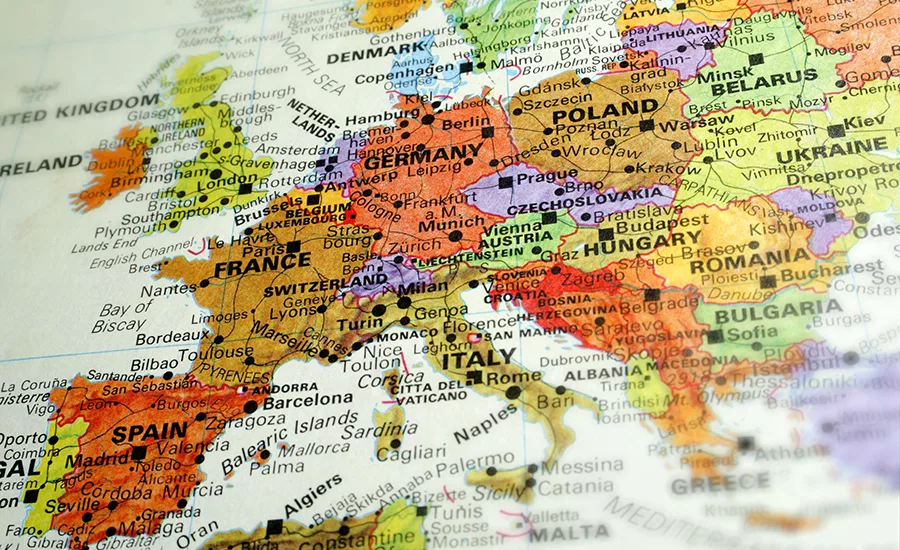
The European Union (EU) is currently evaluating its legislation on food contact materials (FCMs). So far, this process has identified some potential concerns due to the lack of harmonized regulations at the EU level for many types of FCMs. Nonetheless, the European Commission (EC) recently extended the timeline for finalizing any proposals to revise FCM legislation to the fourth quarter of 2022. Due to the delay in completing this process, Germany, which had previously paused in its development of its own legislation to regulate FCMs, is now once again moving forward on its own. Additionally, Switzerland, while not an EU member, has made recent updates to its FCM regulations.
We’ll start with a discussion of the status of EU’s review of its FCM legislation and the steps taken to get there and then look at recent updates to national FCM legislation, especially those in Germany and Switzerland.
In November 2017, the EC published a road map to assess the EU’s approach to regulating FCMs. The intention was to evaluate existing EU legislation on FCMs and the situation concerning materials subject to national legislation because EU measures did not exist. Among other things, the road map included an annex summarizing basic problems related to FCMs, why the problems exist, policy objectives, tools, and anticipated results. One of the basic problems listed in the annex is lack of efficient Member State enforcement at the technical level.
In 2019, the EC launched a public consultation as part of the FCM legislation review to assess if, and to what extent, the current EU legislative framework for FCMs accomplishes its intended purpose and to identify any unexpected issues with the current legislation. The consultation announcement included a link to questionnaires, one for consumers and another for stakeholders.
The questions for consumers concerned their opinions on the safety of different types of FCMs and their understanding of symbols and instructions on FCMs, such as storage containers, plastic wrap, and food bags. The more extensive questionnaire for stakeholders included questions about the effectiveness of current legislation, including the Framework Regulation (EC) No. 1935/2004, the Good Manufacturing Practices Regulation (EC) No. 2023/2006, the Plastics Regulation (EU) No. 10/2011, and questions about the safety of FCMs not subject to legislation harmonized at the EU level as well as issues of noncompliance with current legislation.
More recently, on December 18, 2020, the EC opened a consultation on its inception impact assessment for the ongoing evaluation and revision of EU legislation on FCMs. This assessment, which took into account feedback that the EC had collected up to that point, also mentioned the EU’s Farm to Fork Strategy. In particular, that strategy “commits to revise the FCM legislation in order to improve food safety and public health (in particular, in reducing the use of hazardous chemicals); support the use of innovative and sustainable packaging solutions using environmentally friendly, reusable, and recyclable materials; and contribute to food waste reduction.”
The overall objective of the new initiative is “to build a comprehensive, future-proof, and enforceable regulatory system for FCMs at EU level that fully ensures food safety and public health, guarantees effective functioning of the internal market, and promotes sustainability.” The assessment identified eight fundamental issues with current FCM legislation.
Looking for quick answers on food safety topics?
Try Ask FSM, our new smart AI search tool.
Ask FSM →
These include concern that the absence of specific EU rules for most sectors other than plastics has resulted in a lack of a defined level of safety and that the use of positive lists of starting substances and compositional requirements for plastic FCMs has led to extremely complex technical rules, practical problems in implementation and management, and excessive burdens. Other concerns include poor exchange of information in the supply chain and generally poor enforcement of rules on FCMs, in addition to lack of prioritization of hazardous substances.
The inception impact assessment provided possible measures to ensure the safety and sustainability of the final FCM. These are summarized below.
Shifting the focus onto final materials: New EU-specific rules would refocus on the safety of the final material and/or combinations of materials, addressing their full characteristics and therefore all substances that may potentially migrate into food, instead of only starting substances used in the manufacture of FCMs.
Prioritizing the assessment and management of substances: While the focus would be on final materials, assessment of individual substances or groups of intentionally and unintentionally added substances would remain a key component of the overall safety evaluation and risk management outcomes. This would involve a tiered approach to prioritize regulation of substances. Also, a greater emphasis would be put on protecting specific groups of the population (e.g., pregnant women and children), and potential synergistic effects of chemicals will be considered in safety assessments.
Supporting safer and more sustainable alternatives: The EC would introduce specific rules to ensure that FCMs manufactured from potentially more sustainable sources and methods (i.e., those using plant or bio-based technology) are subject to dedicated and clear rules on safety to incentivize their use. The EC would also prioritize and support all forms of safe reuse and recycling.
Improving quality and accessibility of supply chain information: The EC would introduce clear and consistent rules on data requirements and information transfer throughout the supply chain, including a Declaration of Compliance for all FCMs.
System for ensuring compliance of final FCMs: As an alternative to a system where compliance checks are performed solely by the Member States’ competent authorities, the initiative will look at the possibility of using of delegated bodies and/or notified bodies tasked with conformity assessment.
The impact assessment offers two options:
- Option 1: Use the current regulatory framework [with Regulation (EC) No. 1935/2004 as a cornerstone] or
- Option 2: Develop a new regulatory framework, replacing the current regulation.
These options were further evaluated during the impact assessment, using the baseline situation1 as a benchmark. The consultation was open until January 29, 2021. There is general agreement that FCM legislation needs to be harmonized at the EU level, including among Member States. Expanding on its view that Option 1 is preferable, the Danish Agriculture & Food Council stated in its comments that there is a need for clear rules that “are enforceable and that are being enforced throughout the EU.” The council added that harmonized rules “will make it easier for companies to ensure compliance, and standardized documentation will reduce transaction costs and heighten the protection of citizens.”
In the absence of specific EU measures, EU Member States may maintain or adopt their own national provisions on FCMs in accordance with Article 6 of Regulation No. 1935/2004. These may differ from one Member State to another, but the principle of mutual recognition allows FCMs to be placed on the market in an EU Member State when first lawfully manufactured or marketed in another Member State.
As mentioned above, when the EU review of FCM legislation was originally announced and scheduled to be completed by 2019, some Member States paused work on national FCM legislation. However, after the timeline for completing the review was extended, some of those Member States resumed work on national FCM legislation. Some of their recent activities are summarized below.
Germany
The German Federal Institute for Risk Assessment, or Bundesinstitut für Risikobewertung (BfR), has issued food contact recommendations since 1958, and while they are not legally binding, they are respected by industry as if they were law not only in Germany but also throughout the EU. These recommendations cover only substances for which no harmonized EU regulations exist. Furthermore, they are based on the tenets of European law, and because BfR’s objective is that they represent current scientific knowledge, they are continually modified.
In February 2020, BfR published several updates to its food contact recommendations. These included in BfR Recommendation XXXVI (Paper and Board for Food Contact) the addition of substances to the lists of permitted slimicides, preservatives, and refining and coating agents, and new migration limits for slimicides and aluminum. Recommendations XXXVI/1 (Cooking Paper, Hot Filter Papers, and Filter Layers) and XXXVI/2 (Paper and Paperboard for Baking Purposes) were also updated to include new restrictions on the migration of aluminum into food and to expand permitted substances in categories such as antimicrobial agents and preservatives.
BfR revisions impacting plastic FCMs included updates to the list of catalyst residues for polypropylene in Recommendation VII and catalyst residues for polyethylene in Recommendation III. Also, the table of substances for preparations of colorants for materials other than plastics was deleted in Recommendation IX (Colorants for Plastics and other Polymers Used in Commodities). In Recommendation XIV (Polymer Dispersions), the list of monomers that may be used for polymer dispersions was expanded to include not only monomers listed in the Plastics Regulation, (EU) No. 10/2011, but also other starting substances. Other updates impacted silicones, waxes, absorber pads based on cellulosic fiber, and temperature-resistant polymer coating systems.
More recently, on August 17, 2020, German government authorities notified the European Commission concerning the draft legislation titled “Twenty-second Ordinance amending the Consumer Goods Ordinance,” which deals with the use of recycled paper in food packaging that may contain residual mineral oil aromatic hydrocarbons (MOAH). This was one of the ordinances that Germany suspended work on when the EC announced in November 2016 that it planned to develop a harmonized measure on printed FCMs. However, due to delays in the EC’s work, Germany has proceeded anew with its efforts on this ordinance.
The updated version requires the use of a functional barrier in paper, paperboard, or cardboard FCMs containing recycled paper to prevent the transfer of MOAH to food. A transfer is deemed not to take place if it can be demonstrated that the following are not exceeded: a detection limit of 0.5 mg for the sum of MOAH/kg of food or a detection limit of 0.15 mg for the sum of MOAH/kg of food simulant.
The draft ordinance also contains requirements regarding supporting documentation that must be kept on file by the manufacturer or distributor of the FCM, as well as a requirement that the food business operator demonstrate that they are in compliance with their obligations pursuant to the draft ordinance.
During the standstill period, the EC and Spain submitted comments, while the Netherlands submitted a detailed opinion. Originally, the standstill was scheduled to end November 18, 2020, but was extended to February 18, 2021, due to the opinion submitted by the Netherlands.
Spain pointed out in its comments that the ordinance lacks a mutual-recognition clause. Among the comments by the EC was a request to see supporting scientific data showing that a functional barrier in FCMs made of recycled paper is effective in preventing exposure to MOAH in the context of potentially wider sources of exposure. The EC also suggested that specific types of barrier materials to be used in FCMs made of recycled paper be identified in the ordinance. The Netherlands maintained that the functional barrier requirement for FCMs made of recycled paper is likely to be a barrier to free movement of goods on the internal market and doubts that the draft ordinance is appropriate for achieving the objective of protecting consumer health.
Switzerland
As I mentioned in my column in the February/March 2021 issue of Food Safety Magazine, Switzerland enacted an ordinance several years ago regulating food packaging printing inks, which has to some extent become a de facto standard for the evaluation of printing inks in the European Union (even though Switzerland is not a member of the EU). Swiss rules on food packaging printing inks are found in the country’s Ordinance on Materials and Articles (817.023.21), which establishes certain requirements for FCMs.
An updated version of the Swiss ordinance was published December 1, 2019. The ordinance is accompanied by several annexes, consisting of “positive lists” of permitted substances for different uses, including plastics, cellulose films, ceramics and glass, silicone, and printing inks. The Swiss positive list of substances for use in the manufacture of packaging inks (Annex 10 of the ordinance) was updated in 2020, and the new list became effective on December 1, 2020. However, noting that it was not possible to find replacements for four substances that should be banned as of December 2020, the Swiss Federal Food Safety and Veterinary Office announced that those substances [alpha-chloro-toluene, 3-chloro-propene, hydrazine, and tris(2,3-epoxypropyl)isocyanurate] may be used at a maximum level in the finished printing ink of 1 mg/kg until November 2022.
Conclusion
With the consultation period on the impact assessment completed, the EC is continuing to develop the impact assessment and setting out policy options in more detail. At this point, the EC is estimating that the impact assessment work and adoption of new legislation will be completed by the end of 2022.2 Until legislation for all FCMs is harmonized within the EU, it is important to keep up to date on national legislation concerning FCMs.
References
- The impact assessment describes the baseline situation as “the continuation of the current implementation of the existing rules, mainly focused on plastic FCMs, recycled plastic FCMs, ceramic materials, and to a lesser extent regenerated cellulose film and active and intelligent materials. Other materials would generally continue to be subject to national rules, supra-national standards or industry guidance.”
- A presentation by the EC given at a January 20, 2021, webinar on the evaluation and revision of the EU rules on FCMs is available at https://ec.europa.eu/food/sites/food/files/safety/docs/cs_fcm_eval-workshop_20210120_pres.pdf.
George G. Misko, Esq., is a partner in the Washington, DC, office of Keller and Heckman LLP.
This article was originally published in the April/May 2021 issue of Food Safety Magazine.