Food Safety
search
Ask Food Safety AI
cart
facebook twitter linkedin
  • Sign In
  • Create Account
  • Sign Out
  • My Account
Food Safety
  • NEWS
    • Latest News
    • White Papers
  • PRODUCTS
  • TOPICS
    • Contamination Control
    • Food Types
    • Management
    • Process Control
    • Regulatory
    • Sanitation
    • Supply Chain
    • Testing and Analysis
  • PODCAST
  • EXCLUSIVES
    • Food Safety Five Newsreel
    • eBooks
    • FSM Distinguished Service Award
    • Interactive Product Spotlights
    • Videos
  • BUYER'S GUIDE
  • MORE
    • ENEWSLETTER >
      • Archive Issues
      • Subscribe to eNews
    • Store
    • Sponsor Insights
    • ASK FSM AI
  • WEBINARS
  • FOOD SAFETY SUMMIT
  • EMAG
    • eMagazine
    • Archive Issues
    • Editorial Advisory Board
    • Contact
    • Advertise
  • SIGN UP!
News

Food Standards Agency Survey Explores How Consumers Perceive Food-Related Risks

Campylobacter
February 18, 2021

The Food Standards Agency recently released the results of a survey of 1,194 participants, originally surveyed during March 2017. The intent of the survey was to measure consumer risk perception as to 17 different food risks, including norovirus, Listeria monocytogenes, Escherichia coli, Campylobacter and other pathogens. 

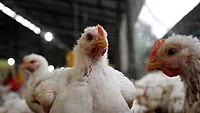
The survey found that there is a low awareness of Campylobacter, even though its one of the main causes of food poisoning in the U.K; there are approximately 280,000 cases of it per year. 

Respondents considered as part of the survey were asked to rate the knowledge and concern that they felt towards seventeen different food risks. The rating scale was between 0 and 10. For the "knowledge" variable, a rating of 0 indicated "I don’t know anything at all about this," while a rating of 10 indicated "I know a lot about this." 

For the "concern" variable, a rating of 0 indicated "I am not at all concerned," and a rating of 10 indicated "I am extremely concerned."

Respondents were also asked about whether they, a member of their household, or another family member had an allergy or food intolerance. The reasoning for this was to enable comparative analysis of whether there were differences in risk perception between respondents that had experience of these conditions, and those who did not.

Respondents did feel that they were more knowledgeable about risks such as food allergens and intolerance. Salmonella scored highly on both knowledge and concern, with respondents giving an average rating of 5.7. For other food risks, the average score was below 5.0. Respondents claimed that their knowledge of Salmonella was higher than their knowledge of generic food poisoning, surprisingly, and chemicals in food scored higher for both knowledge and concern, versus for specific channels. 

The survey concluded that although generally consumers tend to be more knowledgeable about food allergens and intolerances, Campylobacter is a notable case where there is relatively low awareness. It also showed that respondents were more concerned about food risks that occur naturally, and that they perceived generic food poisoning and norovirus as risks that would have a short-term impact. 

Looking for quick answers on food safety topics?
Try Ask FSM, our new smart AI search tool.
Ask FSM →

Read the full survey results here. 


Source: Food Safety News

KEYWORDS: Campylobacter Food Standards Agency

Share This Story

Recommended Content

JOIN TODAY
to unlock your recommendations.

Already have an account? Sign In

  • people holding baby chicks

    Serovar Differences Matter: Utility of Deep Serotyping in Broiler Production and Processing

    This article discusses the significance of Salmonella in...
    Meat/Poultry
    By: Nikki Shariat Ph.D.
  • woman washing hands

    Building a Culture of Hygiene in the Food Processing Plant

    Everyone entering a food processing facility needs to...
    Management
    By: Richard F. Stier, M.S.
  • graphical representation of earth over dirt

    Climate Change and Emerging Risks to Food Safety: Building Climate Resilience

    This article examines the multifaceted threats to food...
    Risk Assessment
    By: Maria Cristina Tirado Ph.D., D.V.M. and Shamini Albert Raj M.A.
Manage My Account
  • eMagazine Subscription
  • Subscribe to eNewsletter
  • Manage My Preferences
  • Website Registration
  • Subscription Customer Service

More Videos

Sponsored Content

Sponsored Content is a special paid section where industry companies provide high quality, objective, non-commercial content around topics of interest to the Food Safety Magazine audience. All Sponsored Content is supplied by the advertising company and any opinions expressed in this article are those of the author and not necessarily reflect the views of Food Safety Magazine or its parent company, BNP Media. Interested in participating in our Sponsored Content section? Contact your local rep!

close
  • Salmonella bacteria
    Sponsored byThermoFisher

    Food Microbiology Testing Methods: Salmonella species

  • a diagram explaining indicator organisms
    Sponsored byHygiena

    How Proactive Listeria Testing Helps Prevent Six- and Seven-Figure Recalls

  • woman grocery shopping
    Sponsored byCorbion

    Designing Safety Into Every Bite: Proactive Risk Mitigation for Refrigerated Foods

Popular Stories

NRTE breaded stuffed chicken

USDA Indefinitely Delays Enforcement of Salmonella as Adulterant in Raw Breaded, Stuffed Chicken

digital map of europe

EU Publishes Food Fraud Tool Mapping Thousands of Cases Since 2016

non-conforming product

How to Handle Non-Conforming Product

Events

December 11, 2025

How to Develop and Implement an Effective Food Defense Strategy

Live: December 11, 2025 at 2:00 pm EDT: From this webinar, attendees will learn common areas where companies encounter challenges in their food defense strategies and how to address them.

May 11, 2026

The Food Safety Summit

Stay informed on the latest food safety trends, innovations, emerging challenges, and expert analysis. Leave the Summit with actionable insights ready to drive measurable improvements in your organization. Do not miss this opportunity to learn from experts about contamination control, food safety culture, regulations, sanitation, supply chain traceability, and so much more.

View All

Products

Global Food Safety Microbial Interventions and Molecular Advancements

Global Food Safety Microbial Interventions and Molecular Advancements

See More Products

Related Articles

  • New Survey Reveals How Food Safety Educators Reach Consumers

    See More
  • pesticides, a cow, and plastic bottles

    FAO Explores Food Safety Risks of Pesticides, Veterinary Drugs, Microplastics on Gut Microbiome

    See More
  • magnifying glass hovering over europe on globe

    EU Consumer Survey Shows Increased Awareness of Food Safety Systems, Risks

    See More

Related Products

See More Products
  • 9781138070912.jpg

    Trends in Food Safety and Protection

  • 1119053595.jpg

    Food Safety for the 21st Century: Managing HACCP and Food Safety throughout the Global Supply Chain, 2E

  • 9781498721776.jpg

    Handbook of Food Processing: Food Safety, Quality, and Manufacturing Processes

See More Products

Related Directories

  • Gold Standard Diagnostics

    Gold Standard Diagnostics develops and markets rapid test kits and analyzers for a wide range of food contaminants including: allergens, pathogens, patulin and mycotoxins, glyphosate and pesticides, VDRs, GMOs and more. Get accurate results in minutes on-site with Gold Standard Diagnostics test kits.
  • FoodReady

    FoodReady offers complete Traceability, Food Safety & Quality, and Supply Chain software to digitize everything related to quality, food safety, sanitation, and traceability. FoodReady also offers complete consulting services for GFSI audit-preparation, HACCP consulting and development, process authority, FDA consulting, USDA consulting, and master sanitation consulting services from a team of longtime auditors, former Directors of Quality at the largest food companies.
  • Michigan State University Online Food Safety Program

    MSU's Online Food Safety program strives to educate professionals on how to make global food systems safe. The program consists of a master’s degree and graduate certificate, both entirely online. Each program will provide students with applicable knowledge to navigate the ever-changing concerns surrounding food safety, food protection, and public health.
×

Never miss the latest news and trends driving the food safety industry

eNewsletter | Website | eMagazine

JOIN TODAY!
  • RESOURCES
    • Advertise
    • Contact Us
    • Directories
    • Store
    • Want More
  • SIGN UP TODAY
    • Create Account
    • eMagazine
    • eNewsletter
    • Customer Service
    • Manage Preferences
  • SERVICES
    • Marketing Services
    • Reprints
    • Market Research
    • List Rental
    • Survey/Respondent Access
  • STAY CONNECTED
    • LinkedIn
    • Facebook
    • Instagram
    • X (Twitter)
  • PRIVACY
    • PRIVACY POLICY
    • TERMS & CONDITIONS
    • DO NOT SELL MY PERSONAL INFORMATION
    • PRIVACY REQUEST
    • ACCESSIBILITY

Copyright ©2025. All Rights Reserved BNP Media.

Design, CMS, Hosting & Web Development :: ePublishing