How Leaders in the Cannabis Industry Are Implementing High Standards for Food Safety in an Unregulated Environment
With more and more states voting to legalize cannabis, legal marijuana is one of the fastest-growing industries in the United States. In a report published by ArcView Market Research,[1] national legal sales of cannabis in 2015 rose to $5.7 billion from 2014’s already-staggering $4.6 billion. The projections for the future are bright—by 2020, legal market sales are expected to surpass $22 billion.
However, since the federal government does not recognize cannabis as legal, the industry has no common framework or federal standards for food safety. Compared with other industries like pharmaceuticals and food, the cannabis industry is missing vital federal standards, leaving businesses to step up on their own.
Each state that allows legal cannabis offers special regulations that the cannabis industry must follow, leaving a patchwork of regulations that vary in each jurisdiction. In states such as Colorado, laws have been written that either apply state health department standards or allow for city-by-city application of local standards. In other states, pieces of processes from food or drug laws are applied, but often they are not connected in a meaningful or practical manner.
In this context, companies that produce and sell marijuana-infused products have a considerable challenge ahead of them if they want to ensure their products are safe for consumers—and in the process, maintain their consumers’ trust.
Lax Legislation and Legalities
Not surprisingly, there are challenges to marijuana that are not found in other industries. Perhaps the most obvious obstacle is the federal status of the medically significant leaf: Cannabis is currently listed as a schedule 1 narcotic alongside street heroin and LSD, while the U.S. Drug Enforcement Agency deems opioids such as oxycodone safer and allows for widespread distribution. At the time of this writing, only 25 states had legalized marijuana for medicinal purposes, and only four states had legalized the substance for adult use (recreational cannabis). For this reason, the regulation of marijuana by federal agencies such as the U.S. Food and Drug Administration (FDA) is nonexistent, making it difficult for the industry to establish a comprehensive and workable set of guidelines. And while FDA “is aware that there is considerable interest in [cannabis’s] use to attempt to treat a number of medical conditions,” according to its website,[2] the agency still does not deem cannabis to be a safe and effective drug—thus leaving a vacuum for oversight and guidance on safety and production.
Similar to the issues encountered due to cannabis’s legal status are those caused by industry testing practices. The standards present in the food industry are not in place in the cannabis industry. Although legislation mandates testing, the labs operate with different testing equipment, standards and methods, and tend to keep their methods secret or “proprietary”—preventing producers from being able to perform a third-party audit to validate processes and materials as is done in food and drug sectors.
With these two challenges in mind, it is not surprising that the regulations regarding the cannabis industry are often confusing and impractical. The absence of cohesive standards and practices regarding potency and purity has driven the industry to innovate and create practices that mimic other, established industries, but it is not enough.
As evidenced throughout the country, the movement toward a safe and well-regulated cannabis industry has been incomplete. In Colorado, for instance, manufacturers must comply with the state’s general health and sanitation practices, which include mandatory sanitation training, similar to the training provided to those involved in the food industry. While useful for maintaining a clean facility, modeling the training program after that of the food industry renders it inadequate, as it fails to address cannabis-specific issues such as potency, the effects of cooking or other production methods and the amounts of tetrahydrocannabinol (THC) within products.
Therefore, without sound standards and guidance to follow, companies are often left to sort it out for themselves, resulting in vague interpretations of existing rules from other industries. Fortunately, many companies are leading the way out of this confusion and choosing to implement high food safety standards and Good Manufacturing Practices (GMPs).
Industry Leaders Design Their Own Standards
If companies are left to fend for themselves, then what exactly are industry leaders doing to become federally compliant and meet food safety guidelines? On the whole, cannabis companies consider consumer safety their top priority. However, if they do not adhere to any kind of food safety guidelines, beyond the possible loss of trust from consumers, the implications are similar to those for the food industry. For edibles production, a cannabis company must establish testing for biocontaminants and pathogens that mirrors standards for food production. Should a company find a potential contamination issue, then destroying the product or conducting a recall would be necessary; however—again—there is no federal guidance, and so companies and states are left deploying varying levels of monitoring, reporting and procedures to deal with such an incident.
In short, they are drafting and implementing their own high standards in food safety and compliance programs. While this varies from company to company, the best players are stepping up to federal requirements, such as GMPs and Hazard Analysis and Critical Control Points (HACCP), even before necessitated by law. The most forward-thinking are hiring GMP- and HACCP-experienced managers, auditors and consultants to establish best practices that mimic those in parallel industries.
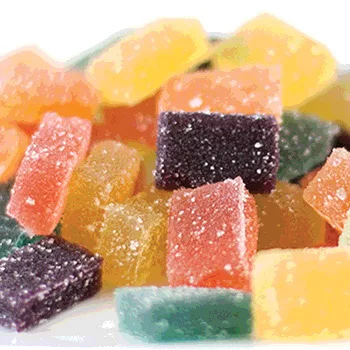
The Colorado-based edibles company incredibles, for instance, was one of the first companies to test their batches to guarantee correct dosage. Disturbed by the lenient rules that allowed the sale of Saran-wrapped goods produced in home kitchens, founders Rick Scarpello and Bob Eschino made it their mission to ensure that every edible consisted of precisely measured portions, subsequently erasing any doubt of dose accuracy and effectiveness. Their products, which include a wide variety of chocolate bars, gummy bites and e-pens (personal vaporizers) for both medical and adult use, have always been professionally packaged and are inspected for safety and consistency every day.
Dixie Elixirs, another Colorado company, is in on the act as well, handcrafting cannabis products like elixirs, chocolates, dew drops, mints and “vape”-style inhalers with pure, CO2-extracted THC and a process that goes far beyond mandated batch testing. The company Love’s Oven, a home-style, small-batch cannabis bakery based in Denver, is also progressive in terms of food safety. It is the first cannabis company to receive GreenSafe certification, which verifies that the practices of the company are compliant with the GreenCode, a set of standards built in accordance with FDA GMP standards and the highest food manufacturing industry standards in the conventional market. To achieve certification, Love’s Oven had to show operational compliance with 26 sections of the GreenCode, including HACCP, allergen control, traceability and employee GMPs and training. Love’s Oven also individually wraps each 10-mg serving to even further delineate suggested serving size. All marijuana-infused products sold in Colorado are sold in childproof containers.
Safety is incredibly important to Wana Brands. Even though cannabis is not yet federally regulated, the Colorado-based company has implemented the highest standards in food safety and compliance programs and is one of the first edibles companies to produce in line with current GMP and HACCP practices. Every Wana product is tested for potency, even though it is not required by regulation. In fact, Colorado legislation simply notes that companies may test and report for any cannabinoid in their product, as long as it is in accordance with the applicable regulations.
Additionally, in an attempt to keep pace with the latest regulations and practices in the cannabis industry, Wana Brands cofounder Nancy Whiteman is the Cannabis Business Alliance Edibles Council Chair. This leadership allows Wana Brands to advocate for the ever-growing marijuana market, educate other companies in the industry and play a leading role in crafting the industry’s future.
How Cannabis Companies Can Make Food Safety a Priority
Companies looking to join the progressive movement toward a safer cannabis industry should implement a handful of tactics immediately. First, they should focus on the enforcement of food industry standards. Companies should be aware of the effect of bacteria on their products and ask questions including: Is refrigeration necessary to prevent contamination? Are goods being stored properly and are consumers getting detailed storage instructions? Lastly, are the facilities clean? These are simple questions to ask on paper, but some companies struggle to answer them, even though the implementation of food industry standards is one of the most basic things a company can do to improve the safety of its products.
Cannabis companies concerned with safety also need to ensure proper dosage. Although legislation varies in states, no state at this time requires companies to test consistency of batches at each phase of the production process. However, this step is essential if a company wants to ensure the proper dosage in each good it produces. Cooking methods and production processes can vastly alter the intended dosage of a product so that the resulting amount of cannabis in the product may be entirely different from what was planned.
While it is easy to direct blame onto regulators, these gaps in mandates can be addressed head-on, and in some cases solved, by the cannabis industry. All that is required is progressive action. Instead of waiting for food safety regulations to be applied to the cannabis industry, companies can implement their own. Be strict with dosing products. Test each batch to ensure proper dosage. Hold your company to the standards of the food industry. Hire GMP- and HACCP-experienced managers.
It is impossible to overlook the growth of the cannabis industry in recent years. As shown by market figures and new products, the industry has seen an influx of consumer interest as well as economic prosperity during its meteoric rise to become the third-fastest-growing industry in the United States. Yet, with this growth comes the need for food safety and accessibility. How can an item meet industry standards when there is no federally regulated industry? Moreover, how are companies supposed to adapt when laws are put into place? For some companies, the lack of coherent structure is a detriment to expansion and ultimately results in failure. Other companies, like Wana Brands, incredibles and Love’s Oven, have taken charge, creating their own regulations and implementing food safety controls before being required to do so by the government—paving the way for other companies in this burgeoning industry to take charge of safety as well.
Mica Gross is director of operations at Wana Brands, based in Boulder, CO.
References
1. www.arcviewmarketresearch.com/.
2. www.fda.gov/NewsEvents/PublicHealthFocus/ucm421163.htm.
Looking for quick answers on food safety topics?
Try Ask FSM, our new smart AI search tool.
Ask FSM →