Food Safety
search
Ask Food Safety AI
cart
facebook twitter linkedin instagram youtube
  • Sign In
  • Create Account
  • Sign Out
  • My Account
Food Safety
  • NEWS
    • Latest News
    • White Papers
  • PRODUCTS
  • TOPICS
    • Contamination Control
    • Food Types
    • Management
    • Process Control
    • Regulatory
    • Sanitation
    • Supply Chain
    • Testing and Analysis
  • PODCAST
  • EXCLUSIVES
    • Food Safety Five Newsreel
    • eBooks
    • FSM Distinguished Service Award
    • Interactive Product Spotlights
    • Videos
  • BUYER'S GUIDE
  • MORE
    • NEWSLETTERS >
      • Archive Issues
      • Subscribe to eNews
    • Store
    • Sponsor Insights
    • ASK FSM AI
  • WEBINARS
  • FOOD SAFETY SUMMIT
  • EMAG
    • eMagazine
    • Archive Issues
    • Editorial Advisory Board
    • Contact
    • Advertise
  • SIGN UP!
Products

PML Applications Helps Boost Innovation in the Biofilms Industry

November 30, 2017

Supported by a commitment of £26 million over the next 5 years, including £12.5M funding from the Biotechnology and Biological Sciences Research Centre and Innovate UK, with additional support from universities and industry, the National Biofilms Innovation Centre (NBIC) will bring the best of UK biofilm research together with UK companies from across the industrial sectors to accelerate the adoption of new technologies into live products and services.

Dr. Thomas Vance is leading the research contribution from the PML Applications, Centre for Marine Biofouling and Corrosion. He says, “Perhaps somewhat surprisingly, biofilm fouling on vessel hulls can negatively impact the efficiency of the vessel. One of the key issues to understand is how biofilms vary spatially on different areas of a vessel, and how these variations change with time. By understanding these patterns, we should be able to use the most effective biofilm control approaches for different areas. Our particular expertise will also be used to test prototype marine biofilm control technologies being developed by other partners in the consortium.  This will include laboratory-based molecular and single-cell genomic techniques as well as in-situ testing in a range of marine settings with high quality environmental characterisation, using buoys, commercial vessels, dynamic test rigs and our own research vessel."

NBIC is a multi-site Innovation and Knowledge Centre led by the University of Southampton together with a core partnership of the Universities of Edinburgh, Liverpool and Nottingham. Eleven additional universities, three research centres – Diamond Synchrotron, the Hartree Centre and the Quadram Institute – and three major global academic partners –  The  Nanyang Technologial University (Singapore), the Montana State University (USA) and the University of Copenhagen (Denmark). NBIC will also collaborate with a network of over 50 companies from different sectors ranging from SMEs to large companies to exploit the UK’s global leadership in biofilms. NBIC’s inclusive model means that other universities and companies conducting biofilm research can participate and benefit from partnership with the NBIC consortium.

Microbial biofilm research is now a feature of many scientific disciplines including biological sciences, medicine, chemistry, physics, computational modelling, engineering and ocean science. Biofilms are central to some of the most urgent global challenges across diverse fields of application, from medicine to industry to the environment and exert considerable economic and social impact:  

  • They are a leading cause of antimicrobial resistance, forecast to cause 10M deaths by 2050.
  • They are the major cause of chronic infections.
  • Contamination, energy losses and damage by biofilms impact on the £70B UK foods industry, the $2.8T consumer products sector, and $117B global coatings industry.
  • Biofilm management is essential to deliver clean and globally sustainable drinking water and food security.

Author(s): Staff

Looking for quick answers on food safety topics?
Try Ask FSM, our new smart AI search tool.
Ask FSM →


Share This Story

Recommended Content

JOIN TODAY
to unlock your recommendations.

Already have an account? Sign In

  • people holding baby chicks

    Serovar Differences Matter: Utility of Deep Serotyping in Broiler Production and Processing

    This article discusses the significance of Salmonella in...
    Microbiological
    By: Nikki Shariat Ph.D.
  • woman washing hands

    Building a Culture of Hygiene in the Food Processing Plant

    Everyone entering a food processing facility needs to...
    Facilities
    By: Richard F. Stier, M.S.
  • graphical representation of earth over dirt

    Climate Change and Emerging Risks to Food Safety: Building Climate Resilience

    This article examines the multifaceted threats to food...
    Management
    By: Maria Cristina Tirado Ph.D., D.V.M. and Shamini Albert Raj M.A.
Manage My Account
  • eMagazine Subscription
  • Subscribe to Newsletters
  • Manage My Preferences
  • Website Registration
  • Subscription Customer Service

More Videos

Sponsored Content

Sponsored Content is a special paid section where industry companies provide high quality, objective, non-commercial content around topics of interest to the Food Safety Magazine audience. All Sponsored Content is supplied by the advertising company and any opinions expressed in this article are those of the author and not necessarily reflect the views of Food Safety Magazine or its parent company, BNP Media. Interested in participating in our Sponsored Content section? Contact your local rep!

close
  • The image shows a variety of fresh produce packaged in plastic trays and wrap.
    Sponsored byWaters Corporation

    PFAS-Free Food Packaging by August 2026

  • This image displays a multi-stage water filtration system designed to remove contaminants from drinking water.
    Sponsored byWaterdrop Filter

    The 4.0 ppt Era: Future-Proofing Your Food Supply Chain Against "Forever Chemicals"

  • The image displays a bottling plant production line, commonly used in the beverage industry for filling and packaging soft drinks.
    Sponsored byBIOIONIX

    Sustainability with ROI: A Beverage Producer Case Study in Water Savings

Popular Stories

recalled Pâté en Croûte products from France

Fatal Listeriosis Outbreak in France Linked to RTE Meats

ensuring ready-to-eat food safety eBook

eBook | Ensuring Ready-to-Eat Food Safety from Processing to Retail

FoodSafetyMattersFinal-900x550-(002).jpg

Ep. 213. Richard Stier: Driving Continuous Improvement in Food Safety and Sanitation

Events

March 26, 2026

Continuous Pathogen Control: Enhancing Sanitation and Environmental Monitoring in Food Processing

Live: March 26, 2026, at 2:00 pm EST: This session explores the role of continuous airborne pathogen control technology in supporting sanitation and environmental monitoring programs within food processing environments.

March 31, 2026

Regulatory Risk, Ingredient Safety, and GRAS: What Companies Need to Act on Now

Live: March 31, 2026, at 11:00 am EDT: From this webinar, attendees will recognize patterns in food policy affecting dietary guidelines, UPFs, state legislative actions, and expected GRAS reform.

April 8, 2026

Foreign Material Contamination: Why In-Line Reinspection Isn't Enough

Live: April 8, 2026, at 11:00 am EDT: From this webinar, attendees will learn why reinspecting with in-line equipment is not sufficient when it comes to potential foreign material contamination.

View All

Products

Global Food Safety Microbial Interventions and Molecular Advancements

Global Food Safety Microbial Interventions and Molecular Advancements

See More Products

Related Articles

  • Blockchain

    Extending the applications of blockchain in the food manufacturing industry

    See More
  • Biofilms: Impact on the Food Industry

    See More
  • How the AIJN Code of Practice Helps the Fruit Juice Industry

    See More

Related Products

See More Products
  • 9781138198463.jpg

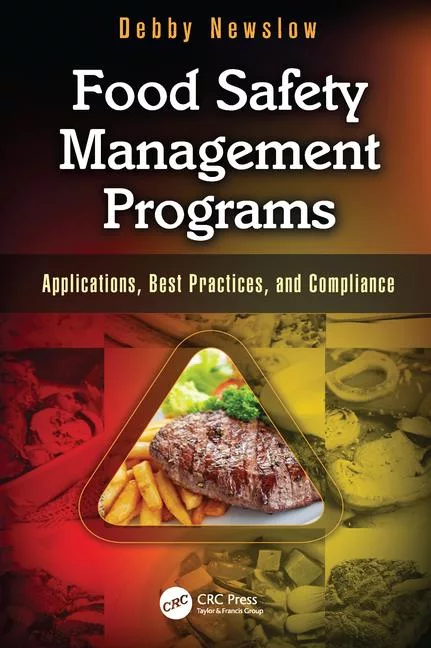
    Food Safety Management Programs: Applications, Best Practices, and Compliance

  • 1119053595.jpg

    Food Safety for the 21st Century: Managing HACCP and Food Safety throughout the Global Supply Chain, 2E

  • 1119258073.jpg

    FSMA and Food Safety Systems: Understanding and Implementing the Rules

See More Products

Related Directories

  • Fayette Industrial

    At Fayette, we understand that cleanliness in your meat, poultry, pork, or ready-to-eat facility isn't just about passing inspections—it's about protecting your entire business. Our specialized contract sanitation services are tailored to your specific processing environment with rigorous pathogen prevention protocols and audit preparation that exceed regulatory standards.
×

Never miss the latest news and trends driving the food safety industry

Newsletters | Website | eMagazine

JOIN TODAY!
  • RESOURCES
    • Advertise
    • Contact Us
    • Directories
    • Store
    • Want More
  • SIGN UP TODAY
    • Create Account
    • eMagazine
    • Newsletters
    • Customer Service
    • Manage Preferences
  • SERVICES
    • Marketing Services
    • Reprints
    • Market Research
    • List Rental
    • Survey/Respondent Access
  • STAY CONNECTED
    • LinkedIn
    • Facebook
    • Instagram
    • X (Twitter)
  • PRIVACY
    • PRIVACY POLICY
    • TERMS & CONDITIONS
    • DO NOT SELL MY PERSONAL INFORMATION
    • PRIVACY REQUEST
    • ACCESSIBILITY

Copyright ©2026. All Rights Reserved BNP Media, Inc. and BNP Media II, LLC.

Design, CMS, Hosting & Web Development :: ePublishing