Food Safety
search
Ask Food Safety AI
cart
facebook twitter linkedin instagram youtube
  • Sign In
  • Create Account
  • Sign Out
  • My Account
Food Safety
  • NEWS
    • Latest News
    • White Papers
  • PRODUCTS
  • TOPICS
    • Contamination Control
    • Food Types
    • Management
    • Process Control
    • Regulatory
    • Sanitation
    • Supply Chain
    • Testing and Analysis
  • PODCAST
  • EXCLUSIVES
    • Food Safety Five Newsreel
    • eBooks
    • FSM Distinguished Service Award
    • Interactive Product Spotlights
    • Videos
  • BUYER'S GUIDE
  • MORE
    • NEWSLETTERS >
      • Archive Issues
      • Subscribe to eNews
    • Store
    • Sponsor Insights
    • ASK FSM AI
  • WEBINARS
  • FOOD SAFETY SUMMIT
  • EMAG
    • eMagazine
    • Archive Issues
    • Editorial Advisory Board
    • Contact
    • Advertise
  • SIGN UP!
Testing & AnalysisMethodsMicrobiological Testing & Analysis

Emerging Technologies to Combat E. coli
August 1, 2017

Recalls over Escherichia coli concerns dominate the current food safety headlines, with two significant, recent occurrences.  In late May, Smucker Foods of Canada was forced to recall three brands of flour in the U.S. due to possible E. coli contamination, while wholesale restaurant food supplier Creation Gardens began recalling over 22,000 pounds of beef in early June. According to the U.S. Department of Agriculture, Creation Gardens is recalling raw ground beef and beef primal cut products, including beef patties, short ribs and sirloin. The products were produced between June 1 and June 2, 2017, and shipped to locations in Indiana, Kentucky, Ohio and Tennessee.

All told, E. coli O157 is believed to be the root of approximately 73,000 illnesses and 60 deaths every year in the U.S.

Scientists at the Massachusetts Institute of Technology (MIT) believe they may have discovered the next entry into the litany of tests and detection systems for food processors to implement to fight off E. coli

The new test—using a liquid that binds to bacterial proteins—can be detected by either the naked eye or a smartphone, offering a much faster and cheaper alternative to existing food safety tests. The scientists developed a way to easily make complex droplets of two equally sized hemispheres, one made of a fluorocarbon and one made of a hydrocarbon. The researchers decided to explore using these droplets as sensors because of their unique optical properties. In their natural state, the liquid is transparent. When applied to the proteins found in E. coli, however, the droplets clump and become opaque.

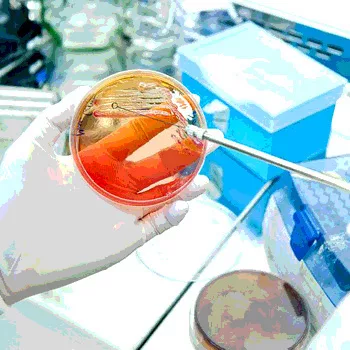
Current food safety testing often involves placing food samples in a culture dish to see if harmful bacterial colonies form, but that process takes two to three days. Faster tests are available but are expensive and involve special instruments. With this new test, the food samples are placed atop a QR code that can be scanned with a smartphone. When E. coli are present, the droplets clump together and the QR code can’t be read.

The MIT team hopes to adapt its new technology into arrays of small wells, each containing droplets customized to detect a different pathogen and linked to a different QR code. This could enable rapid, inexpensive detection of pathogens on the factory floor, using only a smartphone.

While the researchers at MIT hope to launch a company to commercialize the technology within the next year and a half, this is just the latest example of the many different angles the industry is using to tackle food safety.

From sanitary design to packaging and processing systems involving metal and/or X-ray detection, technologies are emerging every year to ensure the safety of the global food supply chain. It is thus incumbent on everyone in the food industry to take advantage of opportunities to learn about such advances, including scientific meetings, trade shows and the vast literature on these developments.

Sean Riley is senior director of media and industry communications at PMMI, the Association for Packaging and Processing Technologies. PMMI is also the owner and producer of the PACK EXPO portfolio of trade shows, which offers a look at breakthrough technologies, innovative applications and proven techniques from industry experts.


Author(s): Sean Riley

Looking for quick answers on food safety topics?
Try Ask FSM, our new smart AI search tool.
Ask FSM →


Share This Story

Recommended Content

JOIN TODAY
to unlock your recommendations.

Already have an account? Sign In

  • people holding baby chicks

    Serovar Differences Matter: Utility of Deep Serotyping in Broiler Production and Processing

    This article discusses the significance of Salmonella in...
    Microbiological Control
    By: Nikki Shariat Ph.D.
  • woman washing hands

    Building a Culture of Hygiene in the Food Processing Plant

    Everyone entering a food processing facility needs to...
    Management
    By: Richard F. Stier, M.S.
  • graphical representation of earth over dirt

    Climate Change and Emerging Risks to Food Safety: Building Climate Resilience

    This article examines the multifaceted threats to food...
    International
    By: Maria Cristina Tirado Ph.D., D.V.M. and Shamini Albert Raj M.A.
Manage My Account
  • eMagazine Subscription
  • Subscribe to Newsletters
  • Manage My Preferences
  • Website Registration
  • Subscription Customer Service

More Videos

Sponsored Content

Sponsored Content is a special paid section where industry companies provide high quality, objective, non-commercial content around topics of interest to the Food Safety Magazine audience. All Sponsored Content is supplied by the advertising company and any opinions expressed in this article are those of the author and not necessarily reflect the views of Food Safety Magazine or its parent company, BNP Media. Interested in participating in our Sponsored Content section? Contact your local rep!

close
  • the use of dual-energy X-ray food inspection technology to identify foreign contaminants.
    Sponsored byEagle by METTLER TOLEDO

    Precision Inspection Starts with the Right X-ray Detector

  • This image depicts a worker cleaning stainless steel machinery in a food processing plant
    Sponsored byCintas

    Employee Uniforms: A Frontline Defense Against Food Contamination

  • This image depicts a healthcare professional managing a large volume of paperwork and transitioning to a digital workflow.
    Sponsored bySafetyChain

    The Invisible Plant Tax Starts with Your Records

Popular Stories

Don Prater at the 2026 Food Safety Summit

Donald Prater Becomes New Head of FDA Human Foods Program

town hall panelists on stage at the 2026 food safety summit

Top U.S. Food Safety Officials Discuss Regulatory Landscape at Food Safety Summit

digital 3d rendering of a biofilm

Plasma-Activated Mist Shows Promise for Biofilm Removal in Food Facilities


Events

May 28, 2026

Advanced Sanitation Strategies for Allergen Risk Reduction in Food Processing

Live: May 28, 2026, at 2:00 pm EDT: From this webinar, attendees will learn why validation and verification are necessary for allergen control, and how analytical tools can support allergen management programs.

June 3, 2026

How to Build a Better Food Safety Training Program

Live: June 3, 2026 at 2:00 pm EDT: Join this webinar to learn how AI is impacting food safety training, and how you can leverage AI in your programs.

June 4, 2026

Building a Stronger Food Safety Program in a Changing GFSI Landscape

Live: June 4, 2026 at 11:00 am EDT: Attend this webinar to understand how GFSI requirements are evolving and what those changes signal for quality programs at food and beverage facilities.

View All

Products

Global Food Safety Microbial Interventions and Molecular Advancements

Global Food Safety Microbial Interventions and Molecular Advancements

See More Products
building a stronger food safety program webinar

Related Articles

  • romaine lettuce washed on a cloth

    The Silent Threats in Our Salad Bowls: Research Harnessing Plant Defenses to Combat E. coli and Salmonella Infections

    See More
  • e. coli

    Fatal French HUS Outbreak Caused by Globally Emerging, Hybrid E. coli Strain Affected Only Adults

    See More
  • 3D rendering of intestine and stomach in human

    Novel qRT-PCR Method Developed to Accurately Identify Emerging Foodborne Pathogen E. albertii

    See More

Related Products

See More Products
  • shelf life.jpg

    Shelf Life and Food Safety

  • global food.jpg

    Global Food Safety Microbial Interventions and Molecular Advancements

  • 1119237963.jpg

    Food Safety in China: Science, Technology, Management and Regulation

See More Products

Related Directories

  • NEMIS Technologies

    At NEMIS, we are setting new standards in environmental monitoring, helping your facility stay audit-ready and protected from contamination. Our cutting-edge solutions are designed to proactively identify and address risks, transforming how food safety is upheld in production environments.
×

Never miss the latest news and trends driving the food safety industry

Newsletters | Website | eMagazine

JOIN TODAY!
  • RESOURCES
    • Advertise
    • Contact Us
    • Directories
    • Store
    • Want More
  • SIGN UP TODAY
    • Create Account
    • eMagazine
    • Newsletters
    • Customer Service
    • Manage Preferences
  • SERVICES
    • Marketing Services
    • Reprints
    • Market Research
    • List Rental
    • Survey/Respondent Access
  • STAY CONNECTED
    • LinkedIn
    • Facebook
    • Instagram
    • X (Twitter)
  • PRIVACY
    • PRIVACY POLICY
    • TERMS & CONDITIONS
    • DO NOT SELL MY PERSONAL INFORMATION
    • PRIVACY REQUEST
    • ACCESSIBILITY

Copyright ©2026. All Rights Reserved BNP Media, Inc. and BNP Media II, LLC.

Design, CMS, Hosting & Web Development :: ePublishing