Food Safety
search
Ask Food Safety AI
cart
facebook twitter linkedin
  • Sign In
  • Create Account
  • Sign Out
  • My Account
Food Safety
  • NEWS
    • Latest News
    • White Papers
  • PRODUCTS
  • TOPICS
    • Contamination Control
    • Food Types
    • Management
    • Process Control
    • Regulatory
    • Sanitation
    • Supply Chain
    • Testing and Analysis
  • PODCAST
  • EXCLUSIVES
    • Food Safety Five Newsreel
    • eBooks
    • FSM Distinguished Service Award
    • Interactive Product Spotlights
    • Videos
  • BUYER'S GUIDE
  • MORE
    • ENEWSLETTER >
      • Archive Issues
      • Subscribe to eNews
    • Store
    • Sponsor Insights
    • ASK FSM AI
  • WEBINARS
  • FOOD SAFETY SUMMIT
  • EMAG
    • eMagazine
    • Archive Issues
    • Editorial Advisory Board
    • Contact
    • Advertise
  • SIGN UP!
White Papers

Food Safety: A Flexible Packaging Checklist

June 22, 2016

According to management at Mondi in North America, packaging’s role in food safety has been growing as consumers eat more meals on the run and food is expected to remain safe in packaging for extended periods. Food companies that use flexible packaging should expect considerable support in the safety area from their packaging suppliers.

No supplier can guarantee that its package is suitable for every type of food product under all possible usage conditions. However, when food manufacturers and packaging specialists effectively collaborate, they usually can discover a successful solution. For that reason, it’s critical for both parties to maintain open communication lines and have a clear understanding of accountability for different aspects of food safety.

Food Safety Standards Compliance
“There are some key points to consider when assessing suppliers,” says Ross Bushnell, president, Mondi Jackson, Consumer Goods Packaging. “For example, flexible packaging facilities should meet globally recognized food safety standards. Some food/beverage manufacturers require that their flexible packaging suppliers are certified to standards approved by the Global Food Safety Initiative (GFSI). GFSI is an international organization that benchmarks food safety-related protocols in an attempt to harmonize them worldwide. An example of a GFSI recognized certification body is the British Retail Consortium (BRC).”

“The GFSI was put together to ensure food chain safety from the field to the consumer,” adds Dirk Sutherlin, Mondi Jackson’s director of integrated management systems and materials science. “The GFSI recognizes various certification bodies such as the BRC, which develops protocols for flexible packaging producers to implement. The BRC audits and certifies packaging suppliers to ensure they comply with the GFSI standards.” 

Food producers should ask their flexible packaging suppliers for evidence of compliance with GFSI standards, including BRC audit and certification documentation. To be fully compliant, suppliers must ensure their systems, procedures, facilities and materials meet GFSI requirements. This includes hygiene, site security, manufacturing processes, raw material sourcing and many other factors.  

Packaging Materials Selection
Bushnell adds that food manufacturers should expect their flexible packaging providers to deliver high-quality films that protect products during distribution and consumer handling, and provide a barrier against oxygen and water for shelf stability. “It’s a plus when the suppliers produce these materials and assemble packaging in-house, offering a single point of accountability,” he says. 

Some leading pouch suppliers provide 100 percent inspection for all retort and hot-fill pouch orders. Every pouch is checked before it is shipped to the food manufacturer to confirm pouch integrity, including proper seals. Regardless of the flexible packaging type, all packages should contain tracking data to facilitate tracing an individual package back to its source if a quality problem arises.

Looking for quick answers on food safety topics?
Try Ask FSM, our new smart AI search tool.
Ask FSM →

Suppliers must be able to assure food companies that their flexible packaging products have the necessary regulatory compliance for the intended application. For example, the supplier should be able to provide documentation that all components used in the package are recognized by the U.S. Food and Drug Administration as safe for food contact products (subject to any noted provisions and use restrictions). A full understanding of food manufacturer requirements is crucial to selecting the correct materials for the package to ensure regulatory compliance for the intended application.

Packaging-related responsibilities reside on the food manufacturer’s side as well. For example, the food manufacturer is ultimately accountable for ensuring that food ingredients are compatible with a package’s substrates. Myriad factors related to food ingredients will influence packaging material selection. The packaging supplier can usually assist in making this assessment. Following are just a few considerations to keep in mind: 

Will the food be sold frozen or at room temperature? Different packaging materials are suited to these specific environments. For example, a two-ply or even single-ply packaging material is typically suitable for frozen foods, whereas shelf stable foods require three or more plies and high-barrier properties to ensure adequate shelf life of the product.
 
Does the food have high-fat content? If they are not in proper packaging, high-fat foods have a tendency to migrate into some packaging substrates or cause delamination. Packaging suppliers can develop the right material structure and use proper adhesives to safely store high-fat products.

Is the food highly acidic, or does it require pasteurization or sterilization? If so, it may require a hot-fill retort pouch, some of which have anti-staining properties so that colorful sauces do not stain the package. Some hot-fill pouches can accommodate foods and beverages with acidity of more than 4.6 pH and processing temperatures up to 205 ºF.

In addition, food manufactures are responsible for providing package design specifications that include all necessary performance characteristics, such as food shelf life. Responsibility for accurate package labeling of all ingredients also resides on the food producer’s side of quality control. When all of this information is shared with the packaging supplier, both the supplier and food producer can collaborate to identify and develop a safe and compelling packaging solution. 

Learn more about Mondi Group by visiting MondiGroup.com.


Author(s): Mondi Group

Share This Story

Recommended Content

JOIN TODAY
to unlock your recommendations.

Already have an account? Sign In

  • people holding baby chicks

    Serovar Differences Matter: Utility of Deep Serotyping in Broiler Production and Processing

    This article discusses the significance of Salmonella in...
    Methods
    By: Nikki Shariat Ph.D.
  • woman washing hands

    Building a Culture of Hygiene in the Food Processing Plant

    Everyone entering a food processing facility needs to...
    Management
    By: Richard F. Stier, M.S.
  • graphical representation of earth over dirt

    Climate Change and Emerging Risks to Food Safety: Building Climate Resilience

    This article examines the multifaceted threats to food...
    Best Practices
    By: Maria Cristina Tirado Ph.D., D.V.M. and Shamini Albert Raj M.A.
Manage My Account
  • eMagazine Subscription
  • Subscribe to eNewsletter
  • Manage My Preferences
  • Website Registration
  • Subscription Customer Service

More Videos

Sponsored Content

Sponsored Content is a special paid section where industry companies provide high quality, objective, non-commercial content around topics of interest to the Food Safety Magazine audience. All Sponsored Content is supplied by the advertising company and any opinions expressed in this article are those of the author and not necessarily reflect the views of Food Safety Magazine or its parent company, BNP Media. Interested in participating in our Sponsored Content section? Contact your local rep!

close
  • Salmonella bacteria
    Sponsored byThermoFisher

    Food Microbiology Testing Methods: Salmonella species

  • a diagram explaining indicator organisms
    Sponsored byHygiena

    How Proactive Listeria Testing Helps Prevent Six- and Seven-Figure Recalls

  • woman grocery shopping
    Sponsored byCorbion

    Designing Safety Into Every Bite: Proactive Risk Mitigation for Refrigerated Foods

Popular Stories

NRTE breaded stuffed chicken

USDA Indefinitely Delays Enforcement of Salmonella as Adulterant in Raw Breaded, Stuffed Chicken

digital map of europe

EU Publishes Food Fraud Tool Mapping Thousands of Cases Since 2016

non-conforming product

How to Handle Non-Conforming Product

Events

December 11, 2025

How to Develop and Implement an Effective Food Defense Strategy

Live: December 11, 2025 at 2:00 pm EDT: From this webinar, attendees will learn common areas where companies encounter challenges in their food defense strategies and how to address them.

May 11, 2026

The Food Safety Summit

Stay informed on the latest food safety trends, innovations, emerging challenges, and expert analysis. Leave the Summit with actionable insights ready to drive measurable improvements in your organization. Do not miss this opportunity to learn from experts about contamination control, food safety culture, regulations, sanitation, supply chain traceability, and so much more.

View All

Products

Global Food Safety Microbial Interventions and Molecular Advancements

Global Food Safety Microbial Interventions and Molecular Advancements

See More Products

Related Articles

  • Ashland Releases Free White Paper on Flexible Food Packaging Safety

    See More
  • Ashland White Paper Examines Flexible Food Packaging Safety in US and EU

    See More
  • Mitsubishi to Unveil New Flexible Packaging Technology That Doubles Food Shelf Life at PACK EXPO

    See More

Related Products

See More Products
  • 1119053595.jpg

    Food Safety for the 21st Century: Managing HACCP and Food Safety throughout the Global Supply Chain, 2E

  • 9781498721776.jpg

    Handbook of Food Processing: Food Safety, Quality, and Manufacturing Processes

  • 1119160553.jpg

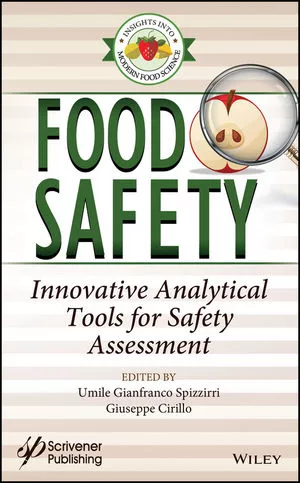
    Food Safety: Innovative Analytical Tools for Safety Assessment

See More Products

Related Directories

  • Promarksvac Corp. - Commercial Vacuum Packaging Machines Manufacturer

    Promarksvac is a leading U.S. manufacturer of industrial vacuum packaging and heat sealing systems for food, beverage, medical, and industrial markets. Known for engineering excellence and dependable performance, Promarksvac equipment is trusted by manufacturers nationwide to improve product integrity, production efficiency, and operational reliability. With a customer-first approach and nationwide support network, the company continues to drive innovation in packaging automation and flexible food safety solutions.
×

Never miss the latest news and trends driving the food safety industry

eNewsletter | Website | eMagazine

JOIN TODAY!
  • RESOURCES
    • Advertise
    • Contact Us
    • Directories
    • Store
    • Want More
  • SIGN UP TODAY
    • Create Account
    • eMagazine
    • eNewsletter
    • Customer Service
    • Manage Preferences
  • SERVICES
    • Marketing Services
    • Reprints
    • Market Research
    • List Rental
    • Survey/Respondent Access
  • STAY CONNECTED
    • LinkedIn
    • Facebook
    • Instagram
    • X (Twitter)
  • PRIVACY
    • PRIVACY POLICY
    • TERMS & CONDITIONS
    • DO NOT SELL MY PERSONAL INFORMATION
    • PRIVACY REQUEST
    • ACCESSIBILITY

Copyright ©2025. All Rights Reserved BNP Media.

Design, CMS, Hosting & Web Development :: ePublishing