Food Safety
search
Ask Food Safety AI
cart
facebook twitter linkedin
  • Sign In
  • Create Account
  • Sign Out
  • My Account
Food Safety
  • NEWS
    • Latest News
    • White Papers
  • PRODUCTS
  • TOPICS
    • Contamination Control
    • Food Types
    • Management
    • Process Control
    • Regulatory
    • Sanitation
    • Supply Chain
    • Testing and Analysis
  • PODCAST
  • EXCLUSIVES
    • Food Safety Five Newsreel
    • eBooks
    • FSM Distinguished Service Award
    • Interactive Product Spotlights
    • Videos
  • BUYER'S GUIDE
  • MORE
    • ENEWSLETTER >
      • Archive Issues
      • Subscribe to eNews
    • Store
    • Sponsor Insights
    • ASK FSM AI
  • WEBINARS
  • FOOD SAFETY SUMMIT
  • EMAG
    • eMagazine
    • Archive Issues
    • Editorial Advisory Board
    • Contact
    • Advertise
  • SIGN UP!

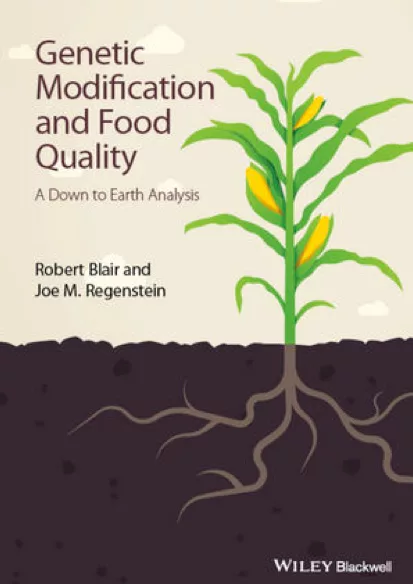
Book Review: Genetic Modification and Food Quality: A Down to Earth Analysis
March 22, 2016

In 2001, many thousands of people across Africa, including Zambia and Zimbabwe, died of hunger while genetically modified (GM) foods were available. Lives could have been saved, but anti-GM activists in Europe have told the world that consumption of GM foods is not safe and local governments in Africa believe this to be true. My feelings were and remain that many of these activists, particular the scientists among them, know there is no evidence of food safety incidents with GM foods, and many millions of people eat GM food every day.  I hold such activists responsible for much of the starvation around the world, then and now.

Thus, when I learned about the book “Genetic Modification and Food Quality: A Down to Earth Analysis”, I not only wanted to know what was in it but was surprised because it addresses the issues surrounding GM foods in a sound scientific fashion. Discussing the arguments of proponents and opponents seriously, with a thorough examination of the evidence presented; the book is full of verifiable references. It is well written and easy to read, and not just by experts in the field. I am certain that proponents will like the book, but I hope that well-meaning opponents will also read it or at least those who sincerely intend to protect the peoples on earth from man-made dangers.

The book gives short but clear descriptions of processes involving genetically modified organisms (GMO), both those where the final product contains GMO and those where GMO are used to make products that are, ultimately, GMO-free.

As the authors state, the world's leading scientific organizations and regulatory authorities have come to the same conclusion after examining the evidence: approved GM foods and feeds are substantially equivalent to their non-GM counterparts in terms of safety and nutritional composition. For instance, the European Commission has funded 130 research projects involving 500 independent research groups over 25 years. They have concluded that, “there is, as of today, no scientific evidence associating GMO with higher risks for the environment or food and feed safety than conventional plants and organisms”.

The fact that some consumers still have concerns about the safety of GM foods can be explained by the persistence of negative stories about GMO in the popular media, any of which can be discredited. The book quotes a good example of how, by being better informed, attitude can change. At the 2013 Oxford Farming Conference, Mark Lynas said, "I apologise for having spent several years ripping up GM crops. I am also sorry that I assisted in demonising an important technological option, which can be used to benefit the environment.... So, I did some reading. And, I discovered one-by-one that my cherished beliefs about GM turned out to be little more than green urban myths".

It is perhaps fitting that the 2013 World Food Prize was awarded to a team of scientists who have made an outstanding contribution to the development of GM foods (Drs Marc Van Montagu [Belgium], Mary-Dell Chilton [USA] and Robert T. Fraley [USA]). According to the citation, "their research is making it possible for farmers to grow crops with: improved yields; resistance to insects and disease; and the ability to tolerate extreme variations in climate".

Highly recommended.

Huub Lelieveld is president of the Global Harmonization Initiative and past president of the European Federation of Food Science and Technology. He is also the founder of the EHEDG and a member of the Editorial Advisory Board of Food Safety Magazine.


Author(s): Huub Lelieveld

Looking for quick answers on food safety topics?
Try Ask FSM, our new smart AI search tool.
Ask FSM →


Share This Story

Recommended Content

JOIN TODAY
to unlock your recommendations.

Already have an account? Sign In

  • people holding baby chicks

    Serovar Differences Matter: Utility of Deep Serotyping in Broiler Production and Processing

    This article discusses the significance of Salmonella in...
    Microbiological
    By: Nikki Shariat Ph.D.
  • woman washing hands

    Building a Culture of Hygiene in the Food Processing Plant

    Everyone entering a food processing facility needs to...
    Training
    By: Richard F. Stier, M.S.
  • graphical representation of earth over dirt

    Climate Change and Emerging Risks to Food Safety: Building Climate Resilience

    This article examines the multifaceted threats to food...
    International
    By: Maria Cristina Tirado Ph.D., D.V.M. and Shamini Albert Raj M.A.
Manage My Account
  • eMagazine Subscription
  • Subscribe to eNewsletter
  • Manage My Preferences
  • Website Registration
  • Subscription Customer Service

More Videos

Sponsored Content

Sponsored Content is a special paid section where industry companies provide high quality, objective, non-commercial content around topics of interest to the Food Safety Magazine audience. All Sponsored Content is supplied by the advertising company and any opinions expressed in this article are those of the author and not necessarily reflect the views of Food Safety Magazine or its parent company, BNP Media. Interested in participating in our Sponsored Content section? Contact your local rep!

close
  • Salmonella bacteria
    Sponsored byThermoFisher

    Food Microbiology Testing Methods: Salmonella species

  • a diagram explaining indicator organisms
    Sponsored byHygiena

    How Proactive Listeria Testing Helps Prevent Six- and Seven-Figure Recalls

  • woman grocery shopping
    Sponsored byCorbion

    Designing Safety Into Every Bite: Proactive Risk Mitigation for Refrigerated Foods

Popular Stories

food Safety Assurance

eBook | Food Safety Assurance for Dairy and Low-Moisture Foods

hospital patient

Foodborne Illness Outbreaks and Serious Listeria Infections Rising in EU

baby eating bottle

Coalition Urges RFK Jr. to Fix Infant Formula Oversight Problems that Allowed Infant Botulism Outbreak

Events

May 11, 2026

The Food Safety Summit

Stay informed on the latest food safety trends, innovations, emerging challenges, and expert analysis. Leave the Summit with actionable insights ready to drive measurable improvements in your organization. Do not miss this opportunity to learn from experts about contamination control, food safety culture, regulations, sanitation, supply chain traceability, and so much more.

View All

Products

Global Food Safety Microbial Interventions and Molecular Advancements

Global Food Safety Microbial Interventions and Molecular Advancements

See More Products

Related Articles

  • gene editing dna strands

    EFSA Concludes New Genetic Modification Techniques for Food Animals do Not Pose Novel Risks

    See More
  • DNA

    DNA-based analysis helps break down complex food samples

    See More
  • An Integrated Approach to Food Quality and Safety: A Case Study in the Cookie Industry

    See More

Related Products

See More Products
  • 9781498721776.jpg

    Handbook of Food Processing: Food Safety, Quality, and Manufacturing Processes

  • 1118396308.jpg

    High Throughput Analysis for Food Safety

  • 9781032369990 (1).webp

    Food Safety Quality Control and Management

See More Products

Related Directories

  • Food Safety and Quality Consultants LLC

    Food Safety and Quality Consultants, LLC (FSQC) is a professional full-service food safety and quality consulting firm offering a complete line of training, consulting, and auditing services to meet your needs. We will help you turn the complicated into compliance by making your food safety systems simple and effective!
×

Never miss the latest news and trends driving the food safety industry

eNewsletter | Website | eMagazine

JOIN TODAY!
  • RESOURCES
    • Advertise
    • Contact Us
    • Directories
    • Store
    • Want More
  • SIGN UP TODAY
    • Create Account
    • eMagazine
    • eNewsletter
    • Customer Service
    • Manage Preferences
  • SERVICES
    • Marketing Services
    • Reprints
    • Market Research
    • List Rental
    • Survey/Respondent Access
  • STAY CONNECTED
    • LinkedIn
    • Facebook
    • Instagram
    • X (Twitter)
  • PRIVACY
    • PRIVACY POLICY
    • TERMS & CONDITIONS
    • DO NOT SELL MY PERSONAL INFORMATION
    • PRIVACY REQUEST
    • ACCESSIBILITY

Copyright ©2025. All Rights Reserved BNP Media.

Design, CMS, Hosting & Web Development :: ePublishing