Food Safety
search
Ask Food Safety AI
cart
facebook twitter linkedin instagram youtube
  • Sign In
  • Create Account
  • Sign Out
  • My Account
Food Safety
  • NEWS
    • Latest News
    • White Papers
  • PRODUCTS
  • TOPICS
    • Contamination Control
    • Food Types
    • Management
    • Process Control
    • Regulatory
    • Sanitation
    • Supply Chain
    • Testing and Analysis
  • PODCAST
  • EXCLUSIVES
    • Food Safety Five Newsreel
    • eBooks
    • FSM Distinguished Service Award
    • Interactive Product Spotlights
    • Videos
  • BUYER'S GUIDE
  • MORE
    • NEWSLETTERS >
      • Archive Issues
      • Subscribe to eNews
    • Store
    • Sponsor Insights
    • ASK FSM AI
  • WEBINARS
  • FOOD SAFETY SUMMIT
  • EMAG
    • eMagazine
    • Archive Issues
    • Editorial Advisory Board
    • Contact
    • Advertise
  • SIGN UP!
Contamination ControlManagementSupply ChainCase StudiesRecall/Crisis ManagementMicrobiologicalFoodservice/Retail

Encourage Reporting of Suspected Foodborne Illness

September 2, 2014

The world seemed shocked that the Noma Restaurant of Copenhagen would be implicated as a source of food poisoning. The restaurant had been awarded high ranks by Michelin. Some call it the “World’s Finest Restaurant.” But, in fact, the Danish Food Ministry criticized the restaurant for not alerting the health department fast enough when it allegedly caused 60 plus people to get sick.

While it is shocking when a Michelin 2 star restaurant is the source of a food poisoning event, no restaurant is without risk. Every restaurant has a food supply chain with potential areas of food safety risk. Every restaurant has employees who are minimally trained in food safety or may not be conscientious enough in the application of procedure. Any broken link in the food safety chain can cause an epidemic. So catching a single event and addressing the root cause before it becomes an epidemic can be challenging.

What does foodborne illness event cost a restaurant?

Financially it can be huge!

In the 1993 Jack in the Box food poisoning epidemic, insurers paid out over $98 million with the largest settlement of $15.6 million. While this is not the average, it shows how devastating the loss can be. It is not uncommon that the “injured” seek damages of $25,000 to $75,000 per person. Many events will have multiple persons involved.

The cost to a restaurant reputation can likewise be devastating.

So it is on no surprise that the threat of foodborne illness event or epidemic can be paralyzing.

What is broken in the chain that allows a suspected foodborne illness event to be neglected and become an epidemic? A restaurant patron may think they got sick from eating at a restaurant. Who to tell? They might call the restaurant but may not be able to connect with a manager in a timely way. Calling the health department entangles them in interdepartment transfers. Even healthcare providers find the telephone maze difficult. Share a concern on a blog or rating system and the information may not be acted upon. There needs to be a better timely universal reporting system.

If the root cause of a single event is not addressed, the event has the potential to become an epidemic. And an epidemic can be catastrophic. When events are reported in a timely way, restaurant management can act on the information, address the potential cause and avert others becoming sick.

The U.S. Centers for Disease Control and Prevention supports innovative surveillance efforts and offers an opinion in a May 2014 report, “Health departments might consider additional surveillance methods to capture illness reports from those more likely to post a restaurant review online than to contact a health department.”

Until now, no convenient, universal reporting system for reporting foodborne illness events has been widely available. Each state has a unique system and each restaurant manager has a unique system for capturing the data.

In a press release of June 26, 2014, DiningGrades.com announced it has developed an innovative universal solution that solves a need for consistently and timely reporting of a suspected restaurant foodborne illness event. It is free to the restaurant patron, easy and intuitive. The system takes the burden off from restaurant management for data collection and facilitates timely reporting to the health department.

After selecting the restaurant, the user answers a limited number of questions about the event.
• Details are documented when they are fresh in the mind of the patron.

• Contact information, for corroboration by experts, is added.

• Staff reviews the report.

• The report can be confidentially sent to the respective restaurant management team and the respective state or community health department.

This process gives the restaurant patron an innovative, easy method to report a suspected event to restaurant management and the respective health department. The system is simple. That critical timely information enhances the ability of management to address a problem before it becomes an epidemic.

Harlan Stueven, M.D., is an emergency physician, poisoning specialist and founder of DiningGrades.com.  


>
Author(s): Harlan Stueven, M.D.

Looking for quick answers on food safety topics?
Try Ask FSM, our new smart AI search tool.
Ask FSM →


Share This Story

Recommended Content

JOIN TODAY
to unlock your recommendations.

Already have an account? Sign In

  • people holding baby chicks

    Serovar Differences Matter: Utility of Deep Serotyping in Broiler Production and Processing

    This article discusses the significance of Salmonella in...
    Testing & Analysis
    By: Nikki Shariat Ph.D.
  • woman washing hands

    Building a Culture of Hygiene in the Food Processing Plant

    Everyone entering a food processing facility needs to...
    Management
    By: Richard F. Stier, M.S.
  • graphical representation of earth over dirt

    Climate Change and Emerging Risks to Food Safety: Building Climate Resilience

    This article examines the multifaceted threats to food...
    International
    By: Maria Cristina Tirado Ph.D., D.V.M. and Shamini Albert Raj M.A.
Manage My Account
  • eMagazine Subscription
  • Subscribe to Newsletters
  • Manage My Preferences
  • Website Registration
  • Subscription Customer Service

More Videos

Sponsored Content

Sponsored Content is a special paid section where industry companies provide high quality, objective, non-commercial content around topics of interest to the Food Safety Magazine audience. All Sponsored Content is supplied by the advertising company and any opinions expressed in this article are those of the author and not necessarily reflect the views of Food Safety Magazine or its parent company, BNP Media. Interested in participating in our Sponsored Content section? Contact your local rep!

close
  • This image displays a multi-stage water filtration system designed to remove contaminants from drinking water.
    Sponsored byWaterdrop Filter

    The 4.0 ppt Era: Future-Proofing Your Food Supply Chain Against "Forever Chemicals"

  • The image displays a bottling plant production line, commonly used in the beverage industry for filling and packaging soft drinks.
    Sponsored byBIOIONIX

    Sustainability with ROI: A Beverage Producer Case Study in Water Savings

  • factory
    Sponsored byIFC

    A Clean Break to Reset the Environment with Chlorine Dioxide

Popular Stories

workers and inspector in processing facility

Gearing Up for an FDA Inspection

formula powder

ByHeart Infant Formula Botulism Outbreak Ends with Extensive WGS Evidence, but Root Cause Remains Unidentified

grocery shopper examining label on a can

EU Considers Adoption of Harmonized Precautionary Allergen Labeling Rules

Events

March 26, 2026

Continuous Pathogen Control: Enhancing Sanitation and Environmental Monitoring in Food Processing

Live: March 26, 2026, at 2:00 pm EST: This session explores the role of continuous airborne pathogen control technology in supporting sanitation and environmental monitoring programs within food processing environments.

March 31, 2026

Regulatory Risk, Ingredient Safety, and GRAS: What Companies Need to Act on Now

Live: March 31, 2026, at 11:00 am EDT: From this webinar, attendees will recognize patterns in food policy affecting dietary guidelines, UPFs, state legislative actions, and expected GRAS reform.

April 8, 2026

Foreign Material Contamination: Why In-Line Reinspection Isn't Enough

Live: April 8, 2026, at 11:00 am EDT: From this webinar, attendees will learn why re-inspecting with in-line equipment is not sufficient when it comes to potential foreign material contamination.

View All

Products

Global Food Safety Microbial Interventions and Molecular Advancements

Global Food Safety Microbial Interventions and Molecular Advancements

See More Products

Related Articles

  • Kentucky Department of Public Health Team KY logo

    Kentucky Food Safety Reporting Website Centralizes Statewide Foodborne Illness Data

    See More
  • doctor and money

    Public Health Funding Linked to Foodborne Illness Outbreak Reporting

    See More
  • social media

    Study Investigates Influence of Social Media on Foodborne Illness Outbreak Identification

    See More

Related Products

See More Products
  • 9781498721776.jpg

    Handbook of Food Processing: Food Safety, Quality, and Manufacturing Processes

  • 1444333348.jpg

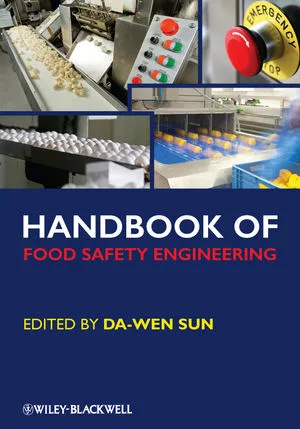
    Handbook of Food Safety Engineering

  • 9781138070912.jpg

    Trends in Food Safety and Protection

See More Products

Related Directories

  • Instant Recall LLC

    Instant Recall automates best practice workflows, data analysis and regulatory reporting for mock recalls, product holds, withdrawals, and recalls for the food industry. Learn why the food industry consistently chooses us as the shared solution for food recall preparedness, recall communications execution, and cost recovery!
  • ETQ, part of Hexagon

    ETQ Reliance is the world’s most flexible, powerful & easy-to-use advanced Quality Management System. Automate & standardize all aspects of quality, from document control, training, CAPA, audits, supply chain & more. Benefit from improved compliance, enhanced reputation, reduced costs, speed to market & visibility into your supply chain.
  • Integrated Chemistry Services LLC

    Integrated Chemistry Services (ICS) is a contract development and manufacturing partner based in Moorestown, New Jersey. In 2025, ICS acquired the PDX product line from Paradigm Diagnostics. These trusted, high-speed microbiological tests detect foodborne pathogens (Listeria, Salmonella, and STEC) quickly and affordably, minimizing downtime and protecting your bottom line.
×

Never miss the latest news and trends driving the food safety industry

Newsletters | Website | eMagazine

JOIN TODAY!
  • RESOURCES
    • Advertise
    • Contact Us
    • Directories
    • Store
    • Want More
  • SIGN UP TODAY
    • Create Account
    • eMagazine
    • Newsletters
    • Customer Service
    • Manage Preferences
  • SERVICES
    • Marketing Services
    • Reprints
    • Market Research
    • List Rental
    • Survey/Respondent Access
  • STAY CONNECTED
    • LinkedIn
    • Facebook
    • Instagram
    • X (Twitter)
  • PRIVACY
    • PRIVACY POLICY
    • TERMS & CONDITIONS
    • DO NOT SELL MY PERSONAL INFORMATION
    • PRIVACY REQUEST
    • ACCESSIBILITY

Copyright ©2026. All Rights Reserved BNP Media.

Design, CMS, Hosting & Web Development :: ePublishing