Food Safety
search
Ask Food Safety AI
cart
facebook twitter linkedin instagram youtube
  • Sign In
  • Join Today
  • Sign Out
  • My Account
Food Safety
  • NEWS
    • Latest News
    • Food Safety Five Newsreel
  • PRODUCTS
  • TOPICS
    • Contamination Control
    • Food Types
    • Management
    • Process Control
    • Regulatory
    • Sanitation
    • Supply Chain
    • Testing and Analysis
  • PODCAST
  • EXCLUSIVES
    • eBooks
    • Sponsored Insights
    • Sponsored White Papers
    • FSM Distinguished Service Award
    • Interactive Product Spotlights
    • Videos
  • MORE
    • BUYER'S GUIDE
    • NEWSLETTERS >
      • Archive Issues
      • Subscribe to eNews
    • Store
    • ASK FSM AI
  • WEBINARS
  • FOOD SAFETY SUMMIT
  • FSM FEATURES
    • FSM Features Collection
    • eMag Archives
    • Editorial Advisory Board
    • Contact
    • Advertise
  • JOIN
News

All To Benefit Under FSIS Hold and Test Implementation

January 15, 2013


The U.S. Department of Agriculture’s (USDA) Food Safety and Inspection Service (FSIS) announced recently that they will require producers to hold shipments of non-intact raw beef and all ready-to-eat products containing meat and poultry until they pass USDA testing for foodborne adulterants.

“This new policy will reduce foodborne illnesses and the number of recalls by preventing contaminated products from reaching consumers,” USDA Under Secretary for Food Safety Dr. Elisabeth Hagen said. “Many producers hold products until test results come back. We're encouraging others in the industry to make this a routine part of operations.”

The new policy requires official establishments and importers of record to maintain control of products tested for adulterants by FSIS and not allow the products to enter commerce until negative test results are received. FSIS anticipates most negative test results will be determined within 2 days. The policy applies to non-intact raw beef products or intact raw beef products intended for non-intact use and that are tested by FSIS for Shiga-toxin producing Escherichia coli. Additionally, the policy applies to any ready-to-eat products tested by FSIS for pathogens.

FSIS developed the “hold and test” policy, which will reduce consumer exposure to unsafe meat products, based on public comment and input received on a Federal Register notice published in April 2011. FSIS estimates if this new requirement had been in place between 2007 through 2010, 49 of the 251 meat, poultry and processed egg product recalls that occurred during that time could have been prevented.

The notice will be posted shortly on the FSIS website at www.fsis.usda.gov/regulations_&_policies/Federal_Register_Notices/index.asp and will be available at www.regulations.gov once it is published.


Author(s): News

Looking for quick answers on food safety topics?
Try Ask FSM, our new smart AI search tool.
Ask FSM →


Share This Story

Recommended Content

JOIN TODAY
to unlock your recommendations.

Already have an account? Sign In

  • people holding baby chicks

    Serovar Differences Matter: Utility of Deep Serotyping in Broiler Production and Processing

    This article discusses the significance of Salmonella in...
    Microbiological Control
    By: Nikki Shariat Ph.D.
  • woman washing hands

    Building a Culture of Hygiene in the Food Processing Plant

    Everyone entering a food processing facility needs to...
    Sanitation
    By: Richard F. Stier, M.S.
  • graphical representation of earth over dirt

    Climate Change and Emerging Risks to Food Safety: Building Climate Resilience

    This article examines the multifaceted threats to food...
    Best Practices
    By: Maria Cristina Tirado Ph.D., D.V.M. and Shamini Albert Raj M.A.
Manage My Account
  • Join Food Safety Magazine
  • Manage My Preferences
  • Customer Service

More Videos

Sponsored Content

Sponsored Content is a special paid section where industry companies provide high quality, objective, non-commercial content around topics of interest to the Food Safety Magazine audience. All Sponsored Content is supplied by the advertising company and any opinions expressed in this article are those of the author and not necessarily reflect the views of Food Safety Magazine or its parent company, BNP Media. Interested in participating in our Sponsored Content section? Contact your local rep!

close
  • pre-packaged salads, noodles, and prepared meals stocked on multi-tier grocery store refrigerator shelves
    Sponsored byCorbion

    How Many Days of Shelf Life Are You Leaving on the Table?

  • Top view portrait of two factory workers standing by conveyor belt during quality inspection at food production, copy space
    Sponsored byFlexXray

    Foreign Material By the Numbers: What the 2026 Benchmark Report Reveals

  • a conveyorized industrial metal detector system that appears to resemble a Loma Systems IQ4 Metal Detector setup with an integrated conveyor belt and control panel for food or package inspection.
    Sponsored byMettler Toledo

    Beyond Detection: How to Avoid Physical Contamination in Food Through a Smarter Inspection Strategy

Popular Stories

choosing food in the freezer aisle

Refrigerator Malfunctions on U.S. Military Bases May Be Result of Targeted Cyberattacks, Similar to French Incident

supermarket freezers

Another Wave of Refrigerator Cyberattacks Sweeps European Grocery Stores, Causing More Food Losses

doctor talking to patient

U.S. is Making Little Progress Toward 2030 Foodborne Illness Reduction Goals, Data Shows

allergens ebook

Events

November 12, 2026

From Data Overload to Actionable Food Safety Risk Intelligence

Live: November 12, 2026 at 11:00 am EST: This webinar explores how data integration, advanced analytics, and digital technologies can help transform disparate information into meaningful risk intelligence.

November 17, 2026

Are You Getting the Most from Your Food Safety Testing?

Live: November 17, 2026 at 11:00 am EST: Attend this webinar to explore practical ways food processors can modernize sanitation verification and microbiological testing while keeping workflows simple and effective.

December 2, 2026

Beyond Surface Clean: Tackling Biofilms and Persistent Pathogens

Live: December 2, 2026 at 11:00 am EST: Attend this webinar to understand why chlorine dioxide is not chlorine, and what “ultra-pure” means for residues, byproducts, and effectiveness.

View All

Products

Global Food Safety Microbial Interventions and Molecular Advancements

Global Food Safety Microbial Interventions and Molecular Advancements

See More Products

Related Articles

  • Consumers, Industry Benefit under FSIS Hold and Test Implementation

    See More
  • raw chicken leg and wing

    USDA-FSIS to Hold Two Public Meetings on Salmonella Framework for Raw Poultry in December

    See More
  • digital rendering of dna

    USDA-FSIS to Hold Webinar on WGS for Food Safety in July

    See More

Related Products

See More Products
  • 9781138070912.jpg

    Trends in Food Safety and Protection

  • 1119258073.jpg

    FSMA and Food Safety Systems: Understanding and Implementing the Rules

  • 1119160553.jpg

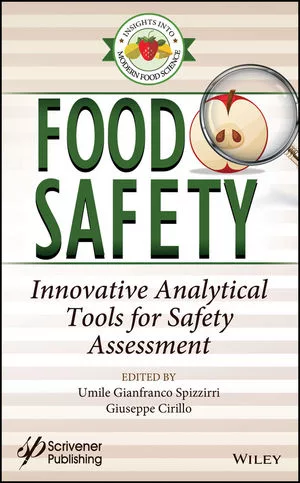
    Food Safety: Innovative Analytical Tools for Safety Assessment

See More Products

Events

View AllSubmit An Event
  • June 17, 2026

    Living HACCP: Practical Steps for Implementation

    On Demand: From this webinar, attendees will understand how social norms shape the way hazards are understood, how decisions are made, and how well risks are understood and acted on across companies.
View AllSubmit An Event

Related Directories

  • All Seasons Uniforms

    From the workforce to the home front, we provide everything from industrial work uniforms and corporate apparel to fashion and casual wear—and everything in between. Our all-inclusive work uniform store pairs convenience and a wide range of selections; all accessible with a click of a button. We offer additional services for all of your work uniforms and apparel— including direct embroidery, custom emblems, and screen printing.
  • NOMADX Holdings

    NomadX delivers integrated food safety solutions combining advanced decontamination, enhanced sampling, and rapid detection technologies. Our platform helps producers and processors reduce pathogen risk, validate safety in real time, and improve operational efficiency. By addressing contamination at every stage, NomadX enables safer food systems and stronger protection for public health.
×

Never miss the latest news and trends shaping the food safety industry

Newsletters | Website | FSM Features Collection

JOIN TODAY!
  • RESOURCES
    • Advertise
    • Contact Us
    • Directories
    • Store
  • JOIN TODAY
    • Create Account
    • FSM Features Collection
    • Newsletters
    • Customer Service
    • Manage Preferences
  • SERVICES
    • Marketing Services
    • Reprints
    • Market Research
    • List Rental
    • Survey/Respondent Access
  • STAY CONNECTED
    • LinkedIn
    • Facebook
    • Instagram
    • X (Twitter)
    • YouTube
  • PRIVACY
    • PRIVACY POLICY
    • TERMS & CONDITIONS
    • DO NOT SELL MY PERSONAL INFORMATION
    • PRIVACY REQUEST
    • ACCESSIBILITY

Copyright ©2026. All Rights Reserved BNP Media, Inc. and BNP Media II, LLC.

Design, CMS, Hosting & Web Development :: ePublishing