Food Safety
search
Ask Food Safety AI
cart
facebook twitter linkedin
  • Sign In
  • Create Account
  • Sign Out
  • My Account
Food Safety
  • NEWS
    • Latest News
    • White Papers
  • PRODUCTS
  • TOPICS
    • Contamination Control
    • Food Types
    • Management
    • Process Control
    • Regulatory
    • Sanitation
    • Supply Chain
    • Testing and Analysis
  • PODCAST
  • EXCLUSIVES
    • Food Safety Five Newsreel
    • eBooks
    • FSM Distinguished Service Award
    • Interactive Product Spotlights
    • Videos
  • BUYER'S GUIDE
  • MORE
    • ENEWSLETTER >
      • Archive Issues
      • Subscribe to eNews
    • Store
    • Sponsor Insights
    • ASK FSM AI
  • WEBINARS
  • FOOD SAFETY SUMMIT
  • EMAG
    • eMagazine
    • Archive Issues
    • Editorial Advisory Board
    • Contact
    • Advertise
  • SIGN UP!
News

Listeria in Ice Cream: Expert Analysis

April 24, 2015

On April 20, 2015, Blue Bell Creameries voluntarily recalled all of its products currently on the market made at all of its facilities, including ice cream, frozen yogurt, sherbet, and frozen snacks, because they have the potential to be contaminated with Listeria monocytogenes. The number of those affected stands at 10, with 3 deaths. This complex and ongoing multistate outbreak investigation of listeriosis illnesses has been occurring since 2010. Several strains of L. monocytogenes appear to be involved in this outbreak and that various Blue Bell brand products are the source of this outbreak.

Food Safety Magazine (FSM) sat down with Dr. Lynne McLandsborough, Ph.D., associate professor of food science at the University of Massachusetts, to discuss the Blue Bell ice cream recall and the dangers that Listeria poses to the public.

When asked what it was specifically about ice cream that makes it vulnerable to contamination by Listeria, she noted that all processed foods are susceptible, and with Listeria extremely common in the processing environment, most instances of contamination are post-processing. Possible sources could be from air handling (lacking proper HEPA filtration), filler condensation dripping onto product, improper pasteurization or contaminated ingredients that don’t receive a proper kill step prior to addition to the ice cream matrix.

While Listeria won’t grow in the frozen products produced by Blue Bell, Dr. McLandsborough mentioned that the organism is quite tolerant of a wide range of temperatures. “We like to call it a psychrotropic mesophile. Its optimal growth temperature is 35 °C, but it can slowly grow at refrigeration temperatures, making it a potential contaminant of dairy and other refrigerated, ready-to-eat foods.”

Listeriosis is caused by eating food contaminated with L. monocytogenes. It can be life-threatening in adults 65 and older, people with compromised immune systems and pregnant women, often causing meningitis and, in the case of pregnancy, stillbirth or spontaneous abortion. There is no indication that it causes high mortality in healthy children or adults.

The incubation period for listeriosis can be quite long, making the tracking of an outbreak extremely difficult. In the current outbreak, a cluster of illnesses were in individuals hospitalized at the same hospital for unrelated problems before developing invasive listeriosis—a finding that strongly suggested that their infections were acquired in the hospital. This connection was confirmed in that four of these affected individuals consumed milkshakes made with a single-serving Blue Bell brand ice cream product called “Scoops” while they were in the hospital. Isolates from these patients were highly related by whole-genome sequencing.

While product sampling and testing, as well as frequent cleaning and sanitation and a robust environmental monitoring program can help safeguard against Listeria contamination of food products, the widespread distribution of Listeria in the environment makes it a food processing challenge.

While U.S. Food and Drug Administration (FDA) has draft guidance on “Control of Listeria monocytogenes In Refrigerated or Frozen Ready-To-Eat Foods” from 2008, it is clear that more than mere recommendations are needed for such products regulated by FDA. “U.S. Department of Agriculture added a regulation in 2004 that mandated the addition of an antimicrobial and/or a subsequent treatment for all ready-to-eat deli meats, or implementation of frequent environmental testing. This approach has been quite effective,” McLandsborough noted. Proof that it is possible to control Listeria in processed foods.


Author(s): Food Safety Magazine

Looking for quick answers on food safety topics?
Try Ask FSM, our new smart AI search tool.
Ask FSM →


Share This Story

Recommended Content

JOIN TODAY
to unlock your recommendations.

Already have an account? Sign In

  • people holding baby chicks

    Serovar Differences Matter: Utility of Deep Serotyping in Broiler Production and Processing

    This article discusses the significance of Salmonella in...
    Meat/Poultry
    By: Nikki Shariat Ph.D.
  • woman washing hands

    Building a Culture of Hygiene in the Food Processing Plant

    Everyone entering a food processing facility needs to...
    Sanitation
    By: Richard F. Stier, M.S.
  • graphical representation of earth over dirt

    Climate Change and Emerging Risks to Food Safety: Building Climate Resilience

    This article examines the multifaceted threats to food...
    Best Practices
    By: Maria Cristina Tirado Ph.D., D.V.M. and Shamini Albert Raj M.A.
Manage My Account
  • eMagazine Subscription
  • Subscribe to eNewsletter
  • Manage My Preferences
  • Website Registration
  • Subscription Customer Service

More Videos

Sponsored Content

Sponsored Content is a special paid section where industry companies provide high quality, objective, non-commercial content around topics of interest to the Food Safety Magazine audience. All Sponsored Content is supplied by the advertising company and any opinions expressed in this article are those of the author and not necessarily reflect the views of Food Safety Magazine or its parent company, BNP Media. Interested in participating in our Sponsored Content section? Contact your local rep!

close
  • Salmonella bacteria
    Sponsored byThermoFisher

    Food Microbiology Testing Methods: Salmonella species

  • a diagram explaining indicator organisms
    Sponsored byHygiena

    How Proactive Listeria Testing Helps Prevent Six- and Seven-Figure Recalls

  • woman grocery shopping
    Sponsored byCorbion

    Designing Safety Into Every Bite: Proactive Risk Mitigation for Refrigerated Foods

Popular Stories

NRTE breaded stuffed chicken

USDA Indefinitely Delays Enforcement of Salmonella as Adulterant in Raw Breaded, Stuffed Chicken

non-conforming product

How to Handle Non-Conforming Product

spoonfuls of food ingredients

FDA’s Developing Rule to Tighten GRAS Oversight Moves to White House

Events

December 11, 2025

How to Develop and Implement an Effective Food Defense Strategy

Live: December 11, 2025 at 2:00 pm EDT: From this webinar, attendees will learn common areas where companies encounter challenges in their food defense strategies and how to address them.

May 11, 2026

The Food Safety Summit

Stay informed on the latest food safety trends, innovations, emerging challenges, and expert analysis. Leave the Summit with actionable insights ready to drive measurable improvements in your organization. Do not miss this opportunity to learn from experts about contamination control, food safety culture, regulations, sanitation, supply chain traceability, and so much more.

View All

Products

Global Food Safety Microbial Interventions and Molecular Advancements

Global Food Safety Microbial Interventions and Molecular Advancements

See More Products

Related Articles

  • Jeni's Ice Cream Pinpoints Origin of Listeria Contamination

    See More
  • FDA Tests 89 Ice Cream Production Facilities for Listeria and Salmonella

    See More
  • Another Listeria Recall for Blue Bell Ice Cream

    See More

Related Products

See More Products
  • 1118396308.jpg

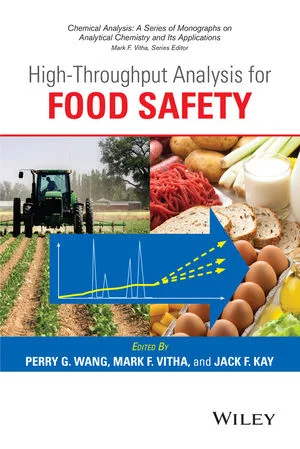
    High Throughput Analysis for Food Safety

  • 1119237963.jpg

    Food Safety in China: Science, Technology, Management and Regulation

  • 9781138070912.jpg

    Trends in Food Safety and Protection

See More Products

Related Directories

  • Integrated Chemistry Services LLC

    Integrated Chemistry Services (ICS) is a contract development and manufacturing partner based in Moorestown, New Jersey. In 2025, ICS acquired the PDX product line from Paradigm Diagnostics. These trusted, high-speed microbiological tests detect foodborne pathogens (Listeria, Salmonella, and STEC) quickly and affordably, minimizing downtime and protecting your bottom line.
×

Never miss the latest news and trends driving the food safety industry

eNewsletter | Website | eMagazine

JOIN TODAY!
  • RESOURCES
    • Advertise
    • Contact Us
    • Directories
    • Store
    • Want More
  • SIGN UP TODAY
    • Create Account
    • eMagazine
    • eNewsletter
    • Customer Service
    • Manage Preferences
  • SERVICES
    • Marketing Services
    • Reprints
    • Market Research
    • List Rental
    • Survey/Respondent Access
  • STAY CONNECTED
    • LinkedIn
    • Facebook
    • Instagram
    • X (Twitter)
  • PRIVACY
    • PRIVACY POLICY
    • TERMS & CONDITIONS
    • DO NOT SELL MY PERSONAL INFORMATION
    • PRIVACY REQUEST
    • ACCESSIBILITY

Copyright ©2025. All Rights Reserved BNP Media.

Design, CMS, Hosting & Web Development :: ePublishing