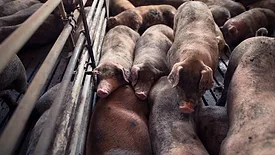
Reintroduced to U.S. Congress on February 3, the Expanded Food Safety Investigation Act seeks to grant FDA the authority to collect microbial samples from concentrated animal feeding operations, also referred to as “factory farms,” during foodborne illness outbreak investigations.
The UK Government is proposing the addition of several foodborne and waterborne viruses, bacteria, and parasites to the list of notifiable causative agents under the Health Protection Notification Regulations, for which laboratories testing human samples are required to report positive test results.
Weather conditions associated with climate change are exacerbating the spread of Salmonella and Campylobacter, suggest researchers at the University of Surrey’s School of Veterinary Medicine.
EU agencies are recommending actions the agriculture sector should take toward the more responsible use of azole-based fungicides, due to the risk of Aspergillus becoming azole-resistant, making treatment for human infections less effective.
Based on a recent analysis, WaterMagage4You is a free, online tool developed by the European Food Safety Authority (EFSA) to help industry predict and mitigate microbial contamination risks in process water for fresh, fresh-cut, and frozen produce. EFSA also published recommendations for fit-for-purpose process water management.
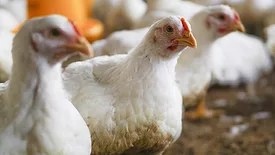
A joint scientific opinion from the European Food Safety Authority (EFSA) and the European Center for Disease Control and Prevention (ECDC) includes recommended strategies for the food animal sector to prevent the spread of avian influenza and its transmission to humans.
A researcher from Southern Illinois University Carbondale has received a $150,000 grant from USDA-NIFA to develop an AI-based rapid detection method for Salmonella on onions.
An Oxford University researcher was awarded £5 million to develop a Campylobacter vaccine for livestock, which will be made possible by data gathered through a global metagenomic surveillance network that is established through collaboration with 19 partner countries.
A new report from the U.S. Government Accountability Office (GAO) concluded that USDA-FSIS’ work on several proposed standards for Salmonella and Campylobacter in meat and poultry has suffered, as the agency has focused on developing a regulatory framework for Salmonella in raw poultry.
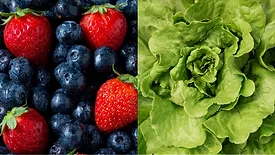
Funded by the Center for Produce Safety, researchers with the University of Barcelona and the Spanish Research Council are developing novel testing protocols for norovirus and hepatitis A on berries and leafy greens, enabling faster analysis and reducing false positives.
 RSS
RSS