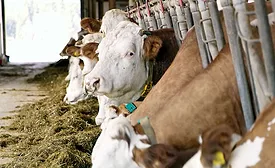
In this article, the authors discuss the mechanisms by which food safety can be improved on the farm, along with some of the treatments that are effective today and likely will be available in the near future.
This article looks back at the events of the 1993 E. coli outbreak associated with hamburgers served at Jack in the Box restaurants along the U.S. West Coast, examining the regulatory changes inspired by the fatal outbreak and its impact. Also discussed are the corporate and industry changes, spearheaded by Dr. David Theno, that set new standards for leadership and management in foodservice and food safety.
Meal kits use a direct-to-consumer model of delivering perishable, pre-measured ingredients for pre-selected recipes that are then used to prepare and cook meals at home. Meal kits are likely to contain a variety of foods that may grow or be contaminated by pathogenic bacteria. Meal kit manufacturers also often repackage ingredients into plain or branded packaging, which can result in the consumption of unexpected ingredients or allergens.
Researchers are exploring the use of superheated, dry steam to clean food manufacturing facilities where the use of traditional wet sanitation is limited, such as in produce packing facilities and low-moisture food processing plants.
Danish consumers, especially children, are at risk of significant exposure to per- and polyfluoroalkyl substances (PFAS) from eggs, according to research conducted by the DTU National Food Institute and the Danish Veterinary and Food Administration.
The U.S. Department of Agriculture’s Food Safety and Inspection Service (USDA’s FSIS) has highlighted several fellowship projects that will advance food safety and help to inform FSIS decision-making.
In an after-action review of a 2022 Escherichia coli O157:H7 outbreak linked to ground beef, the U.S. Food and Drug Administration’s Food Safety and Inspection Service (USDA’s FSIS) highlights the importance of improving outreach to food retail stores about best food safety practices for beef that will be ground.
Using whole genome sequencing (WGS), researchers from the University of Johannesburg have identified a trend of nonpathogenic Listeria strains developing concerning characteristics, such as virulence and stress resistance. Like the pathogenic L. monocytogenes, the “harmless” strains L. innocua and L. welshimeri are common to food processing facilities.
A joint Nordic project has just ended with a report that focuses on the chemical and microbiological hazards associated with seaweed as a food. The project aims to develop a common Nordic approach to seaweed food safety risk management.
The U.S. Food and Drug Administration (FDA) has announced new recommended action levels for lead in certain processed baby foods. The proposed action levels supports the Closer to Zero initiative to continually reduce babies’ and young children’s exposure to toxic heavy metals from food.
 RSS
RSS