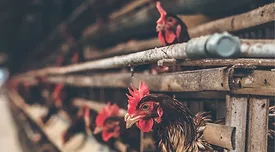
This article provides a future-oriented perspective on comprehensive food safety programs that harness multi-layered sensor technology and artificial intelligence (AI). The program described begins with biosurveillance at the producer level and seamlessly extends to the retail food sector.
Scientists have developed a small, easy-to-produce, and cost effective sensor that can detect water adulteration of honey, a commodity that is often the subject of fraudulent food production practices.
The new humidity sensing capabilities added to Wiliot’s Internet of Things (IoT) Visibility Platform makes it possible for food companies to better ensure the safety, integrity, freshness, and sustainability of moisture-sensitive products
A team of scientists is developing a rapid sensor-based decision-making system to assess and mitigate Salmonella contamination across the entire poultry supply chain, with an emphasis on improving health equity by leveraging data to help disproportionately affected communities make informed food safety decisions.
McMaster University researchers have created a new packaging tray that can signal when Salmonella or other foodborne pathogens are present in raw or cooked foods, such as chicken.
Researchers from Massachusetts Institute of Technology’s (MIT’s) research enterprise in Singapore, the Singapore-MIT Alliance for Research and Technology (SMART), are conducting research to aid the development of nanosensor technology for the detection of foodborne bacteria.
Researchers from Pusan National University in Busan, South Korea have developed a polydiacetylene-based sensor that offers rapid visual detection of biogenic amines released from spoiled food, indicating when products have gone bad.
Zebra Technologies Corporation has announced its new line of environmental sensors, including the new ZS300 sensor, ZB200 Bridge, and Android Sensor Discovery app.
Researchers have introduced a novel, thermal biosensor for real-time detection of Escherichia coli,demonstrating its ability to detect the pathogen in milk without sample preparation. The sensor would be easy to mass produce, and shows potential as a low-cost, rapid tool for onsite microbial indication.