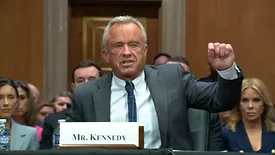
In two letters, thousands of public health professionals from dozens of stakeholder groups and federal agencies have called for the resignation of HHS Secretary Robert F. Kennedy Jr. (RFK Jr.), saying he is making Americans “less safe in a multitude of ways,” including food safety.
Following the firing of former CDC Director Susan Monarez, Ph.D. on August 27, HHS Deputy Secretary Jim O’Neill, who has no medical or infectious disease training, has been named CDC Acting Director.
Nominated by President Trump and confirmed in July, CDC Director Susan Monarez, Ph.D., was fired after scientific clashes with HHS Secretary Kennedy (RFK Jr.) and refusing to dismiss three veteran officials, who also departed CDC shortly after her termination was finalized.
A leaked draft of the second Make America Healthy Again (MAHA) Strategy Report has scant new specifics on how the Administration intends to tackle childhood chronic disease, but it outlines an approach that continues to rely on voluntary industry compliance and deregulation for food system reform, which has drawn criticism.
In this episode of Food Safety Matters, we speak to George Misko, a legal expert on the regulation of food and food contact materials, about the recent “Make America Healthy Again” (MAHA) Report calling for changes to the “Generally Recognized as Safe” (GRAS) provision, food additives, and food contact materials oversight—and the potential regulatory implications.
In this bonus episode of Food Safety Matters, recorded live at IAFP's 2025 Annual Meeting in Cleveland, Ohio, we speak to two top officials from FDA’s Human Foods Program (HFP) about the HFP’s current areas of focus—including produce safety and other goals aligned with the “Make America Healthy Again” (MAHA) initiative—as well as the future of the HFP and how food safety culture influences its work.
According to the 2025 International Food Information Council (IFIC) Food and Health Survey, consumer confidence in U.S. food safety has hit an all-time low in the 13 years since the survey began gauging the metric. Foodborne bacteria are the number one ranked concern in 2025, and attention to food additives and ingredients is rising.
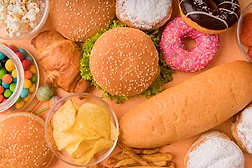
FDA and USDA are issuing a joint Request for Information (RFI) to gather information and data to help establish a federally recognized, uniform definition for ultra-processed foods.
FDA is applauding Consumer Brands Association’s (CBA’s) voluntary commitment to encourage U.S. food producers to remove artificial colorants from foods sold in schools by the start of the 2026–2027 school year. CBA said that, while these ingredients are “safe” and “supported by scientific evidence,” the food industry “recognizes preferences are evolving.”
The Ensuring Safe and Toxic-Free Foods Act of 2025 would set stricter requirements for manufactures to decide a food ingredient is “Generally Recognized as Safe” (GRAS). It also sets an annual quota of GRAS notices for FDA to review, and lays the groundwork for a systematic chemical reassessment process.