The Food and Agriculture Organization of the United Nations (FAO) has published a lexicon of commonly used words related to antimicrobial resistance (AMR).
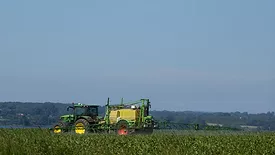
A recent article authored by scientists affiliated with the Food and Agriculture Organization of the United Nations (FAO) stresses the importance of conscientiously choosing pesticides for use on food crops to mitigate the rise of antimicrobial resistance (AMR).
The U.S. Department of Agriculture’s Food Safety and Inspection Service (USDA’s FSIS) published a report that highlights multi-year trends for antimicrobial resistance among Salmonella from data collected by the National Antimicrobial Resistance Monitoring System (NARMS) during 2014–2019.
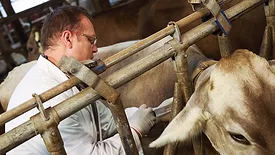
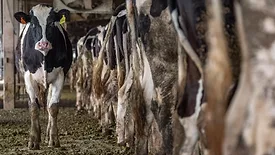
The overuse of antibiotics in livestock raised for food can seriously affect human health and fuel antimicrobial resistance by decreasing the effectiveness of medications used for treating bacterial infections. Without effective antimicrobials, common infections will become life-threatening and certain treatmentswill not be possible.
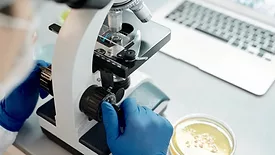
Researchers are exploring the potential of protective bacterial cultures to mitigate the growth of foodborne pathogens that have developed antimicrobial resistance.
Six nations have assessed their performances in minimizing and containing foodborne antimicrobial resistance (AMR). The work was done as part of the Food and Agriculture Organization of the United Nations’ (FAO’s) ACT project, which aims to support the global implementation of Codex Alimentarius texts on AMR.
In this episode of Food Safety Matters, we talk to Jovana Kovacevic, Ph.D., Associate Professor and Food Safety Extension Specialist at Oregon State University’s Food Innovation Center (OSU’s FIC). Dr. Kovacevic discusses her work at FIC, which includes developing educational materials for industry related to the Food Safety Modernization Act (FSMA), and conducting research on Listeria monocytogenes in an effort to better control the pathogen.
The U.S. Food and Drug Administration released a draft guidance that outlines a risk assessment approach to evaluate the microbial food safety risk of antimicrobial resistance (AMR) posed by new antimicrobial animal drugs. The draft guidance is open for comment.
Sales and distribution of medically important antimicrobials approved for use in food-producing animals has been decreasing since 2015, but with only a one percent reduction seen in 2020–2021, according to a recent report from the U.S. Food and Drug Administration’s Center for Veterinary Medicine (FDA’s CVM).
Researchers at McMaster University have developed a new, highly effective tool to mitigate bacterial contamination of foods, including pathogens displaying antimicrobial resistance (AMR), that has great potential for food safety.