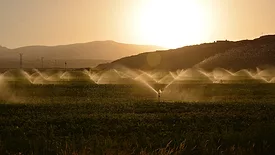
Researchers at the University of Georgia’s College of Agricultural and Environmental Sciences are researching a sunlight-based method for controlling microbial contaminants—specifically, Salmonella and Escherichia coli—in irrigation water used for food crops. After enough research is conducted, the UGA team hopes to create an app that will help growers enhance food safety.
Researchers at Penn State University (PSU) have developed and piloted a food safety training program for farmers market vendors, in response to a need revealed by previous studies.
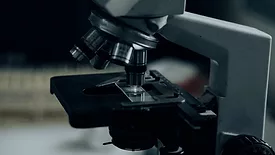
Artificial Intelligence (AI) with optical imaging may be a promising solution for detecting pathogens in foods, and would save the food industry time and resources, according to a recent study.
A recent study analyzing food allergen recalls in the UK from 2016–2021 has revealed allergens to be the most prevalent cause, and milk to be the most commonly implicated allergen.
A recent China–Australia collaborative review examined similarities and differences in the food safety risk assessment systems of China, Australia and New Zealand, Canada, and the U.S., with the aim of identifying areas that could support improvements to the Chinese system.
The European Food Safety Authority (EFSA) recently highlighted various fellowship projects across Europe, providing insight into the recent and ongoing work of EFSA in the realm of food safety risk assessment for various chemical and microbiological hazards.