Food Safety
search
Ask Food Safety AI
cart
facebook twitter linkedin instagram youtube
  • Sign In
  • Create Account
  • Sign Out
  • My Account
Food Safety
  • NEWS
    • Latest News
    • Sponsored Insights
    • Sponsored White Papers
  • PRODUCTS
  • TOPICS
    • Contamination Control
    • Food Types
    • Management
    • Process Control
    • Regulatory
    • Sanitation
    • Supply Chain
    • Testing and Analysis
  • PODCAST
  • EXCLUSIVES
    • Food Safety Five Newsreel
    • eBooks
    • FSM Distinguished Service Award
    • Interactive Product Spotlights
    • Videos
  • MORE
    • BUYER'S GUIDE
    • NEWSLETTERS >
      • Archive Issues
      • Subscribe to eNews
    • Store
    • ASK FSM AI
  • WEBINARS
  • FOOD SAFETY SUMMIT
  • FSM FEATURES
    • FSM Features Collection
    • eMag Archives
    • Editorial Advisory Board
    • Contact
    • Advertise
  • SIGN UP!
RegulatoryFDAFSMA

FSMA Tip: Locate Hazard Analysis Resources Fast with Google Search Operators

68061e1f 9d91 4dd1 b74a9ba3563f64b0
March 7, 2017

When conducting a Hazard Analysis to comply with the Food Safety Modernization Act (FSMA)’s new rules, many are relying on Google to search for scientific studies, guidance and other useful information. But Google, like any tool, is only as helpful as one knows how to use it. Most fail to Google Search effectively, wasting valuable time weeding through (literally) hundreds of millions of search results with little success.

What Are Google Search Operators?
Google Search Operators are simple punctuation, expressions or a combination of the two that enable you to narrow searches to specific sites [e.g., the U.S. Food and Drug Administration (FDA)’s website], file types and words and phrases (as well as exclude unwanted search words and phrases). Put simply, search operators are like secret code that filter out fluff.

How Do Google Search Operators Work?
Below are a few Google Search Operators I use on a regular basis for FSMA- and Hazard Analysis and Critical Control Points (HACCP)-related Google searches.

site:[._ _ _]
Typing “site:” followed by a url extension (e.g., .com, .gov, .org) will limit your search to a specific site, like government sites (.gov), nonprofit organizations (.org) and university web pages (.edu). To search the FDA website for recalls involving cashews, for example, type in your search terms then add the FDA website extension (.fda.gov):


To search the California Department of Public Health’s website, just add the agency’s url extension (.ca.gov):


“[search term]”
Google Search generates search results based on what it thinks you’re looking for. Typing quotation marks around search terms will limit your search only to the exact word(s) or phrase(s) you entered.


-[search term]
Typing a negative (-) sign before a search term will exclude that search term from the search results. This operator is extremely useful when pestered by unrelated search results that share a common word or phrase. For example, if you are searching for cashew recalls and keep pulling up recalls involving mixed nuts, you can list the other nuts in your search terms with negative signs.


filetype:[file format]
Guidance documents and scientific articles are often stored online in PDF format. To only pull up PDFs, follow your search terms with filetype:pdf. If you prefer to search for word docs, type: filetype:.doc or filetype:.docx. With these search operators, you can search any file type.


The search above will yield templates in PDF form exclusively from university sites but U.S. Department of Agriculture (USDA) also has great HACCP resources. Modify your search teams to search the USDA website by typing:


Google Scholar
Google scholar is Google’s search engine that is specially designed to “help you find relevant work across the world of scholarly research.” While Google Scholar is useful, and I recommend using it, expect a high yield of search results to be highly technical scientific studies with limited practical application to a small business or person without an advanced science degree. Still, I have found useful studies with this search engine. The above search operators work in Google Scholar.

Summary
Search operators make Google searches (whether you’re using Google Search or Google Scholar) more efficient and can be used to enhance any FSMA- or HACCP-related query. Search operators weed out hundreds of millions of irrelevant search results, helping you locate what you need quickly and (relatively) painlessly.

Charlie Kalish is managing member of Food Safety Guides, a progressive food safety and quality systems consulting firm that specializes in FSMA compliance, HACCP, third-party audit preparation and food safety and quality plan development. He is also senior director for food safety at UC San Diego Extension and a Food Safety Preventive Controls Alliance Lead Instructor for human and animal food.


Author(s): Charlie Kalish

Looking for quick answers on food safety topics?
Try Ask FSM, our new smart AI search tool.
Ask FSM →


Share This Story

Recommended Content

JOIN TODAY
to unlock your recommendations.

Already have an account? Sign In

  • people holding baby chicks

    Serovar Differences Matter: Utility of Deep Serotyping in Broiler Production and Processing

    This article discusses the significance of Salmonella in...
    Contamination Control
    By: Nikki Shariat Ph.D.
  • woman washing hands

    Building a Culture of Hygiene in the Food Processing Plant

    Everyone entering a food processing facility needs to...
    Management
    By: Richard F. Stier, M.S.
  • graphical representation of earth over dirt

    Climate Change and Emerging Risks to Food Safety: Building Climate Resilience

    This article examines the multifaceted threats to food...
    International
    By: Maria Cristina Tirado Ph.D., D.V.M. and Shamini Albert Raj M.A.
Manage My Account
  • eMagazine Subscription
  • Subscribe to Newsletters
  • Manage My Preferences
  • Website Registration
  • Subscription Customer Service

More Videos

Sponsored Content

Sponsored Content is a special paid section where industry companies provide high quality, objective, non-commercial content around topics of interest to the Food Safety Magazine audience. All Sponsored Content is supplied by the advertising company and any opinions expressed in this article are those of the author and not necessarily reflect the views of Food Safety Magazine or its parent company, BNP Media. Interested in participating in our Sponsored Content section? Contact your local rep!

close
  • Top view portrait of two factory workers standing by conveyor belt during quality inspection at food production, copy space
    Sponsored byFlexXray

    Foreign Material By the Numbers: What the 2026 Benchmark Report Reveals

  • a conveyorized industrial metal detector system that appears to resemble a Loma Systems IQ4 Metal Detector setup with an integrated conveyor belt and control panel for food or package inspection.
    Sponsored byMettler Toledo

    Beyond Detection: How to Avoid Physical Contamination in Food Through a Smarter Inspection Strategy

  • The image displays a bottling plant production line, commonly used in the beverage industry for filling and packaging soft drinks.
    Sponsored byBIOIONIX

    Sustainability with ROI: A Beverage Producer Case Study in Water Savings

Popular Stories

Dr. Heidi Overton speaking at Senate hearing

In Senate Hearing, FDA Commissioner Nominee Says Lack of Resources Will Challenge GRAS Reform

rangpur lime

Pathogens Found on Brazilian Citrus Fruit Present Emerging Food Safety Concerns

lightbulb on a plate next to fork and knife representing food innovation ideas

EFSA Outlines Scientific Needs for Regulatory Preparedness, Risk Assessment

allergens ebook

Events

October 6, 2026

Advances in Environmental Monitoring Science and Strategy

Live: October 6, 2026 at 2:00 pm EDT: This webinar will cover how environmental monitoring science and EMP strategies support sanitation verification and the safe production of food.

October 15, 2026

How to Prevent Physical Contamination in Food Production and Strengthen Compliance

Live: October 15, 2026 at 2:00 pm EDT: Attend this webinar to gain insight into how product inspection helps protect your brand, reduce recall risk, and support compliance.

October 29, 2026

FDA Proposes Major GRAS Reform: What It Could Mean for Your Business

Live: October 29, 2026 at 2:00 pm EDT: Attend this webinar to examine potential implications for self-GRAS, Flavor and Extract Manufacturers Association (FEMA) GRAS, and food-contact substances.

View All

Products

Global Food Safety Microbial Interventions and Molecular Advancements

Global Food Safety Microbial Interventions and Molecular Advancements

See More Products

Related Articles

  • 8920ProcessControl.png

    Ingredients Hazard Analysis and Process-Step Hazard Analysis: Why Separate the Two?

    See More
  • 2318HACCP.png

    Essentials of Hazard Analysis for Process Preventive Controls: Part 1

    See More
  • Hazard Analysis and Risk-Based Preventive Controls (HARPC): The New GMP for Food Manufacturing

    See More

Related Products

See More Products
  • 1118396308.jpg

    High Throughput Analysis for Food Safety

  • 1119258073.jpg

    FSMA and Food Safety Systems: Understanding and Implementing the Rules

  • 1119160553.jpg

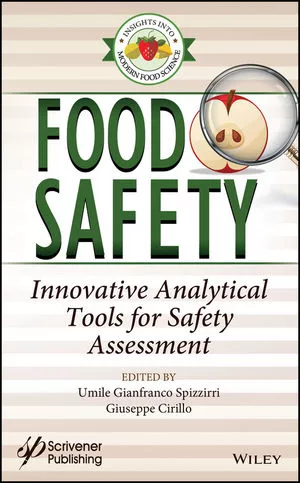
    Food Safety: Innovative Analytical Tools for Safety Assessment

See More Products

Related Directories

  • DeJong Operations Management and Consulting LLC

    DeJong Operations Management & Consulting LLC was established after a gap was identified – the need for flexible, dependable, and solutions-oriented resources who would develop plant designs, uncover efficiencies, share cross-industry insights, and provide process management for companies of all sizes. With 13+ years of experience working in the industry, the DeJong Operations Management & Consulting LLC team brings dedication and creative thinking to help solve customers’ process and plant operations challenges. There is no challenge too complex for our team to solve and no business too small for us to partner with. From plant and process design through sourcing, installation, and training, we can help maximize your plant’s productivity while leveraging your existing footprint.
  • Andy

    Andy is a digital operations platform used by leading food service brands to standardize and optimize food safety and daily operations across multiple locations. It integrates HACCP management, audits, task execution, incident tracking, labeling, traceability, and sensor monitoring, providing real-time visibility, ensuring compliance, and driving consistency, control, and operational excellence at scale.
  • Anatek Labs Inc.

    Anatek Labs, Inc is a full-service environmental testing laboratory, with locations in Moscow, ID and Spokane, Yakima and Wenatchee, WA. Some of our services include testing for pesticides, food pathogens, wastewater/soils, microbiology, compost, hazardous waste, PFC-PFAS, drinking water and more. Please visit our website for all tests and pricing.
×

Never miss the latest news and trends driving the food safety industry

Newsletters | Website | FSM Features Collection

JOIN TODAY!
  • RESOURCES
    • Advertise
    • Contact Us
    • Directories
    • Store
    • Want More
  • SIGN UP TODAY
    • Create Account
    • eMagazine
    • Newsletters
    • Customer Service
    • Manage Preferences
  • SERVICES
    • Marketing Services
    • Reprints
    • Market Research
    • List Rental
    • Survey/Respondent Access
  • STAY CONNECTED
    • LinkedIn
    • Facebook
    • Instagram
    • X (Twitter)
  • PRIVACY
    • PRIVACY POLICY
    • TERMS & CONDITIONS
    • DO NOT SELL MY PERSONAL INFORMATION
    • PRIVACY REQUEST
    • ACCESSIBILITY

Copyright ©2026. All Rights Reserved BNP Media, Inc. and BNP Media II, LLC.

Design, CMS, Hosting & Web Development :: ePublishing