Food Safety
search
Ask Food Safety AI
cart
facebook twitter linkedin
  • Sign In
  • Create Account
  • Sign Out
  • My Account
Food Safety
  • NEWS
    • Latest News
    • White Papers
  • PRODUCTS
  • TOPICS
    • Contamination Control
    • Food Types
    • Management
    • Process Control
    • Regulatory
    • Sanitation
    • Supply Chain
    • Testing and Analysis
  • PODCAST
  • EXCLUSIVES
    • Food Safety Five Newsreel
    • eBooks
    • FSM Distinguished Service Award
    • Interactive Product Spotlights
    • Videos
  • BUYER'S GUIDE
  • MORE
    • ENEWSLETTER >
      • Archive Issues
      • Subscribe to eNews
    • Store
    • Sponsor Insights
    • ASK FSM AI
  • WEBINARS
  • FOOD SAFETY SUMMIT
  • EMAG
    • eMagazine
    • Archive Issues
    • Editorial Advisory Board
    • Contact
    • Advertise
  • SIGN UP!
News

Study: Listeria and Antimicrobial Resistance

December 5, 2018

A recent study conducted by the University of Surrey’s BioProChem group looks at how Listeria grows in food when novel, milder processing techniques are used.

Housed within the institution’s Department of Chemical and Process Engineering, the BioProChem group collaborated with the university’s School of Biosciences and Medicine and KU Leuven in Belgium. The research paper is entitled, “Modelling the microbial dynamics and antimicrobial resistance development of Listeria in viscoelastic food model systems of various structural complexities”.

The study, summarized by Physio.org, is described as the following: 

In the project, researchers have remodeled food products to enable them to thoroughly examine how bacteria develop antimicrobial resistance in a highly controlled chemical and structural environment – and in particular how Listeria responds to nisin (a natural antimicrobial produced by lactic acid bacteria present in dairy products) and to heat in such a controlled environment. They found that in food models containing both proteins and polysaccharides (a type of carbohydrate), the bacteria grow exclusively on the protein, suggesting that Listeria has a mechanism which decides on where growth will take place.

This research could be useful for food processors who continue to face challenges with antimicrobial resistance.

When cells are exposed to environments that are mildly stressful – such as a gradual increase in temperature – they develop resistance not only to this particular factor but to others as well, via a mechanism called 'cross-protection'. As a result, by 2050 it is estimated that more people will die from bacterial infections than cancer.

However, at the same time, conventional sterilisation techniques are being abandoned because consumers demand foods that undergo minimal processing and have high nutritional value and sensory characteristics, which are lost during sterilisation. Food manufacturers are therefore looking at alternatives such as processing with natural antimicrobial compounds, ultrasonic treatment, hydrostatic pressure or milder heat treatment.

Dr. Eirini Velliou, who has led the recent project at Surrey, explains: "Our research could enable manufacturers to tailor products and processing techniques more effectively. The long term aim is to ensure safety from 'farm to fork' and to find out how bacteria can develop resistance throughout the food chain as a result of a food's specific chemical and structural properties."

The BioProChem’s study was published in the International Journal of Food Microbiology in July 2018.


Author(s): Staff

Looking for quick answers on food safety topics?
Try Ask FSM, our new smart AI search tool.
Ask FSM →


Share This Story

Recommended Content

JOIN TODAY
to unlock your recommendations.

Already have an account? Sign In

  • people holding baby chicks

    Serovar Differences Matter: Utility of Deep Serotyping in Broiler Production and Processing

    This article discusses the significance of Salmonella in...
    Contamination Control
    By: Nikki Shariat Ph.D.
  • woman washing hands

    Building a Culture of Hygiene in the Food Processing Plant

    Everyone entering a food processing facility needs to...
    Management
    By: Richard F. Stier, M.S.
  • graphical representation of earth over dirt

    Climate Change and Emerging Risks to Food Safety: Building Climate Resilience

    This article examines the multifaceted threats to food...
    Risk Assessment
    By: Maria Cristina Tirado Ph.D., D.V.M. and Shamini Albert Raj M.A.
Manage My Account
  • eMagazine Subscription
  • Subscribe to eNewsletter
  • Manage My Preferences
  • Website Registration
  • Subscription Customer Service

More Videos

Sponsored Content

Sponsored Content is a special paid section where industry companies provide high quality, objective, non-commercial content around topics of interest to the Food Safety Magazine audience. All Sponsored Content is supplied by the advertising company and any opinions expressed in this article are those of the author and not necessarily reflect the views of Food Safety Magazine or its parent company, BNP Media. Interested in participating in our Sponsored Content section? Contact your local rep!

close
  • Salmonella bacteria
    Sponsored byThermoFisher

    Food Microbiology Testing Methods: Salmonella species

  • a diagram explaining indicator organisms
    Sponsored byHygiena

    How Proactive Listeria Testing Helps Prevent Six- and Seven-Figure Recalls

  • woman grocery shopping
    Sponsored byCorbion

    Designing Safety Into Every Bite: Proactive Risk Mitigation for Refrigerated Foods

Popular Stories

NRTE breaded stuffed chicken

USDA Indefinitely Delays Enforcement of Salmonella as Adulterant in Raw Breaded, Stuffed Chicken

non-conforming product

How to Handle Non-Conforming Product

spoonfuls of food ingredients

FDA’s Developing Rule to Tighten GRAS Oversight Moves to White House

Events

December 11, 2025

How to Develop and Implement an Effective Food Defense Strategy

Live: December 11, 2025 at 2:00 pm EDT: From this webinar, attendees will learn common areas where companies encounter challenges in their food defense strategies and how to address them.

May 11, 2026

The Food Safety Summit

Stay informed on the latest food safety trends, innovations, emerging challenges, and expert analysis. Leave the Summit with actionable insights ready to drive measurable improvements in your organization. Do not miss this opportunity to learn from experts about contamination control, food safety culture, regulations, sanitation, supply chain traceability, and so much more.

View All

Products

Global Food Safety Microbial Interventions and Molecular Advancements

Global Food Safety Microbial Interventions and Molecular Advancements

See More Products

Related Articles

  • Image of person wiping down cafe table with disinfectant

    Study: AI Can Predict Listeria Resistance to Cleaning Agents

    See More
  • blue light waves

    Study Shows Potential of Antimicrobial Blue Light for Listeria Inactivation in Food Processing Plants

    See More
  • blue light beam

    Study Shows Combining Antimicrobial Blue Light and Chemical Sanitizers Can Enhance Listeria Inactivation

    See More

Related Products

See More Products
  • 9781498721776.jpg

    Handbook of Food Processing: Food Safety, Quality, and Manufacturing Processes

  • 9781138198463.jpg

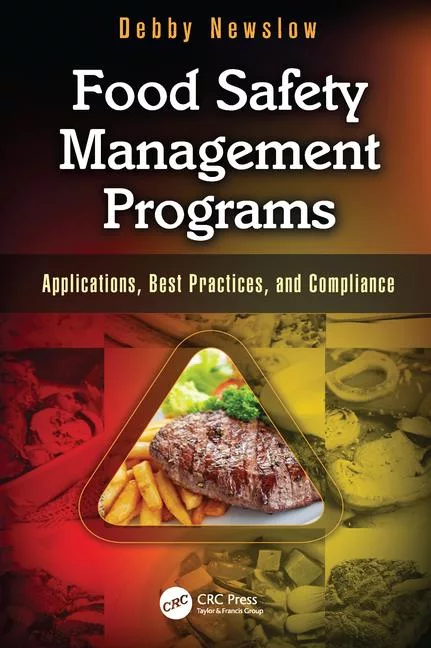
    Food Safety Management Programs: Applications, Best Practices, and Compliance

See More Products

Events

View AllSubmit An Event
  • December 4, 2025

    Beyond Detection: How Integrated PCR Diagnostics Strengthen Food Safety in RTE Manufacturing

    On Demand: From this webinar, attendees will learn best practices for prevention of FM contamination at the corporate and plant levels.
View AllSubmit An Event

Related Directories

  • AEMTEK Laboratories

    ISO 17025 accredited third-party laboratory focused on accuracy, turnaround times, customer service, and knowledgeable staff. AEMTEK specializes in product testing, environmental monitoring, shelf-life studies, process validation, research, training, and consulting services. For over 20 years, AEMTEK has provided clients with holistic solutions to ensure food safety.
  • Eurofins

    Our extensive network provides testing for pathogens, spoilage organisms, contaminants, allergens, viruses, GMOs, and environmental monitoring, as well as training, consulting, auditing, and certification services. We offer solutions that span your products’ entire life cycle, from consumer insights through product development, process and product validations, stability, and shelf-life studies.
  • Integrated Chemistry Services LLC

    Integrated Chemistry Services (ICS) is a contract development and manufacturing partner based in Moorestown, New Jersey. In 2025, ICS acquired the PDX product line from Paradigm Diagnostics. These trusted, high-speed microbiological tests detect foodborne pathogens (Listeria, Salmonella, and STEC) quickly and affordably, minimizing downtime and protecting your bottom line.
×

Never miss the latest news and trends driving the food safety industry

eNewsletter | Website | eMagazine

JOIN TODAY!
  • RESOURCES
    • Advertise
    • Contact Us
    • Directories
    • Store
    • Want More
  • SIGN UP TODAY
    • Create Account
    • eMagazine
    • eNewsletter
    • Customer Service
    • Manage Preferences
  • SERVICES
    • Marketing Services
    • Reprints
    • Market Research
    • List Rental
    • Survey/Respondent Access
  • STAY CONNECTED
    • LinkedIn
    • Facebook
    • Instagram
    • X (Twitter)
  • PRIVACY
    • PRIVACY POLICY
    • TERMS & CONDITIONS
    • DO NOT SELL MY PERSONAL INFORMATION
    • PRIVACY REQUEST
    • ACCESSIBILITY

Copyright ©2025. All Rights Reserved BNP Media.

Design, CMS, Hosting & Web Development :: ePublishing