Food Safety
search
Ask Food Safety AI
cart
facebook twitter linkedin
  • Sign In
  • Create Account
  • Sign Out
  • My Account
Food Safety
  • NEWS
    • Latest News
    • White Papers
  • PRODUCTS
  • TOPICS
    • Contamination Control
    • Food Types
    • Management
    • Process Control
    • Regulatory
    • Sanitation
    • Supply Chain
    • Testing and Analysis
  • PODCAST
  • EXCLUSIVES
    • Food Safety Five Newsreel
    • eBooks
    • FSM Distinguished Service Award
    • Interactive Product Spotlights
    • Videos
  • BUYER'S GUIDE
  • MORE
    • ENEWSLETTER >
      • Archive Issues
      • Subscribe to eNews
    • Store
    • Sponsor Insights
    • ASK FSM AI
  • WEBINARS
  • FOOD SAFETY SUMMIT
  • EMAG
    • eMagazine
    • Archive Issues
    • Editorial Advisory Board
    • Contact
    • Advertise
  • SIGN UP!
News

FDA Identifies Six California Counties Where Contaminated Romaine Lettuce Originated
November 28, 2018

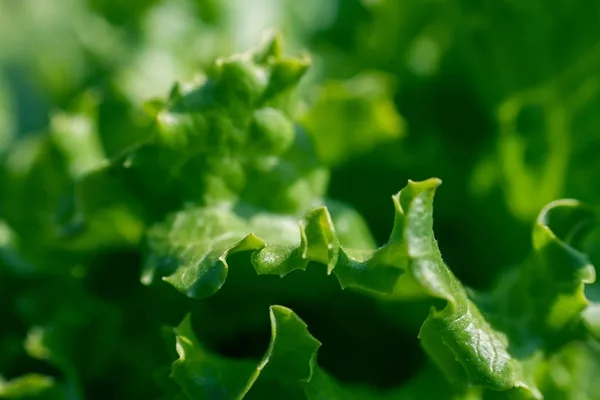
As health officials continue to pinpoint the source of the most current Escherichia coli O157:H7 outbreak linked to romaine lettuce, they have been able to drill down to more specifics about where the contaminated lettuce was grown. The specific California counties that the U.S. Food and Drug Administration (FDA) has identified in the traceback investigation are:

Monterey
San Benito
San Luis Obispo
Santa Barbara
Santa Cruz
Ventura

Romaine harvested from locations outside of the California regions identified by the traceback investigation does not appear to be related to the current outbreak.

There is no recommendation for consumers or retailers to avoid using romaine lettuce that is certain to have been harvested from areas outside of the Central Coast growing regions of northern and central California. For example, romaine lettuce harvested from areas that include, but are not limited to the desert growing region near Yuma, the California desert growing region near Imperial County and Riverside County, the state of Florida, and Mexico, does not appear to be related to the current outbreak. Additionally, there is no evidence hydroponically- and greenhouse-grown romaine is related to the current outbreak.

During this new stage of the investigation, it is vital that consumers and retailers have an easy way to identify romaine lettuce by both harvest date and harvest location. Labeling with this information on each bag of romaine or signage in stores where labels are not an option would easily differentiate for consumers romaine from unaffected growing regions.

FDA’s Recommendation:

Based on discussions with producers and distributors, romaine lettuce entering the market will now be labeled with a harvest location and a harvest date or labeled as being hydroponically- or greenhouse-grown. If it does not have this information, you should not eat or use it.

If romaine lettuce does have this labeling information, FDA advises avoiding any product from the Central Coast growing regions of northern and central California. Romaine lettuce from outside those regions need not be avoided.

Romaine lettuce that was harvested outside of the Central Coast growing regions of northern and central California does not appear to be related to the current outbreak. Hydroponically- and greenhouse-grown romaine also does not appear to be related to the current outbreak. There is no recommendation for consumers or retailers to avoid using romaine harvested from these sources.

FDA's update released on November 28th tallies 43 total illnesses and 16 hospitalizations in this most recent outbreak.

Related news:
FDA: Contaminated Romaine Lettuce is from California

Sign up for Food Safety Magazine’s bi-weekly emails!

Subscribe to our podcast: Food Safety Matters!


Author(s): Staff

Looking for quick answers on food safety topics?
Try Ask FSM, our new smart AI search tool.
Ask FSM →


Share This Story

Recommended Content

JOIN TODAY
to unlock your recommendations.

Already have an account? Sign In

  • people holding baby chicks

    Serovar Differences Matter: Utility of Deep Serotyping in Broiler Production and Processing

    This article discusses the significance of Salmonella in...
    Methods
    By: Nikki Shariat Ph.D.
  • woman washing hands

    Building a Culture of Hygiene in the Food Processing Plant

    Everyone entering a food processing facility needs to...
    Training
    By: Richard F. Stier, M.S.
  • graphical representation of earth over dirt

    Climate Change and Emerging Risks to Food Safety: Building Climate Resilience

    This article examines the multifaceted threats to food...
    Management
    By: Maria Cristina Tirado Ph.D., D.V.M. and Shamini Albert Raj M.A.
Manage My Account
  • eMagazine Subscription
  • Subscribe to eNewsletter
  • Manage My Preferences
  • Website Registration
  • Subscription Customer Service

More Videos

Sponsored Content

Sponsored Content is a special paid section where industry companies provide high quality, objective, non-commercial content around topics of interest to the Food Safety Magazine audience. All Sponsored Content is supplied by the advertising company and any opinions expressed in this article are those of the author and not necessarily reflect the views of Food Safety Magazine or its parent company, BNP Media. Interested in participating in our Sponsored Content section? Contact your local rep!

close
  • Salmonella bacteria
    Sponsored byThermoFisher

    Food Microbiology Testing Methods: Salmonella species

  • a diagram explaining indicator organisms
    Sponsored byHygiena

    How Proactive Listeria Testing Helps Prevent Six- and Seven-Figure Recalls

  • woman grocery shopping
    Sponsored byCorbion

    Designing Safety Into Every Bite: Proactive Risk Mitigation for Refrigerated Foods

Popular Stories

NRTE breaded stuffed chicken

USDA Indefinitely Delays Enforcement of Salmonella as Adulterant in Raw Breaded, Stuffed Chicken

non-conforming product

How to Handle Non-Conforming Product

spoonfuls of food ingredients

FDA’s Developing Rule to Tighten GRAS Oversight Moves to White House

Events

December 11, 2025

How to Develop and Implement an Effective Food Defense Strategy

Live: December 11, 2025 at 2:00 pm EDT: From this webinar, attendees will learn common areas where companies encounter challenges in their food defense strategies and how to address them.

May 11, 2026

The Food Safety Summit

Stay informed on the latest food safety trends, innovations, emerging challenges, and expert analysis. Leave the Summit with actionable insights ready to drive measurable improvements in your organization. Do not miss this opportunity to learn from experts about contamination control, food safety culture, regulations, sanitation, supply chain traceability, and so much more.

View All

Products

Global Food Safety Microbial Interventions and Molecular Advancements

Global Food Safety Microbial Interventions and Molecular Advancements

See More Products

Related Articles

  • Romaine Lettuce Outbreak: FDA Identifies Cattle Operation Near Contaminated Canal Water

    See More
  • FDA: Contaminated Romaine Lettuce is from California

    See More
  • FSS recalls generic image

    Update: FDA investigating multistate outbreak of E. coli O157:H7 infections likely linked to romaine lettuce grown in California

    See More

Related Products

See More Products
  • 1119071127.jpg

    Food Safety, Risk Intelligence and Benchmarking

  • 1119237963.jpg

    Food Safety in China: Science, Technology, Management and Regulation

  • 1119258073.jpg

    FSMA and Food Safety Systems: Understanding and Implementing the Rules

See More Products

Related Directories

  • NEMIS Technologies

    At NEMIS, we are setting new standards in environmental monitoring, helping your facility stay audit-ready and protected from contamination. Our cutting-edge solutions are designed to proactively identify and address risks, transforming how food safety is upheld in production environments.
  • CEJN North America

    High-performance F&B equipment for food safety, washdown and blow-off applications, and, now, introducing the First Metal/X-Ray-Detectable Plastic blow gun on the market- the 208 Detect- made from food grade plastic, reducing the risks of accidental contamination, product rejections, expensive recalls, and waste. Made from food-grade, detectable plastic, 208 Detect and in compliance with Reg. (EC) No 1935/2004 and FDA CFR 21.170-199.
  • Megadyne

    Megadyne Group specializes in the development and manufacture of power transmission belts, matched components, and complete belt systems tailored to diverse industrial applications. As a trusted partner to original equipment manufacturers (OEMs) and aftermarket distributors, Megadyne operates manufacturing facilities across Europe, North America, and Asia. Our comprehensive product range includes thermoset and thermoplastic polyurethane belts, rubber timing and V-belts, flat belts, multi-rib belts, engineered specialty belts, pulleys, clamping plates, timing bars, and customized solutions designed to meet specific customer requirements. Megadyne delivers innovative, end-to-end solutions across a broad spectrum of industries, including material handling, elevators, machine tools, food processing, packaging, fitness equipment, wood, marble, and ceramics, to name just a few sectors where our products are trusted.
×

Never miss the latest news and trends driving the food safety industry

eNewsletter | Website | eMagazine

JOIN TODAY!
  • RESOURCES
    • Advertise
    • Contact Us
    • Directories
    • Store
    • Want More
  • SIGN UP TODAY
    • Create Account
    • eMagazine
    • eNewsletter
    • Customer Service
    • Manage Preferences
  • SERVICES
    • Marketing Services
    • Reprints
    • Market Research
    • List Rental
    • Survey/Respondent Access
  • STAY CONNECTED
    • LinkedIn
    • Facebook
    • Instagram
    • X (Twitter)
  • PRIVACY
    • PRIVACY POLICY
    • TERMS & CONDITIONS
    • DO NOT SELL MY PERSONAL INFORMATION
    • PRIVACY REQUEST
    • ACCESSIBILITY

Copyright ©2025. All Rights Reserved BNP Media.

Design, CMS, Hosting & Web Development :: ePublishing