Food Safety
search
Ask Food Safety AI
cart
facebook twitter linkedin instagram youtube
  • Sign In
  • Create Account
  • Sign Out
  • My Account
Food Safety
  • NEWS
    • Latest News
    • Food Safety Five Newsreel
  • PRODUCTS
  • TOPICS
    • Contamination Control
    • Food Types
    • Management
    • Process Control
    • Regulatory
    • Sanitation
    • Supply Chain
    • Testing and Analysis
  • PODCAST
  • EXCLUSIVES
    • eBooks
    • Sponsored Insights
    • Sponsored White Papers
    • FSM Distinguished Service Award
    • Interactive Product Spotlights
    • Videos
  • MORE
    • BUYER'S GUIDE
    • NEWSLETTERS >
      • Archive Issues
      • Subscribe to eNews
    • Store
    • ASK FSM AI
  • WEBINARS
  • FOOD SAFETY SUMMIT
  • FSM FEATURES
    • FSM Features Collection
    • eMag Archives
    • Editorial Advisory Board
    • Contact
    • Advertise
  • SIGN UP!
News

Cornell University to Host Nonthermal Technologies Symposium

556a136b b9c1 429d a6f8b29069a6a058
August 18, 2017

Running from Sunday October 29 through October 31, 2017, international food safety experts will gather at Cornell University for a symposium on the validation of nonthermal technologies, hosted by the university’s Department of Food Science. This symposium will address critical issues related to the validation of nonthermal processing methods used for controlling pathogens in foods and ensuring compliance with regulatory requirements, such as those set by the Food Safety Modernization Act. Leading experts from the U.S. and around the world—including representatives of U.S. regulatory agencies and the food industry—will discuss best practices and challenges related to the validation and adoption of nonthermal technologies for microbial inactivation. The symposium was made possible by a grant from the U.S. Department of Agriculture and contributions from the Department of Food Science at Cornell University, the Cornell Institute for Food Systems Industry Partnership Program and the New York State Association for Food Protection. The symposium has the support of the Nonthermal Processing Division of the Institute of Food Technologists and the European Federation of Food Science and Technology.

Topics that will be covered include the following:

  • Overview of nonthermal processing methods for microbial inactivation: high pressure processing, pulsed electric field, high pressure homogenization, light-based treatments (UV, pulsed light), cold plasma, irradiation
  • Mechanisms of inactivation of different types of microorganisms by nonthermal methods
  • Critical issues for the adoption of novel processing methods for microbial inactivation to ensure compliance with FSMA
  • Validation of nonthermal processing methods: regulatory requirements and best practices
  • Round table discussion on validation and regulatory aspects of nonthermal involving academic researchers, industry and regulatory representatives
  • Visit of the Cornell Food Science facilities and demonstration of various nonthermal technologies: high pressure processing, pulsed electric field, membrane filtration (microfiltration, ultrafiltration, reverse osmosis, forward osmosis), supercritical CO2, UV, pulsed light, LED light

For more information, please visit foodscience.cals.cornell.edu/news-events/symposium-2017.


Author(s): Staff

Looking for quick answers on food safety topics?
Try Ask FSM, our new smart AI search tool.
Ask FSM →


Share This Story

Recommended Content

JOIN TODAY
to unlock your recommendations.

Already have an account? Sign In

  • people holding baby chicks

    Serovar Differences Matter: Utility of Deep Serotyping in Broiler Production and Processing

    This article discusses the significance of Salmonella in...
    Testing & Analysis
    By: Nikki Shariat Ph.D.
  • woman washing hands

    Building a Culture of Hygiene in the Food Processing Plant

    Everyone entering a food processing facility needs to...
    Facilities
    By: Richard F. Stier, M.S.
  • graphical representation of earth over dirt

    Climate Change and Emerging Risks to Food Safety: Building Climate Resilience

    This article examines the multifaceted threats to food...
    Contamination Control
    By: Maria Cristina Tirado Ph.D., D.V.M. and Shamini Albert Raj M.A.
Manage My Account
  • eMagazine Subscription
  • Subscribe to Newsletters
  • Manage My Preferences
  • Website Registration
  • Subscription Customer Service

More Videos

Sponsored Content

Sponsored Content is a special paid section where industry companies provide high quality, objective, non-commercial content around topics of interest to the Food Safety Magazine audience. All Sponsored Content is supplied by the advertising company and any opinions expressed in this article are those of the author and not necessarily reflect the views of Food Safety Magazine or its parent company, BNP Media. Interested in participating in our Sponsored Content section? Contact your local rep!

close
  • Top view portrait of two factory workers standing by conveyor belt during quality inspection at food production, copy space
    Sponsored byFlexXray

    Foreign Material By the Numbers: What the 2026 Benchmark Report Reveals

  • a conveyorized industrial metal detector system that appears to resemble a Loma Systems IQ4 Metal Detector setup with an integrated conveyor belt and control panel for food or package inspection.
    Sponsored byMettler Toledo

    Beyond Detection: How to Avoid Physical Contamination in Food Through a Smarter Inspection Strategy

  • The image displays a bottling plant production line, commonly used in the beverage industry for filling and packaging soft drinks.
    Sponsored byBIOIONIX

    Sustainability with ROI: A Beverage Producer Case Study in Water Savings

Popular Stories

Genome sequencing data and lab equipment

Whole Genome Sequencing in Food Safety: Non-Technical Systems Barriers and Opportunities for Enhanced Global Use

baby being spoon-fed jarred baby food

FDA Proposes Cadmium Action Levels for Baby Foods, Issues Preventive Controls Guidance for Chemical Hazards

Image of U.S. Department of Agriculture building

Court Temporarily Halts USDA’s Planned Reorganization

allergens ebook

Events

October 29, 2026

FDA Proposes Major GRAS Reform: What It Could Mean for Your Business

Live: October 29, 2026 at 2:00 pm EDT: Attend this webinar to examine potential implications for self-GRAS, Flavor and Extract Manufacturers Association (FEMA) GRAS, and food-contact substances.

November 5, 2026

How Middle Managers Shape Food Safety Culture and Risk Performance

Live: November 5, 2026 at 11:00 am EST: From this webinar, attendees will learn how investing in middle managers improves both FSQ strategy implementation and accountability across all levels of the company.

November 12, 2026

From Data Overload to Actionable Food Safety Risk Intelligence

Live: November 12, 2026 at 11:00 am EST: This webinar explores how data integration, advanced analytics, and digital technologies can help transform disparate information into meaningful risk intelligence.

View All

Products

Global Food Safety Microbial Interventions and Molecular Advancements

Global Food Safety Microbial Interventions and Molecular Advancements

See More Products

Related Articles

  • IAFNS McGill University logos

    IAFNS, McGill University to Host Free Virtual Workshop on Food Safety in Production Environments

    See More
  • Denmark flag

    Technical University of Denmark to Host WHO Center for Food Safety, Nutrition Work

    See More
  • coronavirus square.png

    Resource: Cornell University

    See More

Related Products

See More Products
  • food safety.jpg

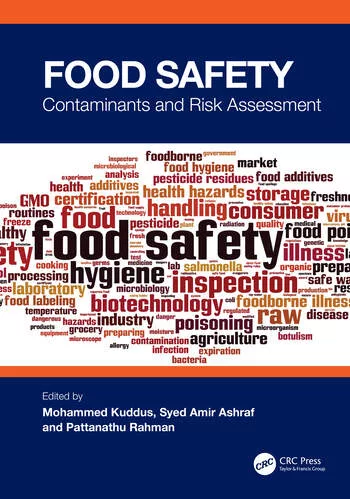
    Food Safety Contaminants and Risk Assessment

  • shelf life.jpg

    Shelf Life and Food Safety

  • 9781498721776.jpg

    Handbook of Food Processing: Food Safety, Quality, and Manufacturing Processes

See More Products

Related Directories

  • Lakeland University

    Lakeland University offers a unique Food Safety & Quality program that blends the sciences of biology and chemistry with best business practices to prepare students for careers in food processing. This is the nation’s first bachelor’s degree program of its kind. Lakeland worked with some of the biggest names in the food business to create this degree program.
  • Allera Technologies

    Allera is a modern food safety platform for FSQA professionals, offering three core solutions: digital forms for quality checks, HACCP monitoring, and production logs; supplier management with automated compliance tracking; and document control with centralized SOPs and version history. Eliminate lost documentation, release batches faster, and remove manual FSQA work.
  • Goodway Technologies

    Goodway Technologies has the industry's most reliable surface and conveyor belt sanitizing equipment for robust hygiene in food production plants, as well as powerful dry steam cleaners that can be used to clean tough grime on virtually any surface.
×

Never miss the latest news and trends driving the food safety industry

Newsletters | Website | FSM Features Collection

JOIN TODAY!
  • RESOURCES
    • Advertise
    • Contact Us
    • Directories
    • Store
    • Want More
  • SIGN UP TODAY
    • Create Account
    • eMagazine
    • Newsletters
    • Customer Service
    • Manage Preferences
  • SERVICES
    • Marketing Services
    • Reprints
    • Market Research
    • List Rental
    • Survey/Respondent Access
  • STAY CONNECTED
    • LinkedIn
    • Facebook
    • Instagram
    • X (Twitter)
  • PRIVACY
    • PRIVACY POLICY
    • TERMS & CONDITIONS
    • DO NOT SELL MY PERSONAL INFORMATION
    • PRIVACY REQUEST
    • ACCESSIBILITY

Copyright ©2026. All Rights Reserved BNP Media, Inc. and BNP Media II, LLC.

Design, CMS, Hosting & Web Development :: ePublishing