Food Safety
search
Ask Food Safety AI
cart
facebook twitter linkedin instagram youtube
  • Sign In
  • Create Account
  • Sign Out
  • My Account
Food Safety
  • NEWS
    • Latest News
    • White Papers
  • PRODUCTS
  • TOPICS
    • Contamination Control
    • Food Types
    • Management
    • Process Control
    • Regulatory
    • Sanitation
    • Supply Chain
    • Testing and Analysis
  • PODCAST
  • EXCLUSIVES
    • Food Safety Five Newsreel
    • eBooks
    • FSM Distinguished Service Award
    • Interactive Product Spotlights
    • Videos
  • BUYER'S GUIDE
  • MORE
    • NEWSLETTERS >
      • Archive Issues
      • Subscribe to eNews
    • Store
    • Sponsor Insights
    • ASK FSM AI
  • WEBINARS
  • FOOD SAFETY SUMMIT
  • EMAG
    • eMagazine
    • Archive Issues
    • Editorial Advisory Board
    • Contact
    • Advertise
  • SIGN UP!
Testing & AnalysisMethodsMicrobiological Testing & Analysis

Testing Automation Provides Flexible Solutions

October 1, 2016

According to the Centers for Disease Control and Prevention (CDC), major outbreaks of foodborne illness due to Salmonella, Campylobacter, E. coli and Listeria affect an estimated 48 million people in the U.S. each year. Introduction of the Food Safety Modernization Act (FSMA) has shifted focus towards ongoing prevention through establishment of documented food safety plans, which include Hazard Analysis, preventive controls and recall plans.

Due to increased consumer awareness of foodborne illness, through heightened media coverage and the influence of social media, food manufacturers understand that a single outbreak can impact not only millions of consumers’ lives, but also their company’s future viability as well. For this reason, food safety testing labs are experiencing heightened demands from manufacturers and regulators who are seeking faster test times and higher accuracy than ever before. This, in turn, has led to food manufacturers seeking new and improved methods for processing, packaging and testing in an attempt to increase sustainability of their product and their brand.

In the U.S., as food safety regulations continue to evolve, as seen with the implementation of FSMA, laboratory automation can be a key component for test labs who have to comply with industry regulations (including reporting and traceability).

Automation Doesn’t Have to Be Cumbersome
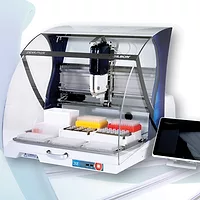
Advancements in testing automation have allowed for the development of smaller, more flexible solutions that fit into existing laboratory configurations and workflows, and are available at a significantly lower price than traditional systems. Thanks to these advancements, automation is within the reach of both low- and high-volume laboratories that wish to benefit from increased workflow with reduced handling and steps. BioControl System’s Assurance GDS® system utilizes the targeted isolation capabilities of immunomagnetic separation (IMS) together with the specificity of DNA-based detection to provide fast and accurate results for even the most challenging food samples.

With Assurance GDS, your test methods can be automated or performed manually as needed, giving your lab the ultimate in flexibility. Whether using a “batch and test” or “continuous processing” workflow, Assurance GDS PickPen® PIPETMAX® (PPMX) can dispense reagents for up to 288 samples and perform IMS for up to 96 samples at one time. “The ability for our lab technicians to walk away and complete other tasks while the GDS PPMX is running is a valuable time saver for our lab,” says one lab manager.

Even Data Can Be Automated
BioControl’s Assurance GDS Rotor-Gene® software includes the ability to automatically store all associated test data into a Laboratory Information Management System (LIMS). By electronically storing all data associated with test records, LIMS may facilitate document control, trend analysis and traceability, which is a key component in FSMA.

The data are available in a user-friendly format that can be customized to meet your lab’s needs. With LIMS integration, all information from a sample is electronically stored, from start to finish. You’ll know the sample identity, where the sample came from, the sample prep process, the PCR process, results and even every person who was involved with that sample along the way. Every detail is automatically stored, no matter how big or small, and you maintain proper documentation, making you much more prepared, whether it be for an audit or an unexpected event.

“LIMS changed the way our lab tracked samples and improved workflow to help our managers oversee operations more effectively,” says one lab manager of a large commercial lab after using LIMS with both the Assurance GDS PPMX and Rotor-Gene. Both instruments are LIMS compatible and feature importing and exporting capabilities.

With over 30 years of experience in the global food industry, BioControl Systems specializes in developing rapid pathogen diagnostics that are fast, accurate and flexible. Assurance GDS is a flexible automated solution that reduces the labor and helps increase accuracy of the method. This flexibility makes Assurance GDS an ideal solution for labs of any size who are looking to accomplish more—with less.

To learn more about the latest in laboratory and data automation, contact BioControl Systems, Phone: 800.245.0113, E-mail: info@biocontrolsys.com, web: www.biocontrolsys.com.


Author(s): BioControl Systems

Looking for quick answers on food safety topics?
Try Ask FSM, our new smart AI search tool.
Ask FSM →


Share This Story

Recommended Content

JOIN TODAY
to unlock your recommendations.

Already have an account? Sign In

  • people holding baby chicks

    Serovar Differences Matter: Utility of Deep Serotyping in Broiler Production and Processing

    This article discusses the significance of Salmonella in...
    Contamination Control
    By: Nikki Shariat Ph.D.
  • woman washing hands

    Building a Culture of Hygiene in the Food Processing Plant

    Everyone entering a food processing facility needs to...
    Facilities
    By: Richard F. Stier, M.S.
  • graphical representation of earth over dirt

    Climate Change and Emerging Risks to Food Safety: Building Climate Resilience

    This article examines the multifaceted threats to food...
    Risk Assessment
    By: Maria Cristina Tirado Ph.D., D.V.M. and Shamini Albert Raj M.A.
Manage My Account
  • eMagazine Subscription
  • Subscribe to Newsletters
  • Manage My Preferences
  • Website Registration
  • Subscription Customer Service

More Videos

Sponsored Content

Sponsored Content is a special paid section where industry companies provide high quality, objective, non-commercial content around topics of interest to the Food Safety Magazine audience. All Sponsored Content is supplied by the advertising company and any opinions expressed in this article are those of the author and not necessarily reflect the views of Food Safety Magazine or its parent company, BNP Media. Interested in participating in our Sponsored Content section? Contact your local rep!

close
  • NEVIFIT 3 Compartment BPA-FREE
    Sponsored byCorbion

    The Risks of Ready-to-Eat: Five Ways to Protect Today's Prepared Meals

  • a group of workers in a food production facility
    Sponsored bySkillUp by Registrar Corp

    How to Build a Better Training Program: Data and Insights from the Global Food Safety Training Survey

  • the use of dual-energy X-ray food inspection technology to identify foreign contaminants.
    Sponsored byEagle by METTLER TOLEDO

    Precision Inspection Starts with the Right X-ray Detector

Popular Stories

green powder/moringa in wooden mortar

FDA Opens Third Salmonella–Moringa Outbreak Investigation of the Year

FoodSafetyMattersFinal-900x550-(002).jpg

Ep. 218. Dr. Brady Carter: Water Activity, Shelf-Life Validation, and Food Safety Controls

fermented meat

Study is First to Analyze Trends in Foodborne Illness Outbreaks Linked to Non-Dairy Fermented Products

a practical guide to spoilage investigation webinar

Events

June 4, 2026

Building a Stronger Food Safety Program in a Changing GFSI Landscape

Live: June 4, 2026 at 11:00 am EDT: Attend this webinar to understand how GFSI requirements are evolving and what those changes signal for quality programs at food and beverage facilities.

June 10, 2026

A Practical Guide to Spoilage Investigation and Prevention

Live: June 10, 2026 at 11:00 am EDT: Join this webinar to learn how to identify spoilage root causes, reduce risk, and apply data-driven strategies for prevention.

June 16, 2026

Sustainable Food Contact Materials: Where Regulation Meets Analytical Testing

Live: June 16, 2026 at 11:00 am EDT: This webinar explores how sustainability regulations are changing food contact material requirements, including packaging compliance, unintended substances, and per- and polyfluoroalkyl substances.

View All

Products

Global Food Safety Microbial Interventions and Molecular Advancements

Global Food Safety Microbial Interventions and Molecular Advancements

See More Products

Related Articles

  • Testing Automation Provides Flexible Solutions

    See More
  • BFM Venting Surge Hopper

    BFM’s New Venting Surge Hopper Provides Transparent, Flexible Bridging Solution

    See More
  • JBT Marel logo

    New Efficient Agitation Retort Provides Optimized Preservation Solutions for Various RTE Food Packaging

    See More

Related Products

See More Products
  • 0813808774.jpg

    Improving Import Food Safety

  • 1118396308.jpg

    High Throughput Analysis for Food Safety

  • Food-Forensics-3D.jpg

    Food Forensics Handbook Practice, Instrumentation, Case Studies

See More Products

Events

View AllSubmit An Event
  • June 16, 2026

    Sustainable Food Contact Materials: Where Regulation Meets Analytical Testing

    Live: June 16, 2026 at 11:00 am EDT: This webinar explores how sustainability regulations are changing food contact material requirements, including packaging compliance, unintended substances, and per- and polyfluoroalkyl substances.
View AllSubmit An Event

Related Directories

  • BluePrint Automation (BPA)

    BluePrint Automation is a world leader in end of line packaging automation, with a core focus on flexible (bags, SUP’s, flow wraps) and naked products. With an innovative team BPA designs, develops and manufactures primary and secondary packaging solutions for QSR, food service and retail products. You make it, we pack it!
  • NorthStar Automation

    The NorthStar WMS utilizing barcode scanning provides functionality for the food industry: 1.) Full traceability 2.) Lot control 3.) Allergen control 4.) Mock recall 5.) 60+ reports and KPIs 6.) FIFO, FEFO
×

Never miss the latest news and trends driving the food safety industry

Newsletters | Website | eMagazine

JOIN TODAY!
  • RESOURCES
    • Advertise
    • Contact Us
    • Directories
    • Store
    • Want More
  • SIGN UP TODAY
    • Create Account
    • eMagazine
    • Newsletters
    • Customer Service
    • Manage Preferences
  • SERVICES
    • Marketing Services
    • Reprints
    • Market Research
    • List Rental
    • Survey/Respondent Access
  • STAY CONNECTED
    • LinkedIn
    • Facebook
    • Instagram
    • X (Twitter)
  • PRIVACY
    • PRIVACY POLICY
    • TERMS & CONDITIONS
    • DO NOT SELL MY PERSONAL INFORMATION
    • PRIVACY REQUEST
    • ACCESSIBILITY

Copyright ©2026. All Rights Reserved BNP Media, Inc. and BNP Media II, LLC.

Design, CMS, Hosting & Web Development :: ePublishing