Food Safety
search
Ask Food Safety AI
cart
facebook twitter linkedin instagram youtube
  • Sign In
  • Create Account
  • Sign Out
  • My Account
Food Safety
  • NEWS
    • Latest News
    • White Papers
  • PRODUCTS
  • TOPICS
    • Contamination Control
    • Food Types
    • Management
    • Process Control
    • Regulatory
    • Sanitation
    • Supply Chain
    • Testing and Analysis
  • PODCAST
  • EXCLUSIVES
    • Food Safety Five Newsreel
    • eBooks
    • FSM Distinguished Service Award
    • Interactive Product Spotlights
    • Videos
  • BUYER'S GUIDE
  • MORE
    • NEWSLETTERS >
      • Archive Issues
      • Subscribe to eNews
    • Store
    • Sponsor Insights
    • ASK FSM AI
  • WEBINARS
  • FOOD SAFETY SUMMIT
  • EMAG
    • eMagazine
    • Archive Issues
    • Editorial Advisory Board
    • Contact
    • Advertise
  • SIGN UP!

Food scientists study how virtual reality can alter consumers' tastebuds

Panelists rated the pungency of the blue cheese significantly higher in the cow barn setting than in the sensory booth or the virtual park bench.
default virtual reality
October 5, 2018

Food scientists from Cornell University, Ithaca, N.Y., used virtual reality (VR) to show how people’s perception of real food can be altered by their surroundings, according to “Dynamic Context Sensory Testing–A Proof of Concept Study Bringing Virtual Reality to the Sensory Booth.”

“When we eat, we perceive not only just the taste and aroma of foods, [but we also] get sensory input from our surroundings – our eyes, ears, even our memories about surroundings,” says Robin Dando, associate professor of food science and senior author of the study.

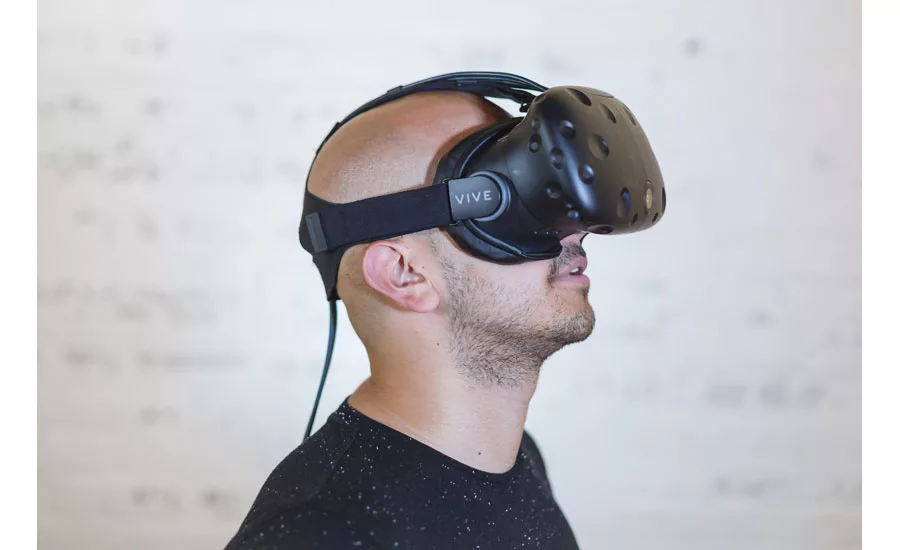
About 50 panelists who used VR headsets as they ate were given three identical samples of blue cheese. The study participants were virtually placed in a standard sensory booth, a pleasant park bench and the Cornell cow barn to see custom-recorded 360-degree videos.

The panelists were unaware that the cheese samples were identical, and rated the pungency of the blue cheese significantly higher in the cow barn setting than in the sensory booth or the virtual park bench.

To control for the pungency results, panelists also rated the saltiness of the three samples, and researchers found there was no statistical difference among them.

The purpose of this project was to develop an easy-to-implement method for adapting VR technology for use in food sensory evaluation, says Dando.

“Our environs are a critical part of the eating experience. We consume foods in surroundings that can spill over into our perceptions of the food,” he adds. “This kind of testing offers advantages of convenience and flexibility, compared to building physical environments. This research validates that virtual reality can be used, as it provides an immersive environment for testing. Visually, virtual reality imparts qualities of the environment itself to the food being consumed – making this kind of testing cost-efficient.”

The was also authored by researcher Alina Stelick, sensory program manager at Cornell Institute for Food Systems; and summer undergraduate research scholars Alexandra Penano, University of California, Berkeley, Berkeley, Calif., and Alden Riak, Iowa State University, Ames, Iowa.

Looking for quick answers on food safety topics?
Try Ask FSM, our new smart AI search tool.
Ask FSM →


This article was originally posted on www.refrigeratedfrozenfood.com.
KEYWORDS: Cornell University market trends virtual reality virtual reality technology

Share This Story

Recommended Content

JOIN TODAY
to unlock your recommendations.

Already have an account? Sign In

  • people holding baby chicks

    Serovar Differences Matter: Utility of Deep Serotyping in Broiler Production and Processing

    This article discusses the significance of Salmonella in...
    Meat/Poultry
    By: Nikki Shariat Ph.D.
  • woman washing hands

    Building a Culture of Hygiene in the Food Processing Plant

    Everyone entering a food processing facility needs to...
    Personal Hygiene/Handwashing
    By: Richard F. Stier, M.S.
  • graphical representation of earth over dirt

    Climate Change and Emerging Risks to Food Safety: Building Climate Resilience

    This article examines the multifaceted threats to food...
    Management
    By: Maria Cristina Tirado Ph.D., D.V.M. and Shamini Albert Raj M.A.
Manage My Account
  • eMagazine Subscription
  • Subscribe to Newsletters
  • Manage My Preferences
  • Website Registration
  • Subscription Customer Service

More Videos

Sponsored Content

Sponsored Content is a special paid section where industry companies provide high quality, objective, non-commercial content around topics of interest to the Food Safety Magazine audience. All Sponsored Content is supplied by the advertising company and any opinions expressed in this article are those of the author and not necessarily reflect the views of Food Safety Magazine or its parent company, BNP Media. Interested in participating in our Sponsored Content section? Contact your local rep!

close
  • This image displays a multi-stage water filtration system designed to remove contaminants from drinking water.
    Sponsored byWaterdrop Filter

    The 4.0 ppt Era: Future-Proofing Your Food Supply Chain Against "Forever Chemicals"

  • The image displays a bottling plant production line, commonly used in the beverage industry for filling and packaging soft drinks.
    Sponsored byBIOIONIX

    Sustainability with ROI: A Beverage Producer Case Study in Water Savings

  • factory
    Sponsored byIFC

    A Clean Break to Reset the Environment with Chlorine Dioxide

Popular Stories

workers and inspector in processing facility

Gearing Up for an FDA Inspection

woman looking at box of packaged food in grocery store seeming pensive

RFK Jr. Says Federal Ultra-Processed Foods Definition is Coming in April

magnifying glass hovering over question mark on yellow background

FDA Redacts All Key Details in Summary of Fatal Listeriosis Outbreak Linked to Produce

Events

March 26, 2026

Continuous Pathogen Control: Enhancing Sanitation and Environmental Monitoring in Food Processing

Live: March 26, 2026, at 2:00 pm EST: This session explores the role of continuous airborne pathogen control technology in supporting sanitation and environmental monitoring programs within food processing environments.

March 31, 2026

Regulatory Risk, Ingredient Safety, and GRAS: What Companies Need to Act on Now

Live: March 31, 2026, at 11:00 am EDT: From this webinar, attendees will recognize patterns in food policy affecting dietary guidelines, UPFs, state legislative actions, and expected GRAS reform.

April 8, 2026

Foreign Material Contamination: Why In-Line Reinspection Isn't Enough

Live: April 8, 2026, at 11:00 am EDT: From this webinar, attendees will learn why re-inspecting with in-line equipment is not sufficient when it comes to potential foreign material contamination.

View All

Products

Global Food Safety Microbial Interventions and Molecular Advancements

Global Food Safety Microbial Interventions and Molecular Advancements

See More Products

Related Articles

  • peanuts with shells

    Researchers Study How Much Peanut Protein Those with Allergies Can Tolerate

    See More
  • Jason Andersen

    How IIoT can improve food and beverage bottom lines

    See More
  • food and packaging safety

    How to Mitigate Risk as Consumers Question Food and Packaging Safety

    See More

Related Products

See More Products
  • 1119053595.jpg

    Food Safety for the 21st Century: Managing HACCP and Food Safety throughout the Global Supply Chain, 2E

  • 9781498721776.jpg

    Handbook of Food Processing: Food Safety, Quality, and Manufacturing Processes

  • shelf life.jpg

    Shelf Life and Food Safety

See More Products

Related Directories

  • Goodway Technologies

    Goodway Technologies has the industry's most reliable surface and conveyor belt sanitizing equipment for robust hygiene in food production plants, as well as powerful dry steam cleaners that can be used to clean tough grime on virtually any surface.
  • Eurofins

    Our extensive network provides testing for pathogens, spoilage organisms, contaminants, allergens, viruses, GMOs, and environmental monitoring, as well as training, consulting, auditing, and certification services. We offer solutions that span your products’ entire life cycle, from consumer insights through product development, process and product validations, stability, and shelf-life studies.
×

Never miss the latest news and trends driving the food safety industry

Newsletters | Website | eMagazine

JOIN TODAY!
  • RESOURCES
    • Advertise
    • Contact Us
    • Directories
    • Store
    • Want More
  • SIGN UP TODAY
    • Create Account
    • eMagazine
    • Newsletters
    • Customer Service
    • Manage Preferences
  • SERVICES
    • Marketing Services
    • Reprints
    • Market Research
    • List Rental
    • Survey/Respondent Access
  • STAY CONNECTED
    • LinkedIn
    • Facebook
    • Instagram
    • X (Twitter)
  • PRIVACY
    • PRIVACY POLICY
    • TERMS & CONDITIONS
    • DO NOT SELL MY PERSONAL INFORMATION
    • PRIVACY REQUEST
    • ACCESSIBILITY

Copyright ©2026. All Rights Reserved BNP Media.

Design, CMS, Hosting & Web Development :: ePublishing