Food Safety
search
Ask Food Safety AI
cart
facebook twitter linkedin instagram youtube
  • Sign In
  • Create Account
  • Sign Out
  • My Account
Food Safety
  • NEWS
    • Latest News
    • White Papers
  • PRODUCTS
  • TOPICS
    • Contamination Control
    • Food Types
    • Management
    • Process Control
    • Regulatory
    • Sanitation
    • Supply Chain
    • Testing and Analysis
  • PODCAST
  • EXCLUSIVES
    • Food Safety Five Newsreel
    • eBooks
    • FSM Distinguished Service Award
    • Interactive Product Spotlights
    • Videos
  • BUYER'S GUIDE
  • MORE
    • NEWSLETTERS >
      • Archive Issues
      • Subscribe to eNews
    • Store
    • Sponsor Insights
    • ASK FSM AI
  • WEBINARS
  • FOOD SAFETY SUMMIT
  • EMAG
    • eMagazine
    • Archive Issues
    • Editorial Advisory Board
    • Contact
    • Advertise
  • SIGN UP!

Tyson Foods Q&A: Why they're using walk-through temperature scanners

The Feed blog post about why Tyson Foods, Inc. is installing more than 150 infrared temperature scanners in its production facilities.
Tyson Foods Q&A: Why theyre using walk-through temperature scanners
April 14, 2020

From Tyson:

We’re working hard to protect team members during this challenging and ever-changing situation, while continuing to fulfill our critical role of helping feed people across the country. Our growing list of protective measures are all essential in doing as much as we can to keep COVID-19 out of the workplace.

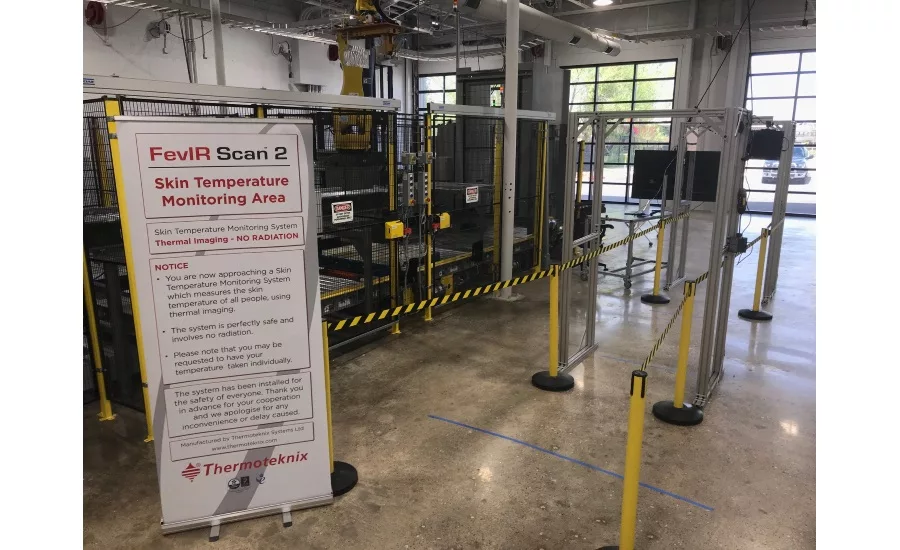
We’ve purchased more than 150 infrared walk-through temperature scanners. So far, we have the scanners installed in four facilities; pork plants in Iowa and Indiana and poultry plants in Arkansas and Georgia. We expect that eventually every one of our food production facilities will have at least one in place. Hear from our Senior Vice President of Health & Safety, Tom Brower, as he explains why we’re installing the scanners.

Why are we using this technology?

We need to ensure a safe work environment for our people. Exploring ways that are more efficient in keeping our team members safe is never a bad thing. This is a non-contact temperature scanner, so it’s seamless for our team members since all they need to do is walk through the detector zone. It doesn’t disrupt their routine, and it’s faster than using the handheld thermometers.

How do these walk-through scanners work?

All that team members have to do is walk through the detector zone one at a time. The non-contact thermal imaging system tracks them as a screen provides a real-time display of the maximum temperature reading of each person. If a team member’s temperature exceeds a fever-grade temperature, the system sets an alarm. One of our trained professionals will take additional steps and check that team members temperature with a temporal thermometer to verify their temperature. If a team member is sick, we’ll send them home.

Do infrared scanners detect COVID-19?

Looking for quick answers on food safety topics?
Try Ask FSM, our new smart AI search tool.
Ask FSM →

No. The makers of these devices have noted that the scanners only detect a person’s body temperature. We still choose to use them because it’s a safer non-contact option to check temperature. Just because it can detect a fever, doesn’t mean it can identify someone who potentially has COVID-19. We know that the virus can be in people who are asymptomatic. That’s why we’ve implemented other protective measures since January.

What other protective measures have we implemented?

We formed an internal COVID-19 task force in January and began isolating team members who could be at-risk by virtue of their travel. By the end of February, we had limited business travel, educated our team members about COVID-19 through digital signage, videos and other communications. We also encouraged sick team members to stay home by relaxing attendance policies, increased sanitation/disinfection efforts and implemented restrictions on visitors to our facilities. We’re also using temporal thermometers to take the temperature of every team member at every facility before they enter the workplace.

Have thermal imaging systems been recommended by federal agencies?

According to CNBC, the Food and Drug Administration (FDA) hasn’t approved infrared body temperature scanners to detect coronavirus fevers. The organization is exploring new guidance because of the COVID-19 outbreak. This doesn’t mean we shouldn’t use it. It means we should also be utilizing other protective measures and practicing social distancing.

Will we keep these walk-through temperature scanners for the long-term?

Since we’ve invested in the equipment, we may consider continuing to use them. This could help in the future flu and cold seasons to identify team members that are just starting to show symptoms and have them go home.


KEYWORDS: coronavirus and food safety Tyson Foods

Share This Story

Recommended Content

JOIN TODAY
to unlock your recommendations.

Already have an account? Sign In

  • people holding baby chicks

    Serovar Differences Matter: Utility of Deep Serotyping in Broiler Production and Processing

    This article discusses the significance of Salmonella in...
    Microbiological Control
    By: Nikki Shariat Ph.D.
  • woman washing hands

    Building a Culture of Hygiene in the Food Processing Plant

    Everyone entering a food processing facility needs to...
    Food Prep/Handling
    By: Richard F. Stier, M.S.
  • graphical representation of earth over dirt

    Climate Change and Emerging Risks to Food Safety: Building Climate Resilience

    This article examines the multifaceted threats to food...
    International
    By: Maria Cristina Tirado Ph.D., D.V.M. and Shamini Albert Raj M.A.
Manage My Account
  • eMagazine Subscription
  • Subscribe to Newsletters
  • Manage My Preferences
  • Website Registration
  • Subscription Customer Service

More Videos

Sponsored Content

Sponsored Content is a special paid section where industry companies provide high quality, objective, non-commercial content around topics of interest to the Food Safety Magazine audience. All Sponsored Content is supplied by the advertising company and any opinions expressed in this article are those of the author and not necessarily reflect the views of Food Safety Magazine or its parent company, BNP Media. Interested in participating in our Sponsored Content section? Contact your local rep!

close
  • the use of dual-energy X-ray food inspection technology to identify foreign contaminants.
    Sponsored byEagle by METTLER TOLEDO

    Precision Inspection Starts with the Right X-ray Detector

  • This image depicts a worker cleaning stainless steel machinery in a food processing plant
    Sponsored byCintas

    Employee Uniforms: A Frontline Defense Against Food Contamination

  • This image depicts a healthcare professional managing a large volume of paperwork and transitioning to a digital workflow.
    Sponsored bySafetyChain

    The Invisible Plant Tax Starts with Your Records

Popular Stories

packages of beef at retail

Scientists Tackle Food Waste with More Accurate ‘Sell By’ Dates Based on Meat Microbial Activity

scientists using molecular model

Updated EU Food Chemical Safety Information Database Now Available

close-up of woman in suit writing on clipboard

FDA Launches One-Day Inspectional Assessments


Events

May 11, 2026

The Food Safety Summit

Stay informed on the latest food safety trends, innovations, emerging challenges, and expert analysis. Leave the Summit with actionable insights ready to drive measurable improvements in your organization. Do not miss this opportunity to learn from experts about contamination control, food safety culture, regulations, sanitation, supply chain traceability, and so much more.

May 13, 2026

The Foreign Material Maturity Model—Tips from the Trenches

Live Streaming from Food Safety Summit: See how leading protein companies use the Foreign Material Maturity Model to reduce risk, close gaps, and strengthen prevention programs with real-world, actionable insights.

May 14, 2026

FSMA at 15: Where Are We Now?

Live Streaming from Food Safety Summit: This session will explore how FSMA has shaped today’s food safety landscape—and what’s next.

View All

Products

Global Food Safety Microbial Interventions and Molecular Advancements

Global Food Safety Microbial Interventions and Molecular Advancements

See More Products

Related Articles

  • Exclusive interview: Q&A with US Foods, on COVID-19 changes and sanitation

    Exclusive interview: Q&A with US Foods, on COVID-19 changes and sanitation

    See More
  • Tyson Foods: Avian Flu Outbreak Not a Food Safety or Human Health Concern

    See More
  • Best Sanitizers, Inc. Announces New HACCP SmartStep2 Walk-Through Dual Footwear Sanitizing Unit.

    Best Sanitizers, Inc. announces new HACCP SmartStep2 walk-through dual footwear sanitizing unit

    See More

Related Products

See More Products
  • food-safety-making.jpg

    Food Safety: Making Foods Safe and Free From Pathogens

  • global food.jpg

    Global Food Safety Microbial Interventions and Molecular Advancements

  • 1118474600.jpg

    Practical Food Safety: Contemporary Issues and Future Directions

See More Products
×

Never miss the latest news and trends driving the food safety industry

Newsletters | Website | eMagazine

JOIN TODAY!
  • RESOURCES
    • Advertise
    • Contact Us
    • Directories
    • Store
    • Want More
  • SIGN UP TODAY
    • Create Account
    • eMagazine
    • Newsletters
    • Customer Service
    • Manage Preferences
  • SERVICES
    • Marketing Services
    • Reprints
    • Market Research
    • List Rental
    • Survey/Respondent Access
  • STAY CONNECTED
    • LinkedIn
    • Facebook
    • Instagram
    • X (Twitter)
  • PRIVACY
    • PRIVACY POLICY
    • TERMS & CONDITIONS
    • DO NOT SELL MY PERSONAL INFORMATION
    • PRIVACY REQUEST
    • ACCESSIBILITY

Copyright ©2026. All Rights Reserved BNP Media, Inc. and BNP Media II, LLC.

Design, CMS, Hosting & Web Development :: ePublishing