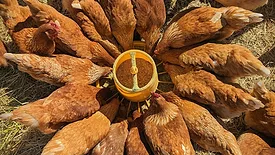
Field studies led by Wageningen University have demonstrated the efficacy of two vaccines in reducing mortality in poultry infected with the Highly Pathogenic Avian Influenza (HPAI) H5N1 virus, although it is too early to draw accurate conclusions about transmission.
Researchers from Wageningen University and Research have characterized the toxicological effects and allergenic potential of emerging alternative protein sources in a recent review.
Harmonized food allergen regulation at the EU level, and systematic monitoring led by a European reference lab, are necessary to protect consumers, argue researchers.
The open access Food Safety Mass Spectral Library, developed by Wageningen University and Research scientists, comprises more than 1,000 chemicals including veterinary drugs, contaminants, pesticides, and natural toxins.
In an effort to reduce reliance on chemical pesticides, researchers at Wageningen University and Research (WUR) are developing a tool to help farmers choose the most effective and sustainable crop protection approaches for their unique operations.
A recent study has provided an overview of the levels and types of microbial contaminants present in 88 different plant-based ingredients used to make dairy alternatives, finding the microbial loads in different ingredients to be highly variable depending on difficult-to-control factors, as well as a high proportion of spore-forming microbes among the total microbial counts in many samples.
Although the use of glyphosate on crops poses a food safety risk and its use should be curbed, completely banning the substance too early may lead to farmers using chemical alternatives that are just as harmful to human and environmental health, according to experts from Wageniningen University and Research (WUR).
Scientists from Wageningen University and Research have created a model that considers multiple criteria to help industry reverse-engineer foods that are palatable, nutritious, sustainable, safe, and economically viable.
Wageningen University and Research (WUR) has announced the launch of its Safe Precision Fermentation (SAFERMENT) project, which is aimed at enhancing the safety of animal-free dairy protein production. The project consortium is still open to additional partners and encourages interested parties to contact WUR.
Wageningen University Food Safety Research recently launched a four-year project with the goal of developing an early warning system to detect the presence of mycotoxins in European cereal grains.