Food Safety
search
Ask Food Safety AI
cart
facebook twitter linkedin
  • Sign In
  • Create Account
  • Sign Out
  • My Account
Food Safety
  • NEWS
    • Latest News
    • White Papers
  • PRODUCTS
  • TOPICS
    • Contamination Control
    • Food Types
    • Management
    • Process Control
    • Regulatory
    • Sanitation
    • Supply Chain
    • Testing and Analysis
  • PODCAST
  • EXCLUSIVES
    • Food Safety Five Newsreel
    • eBooks
    • FSM Distinguished Service Award
    • Interactive Product Spotlights
    • Videos
  • BUYER'S GUIDE
  • MORE
    • ENEWSLETTER >
      • Archive Issues
      • Subscribe to eNews
    • Store
    • Sponsor Insights
    • ASK FSM AI
  • WEBINARS
  • FOOD SAFETY SUMMIT
  • EMAG
    • eMagazine
    • Archive Issues
    • Editorial Advisory Board
    • Contact
    • Advertise
  • SIGN UP!

Study: Less food wasted when using frozen produce

The study, conducted within CARVE's public-private partnership, shows that using frozen foods might reduce consumers’ food waste.
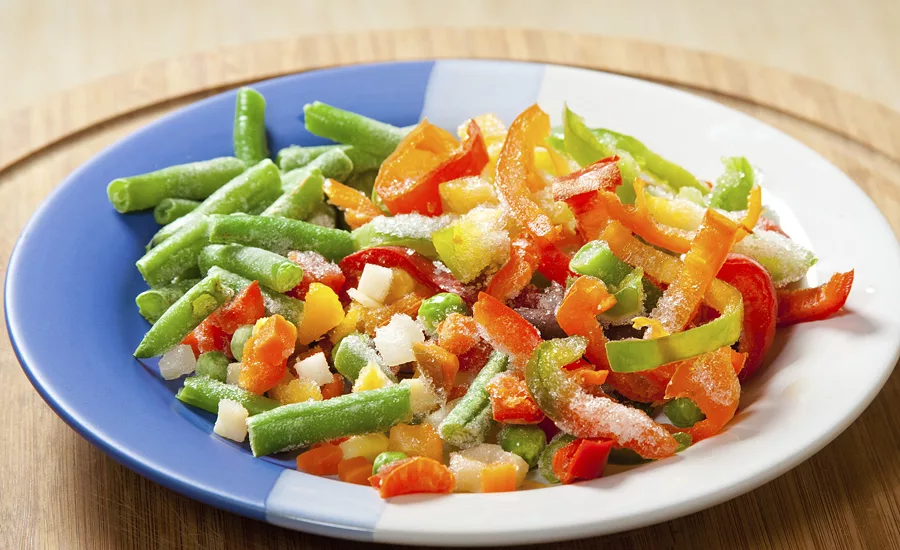
default frozen vegetables
August 4, 2017

Consumers create less waste from frozen vegetables, potato products and berry fruit than from fresh or alternatives in cans or jars, according to a study by Wageningen University & Research, The Netherlands.

The study, conducted within CARVE's public-private partnership, shows that using frozen foods might reduce consumers’ food waste. The research is a pilot study within the project CARVE (Across supply Chain Action program Reduction of food waste, improved Valorisation & Resource Efficiency, 2015-2018). Via a number of pilots, companies throughout the food chain are getting involved, using knowledge, tools and decision-making models developed by Wageningen experts. The project offers a toolbox that enables companies to integrate the prevention and reduction of food waste into their business operations. CARVE is a public-private collaboration between the Alliance Sustainable Food and Wageningen Food & Biobased Research. The pilot study was funded by the top sector Agri&Food and Nomad Foods Europe.

To explore which purchase form ended up in the waste bin relatively the most, the researchers conducted an online survey among consumers from a representative group of over 500 Dutch households. Participants first answered a number of general questions about their household routines regarding food, e.g. about their stock management. The second part of the questionnaire looked at how much food, on average, goes to the bin. In this context, for 12 types of products, including seven types of vegetables, potato products, berry fruit, fish and ready-to-eat meals, the influence of the purchase form (frozen, fresh or preserved) was evaluated. Participants indicated how often they consumed a product annually, how often they disposed of it and the habitual quantities involved.

Results

For six of the vegetables tested, plus potato products and berry fruit, the volumes discarded per consumption event were the smallest for frozen. For peas and carrots and unbattered fish, the quantities of frozen, fresh and preserved foods going to the waste bin were approximately the same. In case of ready-to-eat meals, a greater proportion of the frozen version was discarded. It was observed that participants were more likely to store fresh products in the fridge to consume at a later stage compared to their frozen or preserved equivalents.

Fresh or frozen

"Dutch consumers prefer fresh produce," says Anke Janssen, project manager and researcher at Wageningen Food & Biobased Research. "But, faced with so much food waste, it could be wiser to choose for more frozen food. Frozen products have often extended shelf life and are easier to divide into portions."

The research emphasizes that it is still too early to translate these insights into concrete advice at a national level.

“First, we want to better understand the precise underlying behavior with regard to shopping, storage and disposal.”

Looking for quick answers on food safety topics?
Try Ask FSM, our new smart AI search tool.
Ask FSM →

In the first part of the questionnaire, often "forget about products" was indicated when giving a reason for discarding food, although before going shopping, most participants indicated to check what they have in stock at home.

“It is clear that consumers would benefit from support in managing food stocks at home. Imagine, for example, an app that warns when a product in the freezer is good for only a few more weeks," says Janssen.

Food waste

About a quarter of all food intended for human consumption is lost in the distribution chain. Households in the Netherlands and other European countries account for approximately half of this. Much of this waste could be avoided by improving consumer awareness when buying, storing and cooking.

This article was originally posted on www.refrigeratedfrozenfood.com/.

This article was originally posted on www.refrigeratedfrozenfood.com.
KEYWORDS: food waste frozen foods market trends produce Wageningen University

Share This Story

Recommended Content

JOIN TODAY
to unlock your recommendations.

Already have an account? Sign In

  • people holding baby chicks

    Serovar Differences Matter: Utility of Deep Serotyping in Broiler Production and Processing

    This article discusses the significance of Salmonella in...
    Meat/Poultry
    By: Nikki Shariat Ph.D.
  • woman washing hands

    Building a Culture of Hygiene in the Food Processing Plant

    Everyone entering a food processing facility needs to...
    Management
    By: Richard F. Stier, M.S.
  • graphical representation of earth over dirt

    Climate Change and Emerging Risks to Food Safety: Building Climate Resilience

    This article examines the multifaceted threats to food...
    International
    By: Maria Cristina Tirado Ph.D., D.V.M. and Shamini Albert Raj M.A.
Manage My Account
  • eMagazine Subscription
  • Subscribe to eNewsletter
  • Manage My Preferences
  • Website Registration
  • Subscription Customer Service

More Videos

Sponsored Content

Sponsored Content is a special paid section where industry companies provide high quality, objective, non-commercial content around topics of interest to the Food Safety Magazine audience. All Sponsored Content is supplied by the advertising company and any opinions expressed in this article are those of the author and not necessarily reflect the views of Food Safety Magazine or its parent company, BNP Media. Interested in participating in our Sponsored Content section? Contact your local rep!

close
  • Salmonella bacteria
    Sponsored byThermoFisher

    Food Microbiology Testing Methods: Salmonella species

  • a diagram explaining indicator organisms
    Sponsored byHygiena

    How Proactive Listeria Testing Helps Prevent Six- and Seven-Figure Recalls

  • woman grocery shopping
    Sponsored byCorbion

    Designing Safety Into Every Bite: Proactive Risk Mitigation for Refrigerated Foods

Popular Stories

NRTE breaded stuffed chicken

USDA Indefinitely Delays Enforcement of Salmonella as Adulterant in Raw Breaded, Stuffed Chicken

non-conforming product

How to Handle Non-Conforming Product

spoonfuls of food ingredients

FDA’s Developing Rule to Tighten GRAS Oversight Moves to White House

Events

December 11, 2025

How to Develop and Implement an Effective Food Defense Strategy

Live: December 11, 2025 at 2:00 pm EDT: From this webinar, attendees will learn common areas where companies encounter challenges in their food defense strategies and how to address them.

May 11, 2026

The Food Safety Summit

Stay informed on the latest food safety trends, innovations, emerging challenges, and expert analysis. Leave the Summit with actionable insights ready to drive measurable improvements in your organization. Do not miss this opportunity to learn from experts about contamination control, food safety culture, regulations, sanitation, supply chain traceability, and so much more.

View All

Products

Global Food Safety Microbial Interventions and Molecular Advancements

Global Food Safety Microbial Interventions and Molecular Advancements

See More Products

Related Articles

  • ACS edible sensor

    Edible Sensor for Frozen Food Safety Indicates When Products Have Been Thawed, Refrozen

    See More
  • individual curly kale leafs

    Study Identifies Why Some Leafy Greens are Less Susceptible to E. Coli Than Lettuce; Finds Natural Antimicrobial Effect of Kale, Collards

    See More
  • FDA Study: Allergen Removal and Transfer Using Wiping and Cleaning Methods in Retail Food Establishments

    See More

Related Products

See More Products
  • 9781498721776.jpg

    Handbook of Food Processing: Food Safety, Quality, and Manufacturing Processes

  • 1119053595.jpg

    Food Safety for the 21st Century: Managing HACCP and Food Safety throughout the Global Supply Chain, 2E

  • global food.jpg

    Global Food Safety Microbial Interventions and Molecular Advancements

See More Products

Related Directories

  • Quickdraft

    Food Industry Exhaust Filtration Systems. The Quickdraft Venturi exhauster is an excellent solution for a variety of exhaust processing applications in the food industry. They are especially effective for high heat, grease, and oil applications, offering dependable, consistent exhaust with less costly downtime. Call 1-855-VENTURI or contact us at sales@quickdraft.com for more information.
×

Never miss the latest news and trends driving the food safety industry

eNewsletter | Website | eMagazine

JOIN TODAY!
  • RESOURCES
    • Advertise
    • Contact Us
    • Directories
    • Store
    • Want More
  • SIGN UP TODAY
    • Create Account
    • eMagazine
    • eNewsletter
    • Customer Service
    • Manage Preferences
  • SERVICES
    • Marketing Services
    • Reprints
    • Market Research
    • List Rental
    • Survey/Respondent Access
  • STAY CONNECTED
    • LinkedIn
    • Facebook
    • Instagram
    • X (Twitter)
  • PRIVACY
    • PRIVACY POLICY
    • TERMS & CONDITIONS
    • DO NOT SELL MY PERSONAL INFORMATION
    • PRIVACY REQUEST
    • ACCESSIBILITY

Copyright ©2025. All Rights Reserved BNP Media.

Design, CMS, Hosting & Web Development :: ePublishing